
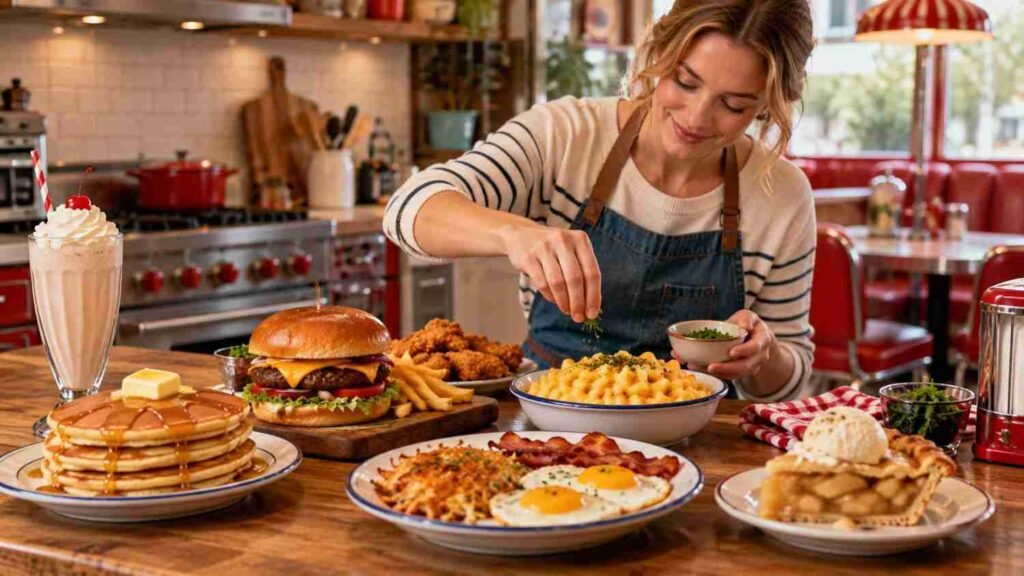
I have always liked diner meals that arrive without much fuss: crisp potatoes, a burger with melted cheese, a tall shake, and something sweet behind the glass. When I started making those foods at home, I realized they were less complicated than they looked. A hot skillet, good ingredients, and patience often mattered more than specialized equipment.
I also found that diner cooking depends on small details. Letting potatoes sit undisturbed creates a golden crust, while a hot pan gives burgers browned edges instead of a steamed texture. Those choices make familiar food taste closer to what you would order at a neighborhood counter and keep the shopping list short.
What Makes Diner Food Taste Like Diner Food?
Classic diner cooking is built around straightforward ingredients and strong contrast: crisp against soft, salty against creamy, and browned edges beside a tender center. Cast-iron or heavy skillets help because they hold heat when cold ingredients hit the surface.
You do not need a commercial flat-top. Preheat the skillet, avoid overcrowding it, and let food brown before flipping or stirring. Butter brings flavor, while neutral oil helps create crisp surfaces. Seasoning should be deliberate, too. Salt at the right stage can make inexpensive ingredients taste complete. That combination keeps the meal relaxed and familiar without extra effort.
Breakfast Classics Worth Making First
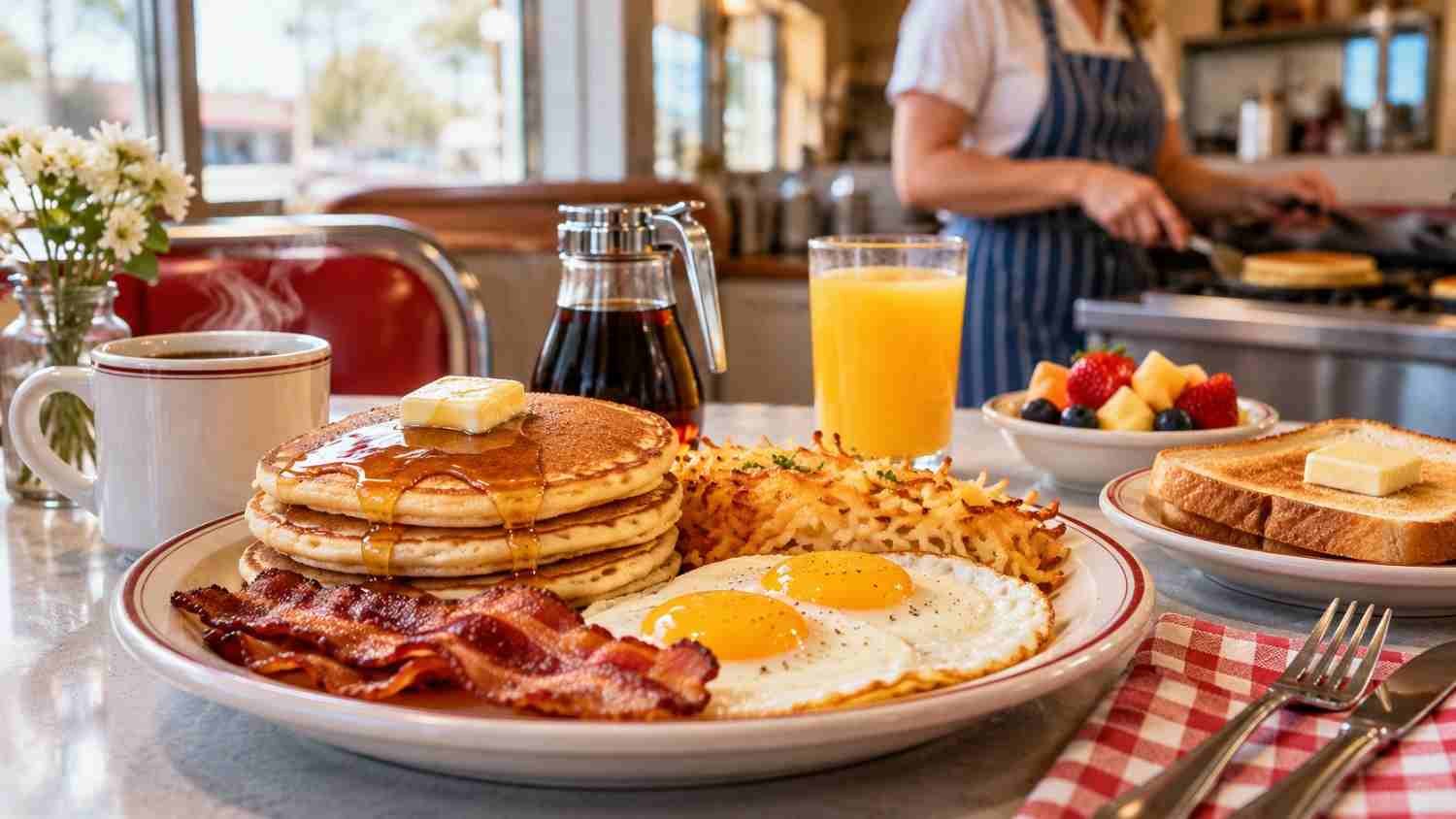
Pancakes are an easy place to start. Use buttermilk for gentle tang and a tender crumb, then mix only until the dry ingredients disappear. A few lumps are fine. Pour onto a lightly greased hot skillet and wait for bubbles and dry-looking edges before flipping. Aim for a browned surface with a soft middle.
Hash browns reward patience. Grate Russet potatoes, rinse away excess starch, then squeeze and dry them thoroughly. Spread them thinly over a hot skillet with butter and neutral oil. Leave them alone until the underside browns. Moving them too early breaks the crust and creates loose, greasy potatoes.
An omelet needs a gentler touch. Keep the eggs moving briefly as they set, lower the heat, then add cheese before folding. It should stay tender rather than dry. Serve it with toast, hash browns, or bacon.
Burgers and Sandwiches With Griddle Flavor
A smash burger works because a hot cooking surface creates intense browning. Use 80/20 beef, form loose balls, and press them onto a very hot skillet. When the edges become browned and lacy, flip and add American cheese. A short covered rest melts the cheese completely.
The patty melt uses the same griddle logic with caramelized onions and rye bread. Cook thinly sliced onions in butter until golden. Toast buttered rye in the same skillet, then layer beef, onions, and Swiss cheese. The sandwich should have crisp bread, a juicy center, and plenty of melted cheese.
Grilled cheese is another low-cost option. Medium heat gives bread time to brown before the cheese burns. Sharp cheddar and American cheese provide flavor and reliable melt, while tomato soup makes the meal instantly familiar.
Leftover roast beef, chicken, or turkey can become a hot sandwich with toasted bread, melted cheese, pickles, and a simple sauce. Diner food often feels generous because of the assembly, not complicated cooking.
Sides, Desserts, and the Diner Drink
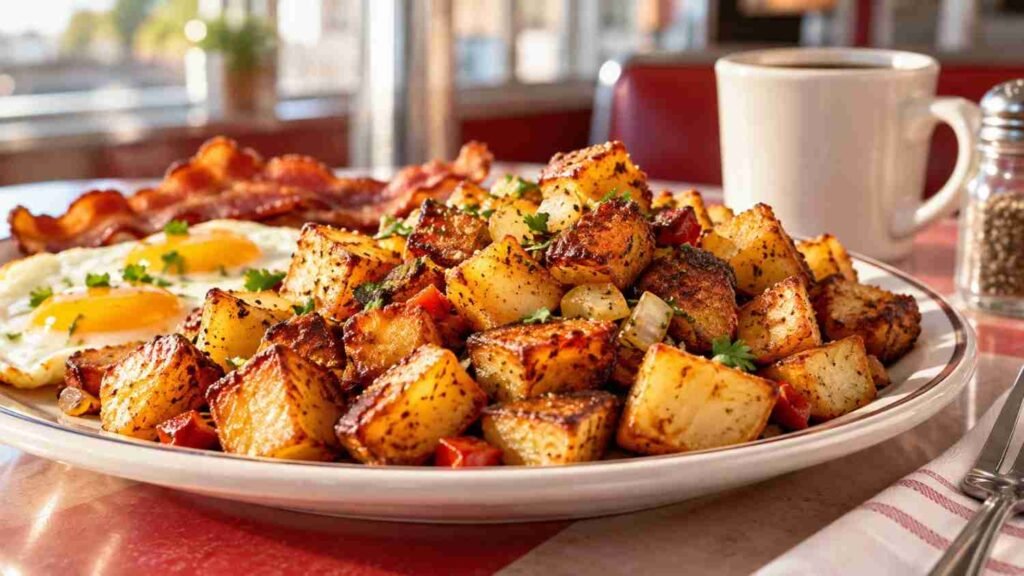
French fries and onion rings take more effort, but skillet potatoes are easier at home. Season fries immediately after cooking so salt adheres while the surface is hot. A simple salad or cup of soup can balance a rich sandwich.
Dessert is where the nostalgic character comes through. A chilled cream pie, fruit pie, or chocolate pudding pie can finish the meal without restaurant equipment. Old-school diner pie and dessert recipes with homemade fillings can add the right homemade touch because creamy fillings and buttery crusts capture the dessert-counter feeling particularly well.
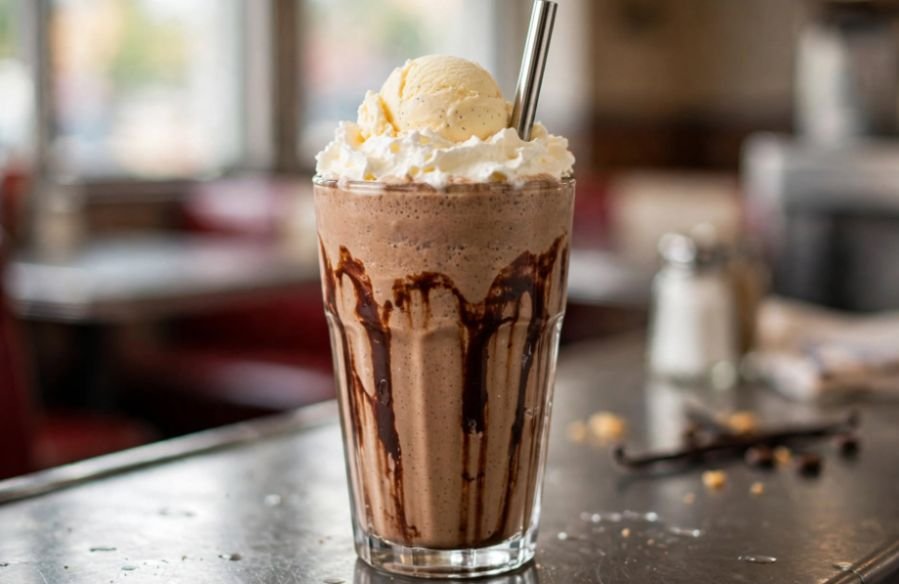
A milkshake is simpler. Use full-fat vanilla ice cream, a little whole milk, and chocolate syrup or malt powder. Blend only until smooth. Too much milk makes it thin, while excessive blending warms the ice cream. Serve immediately.
How to Build a Complete Diner Meal at Home
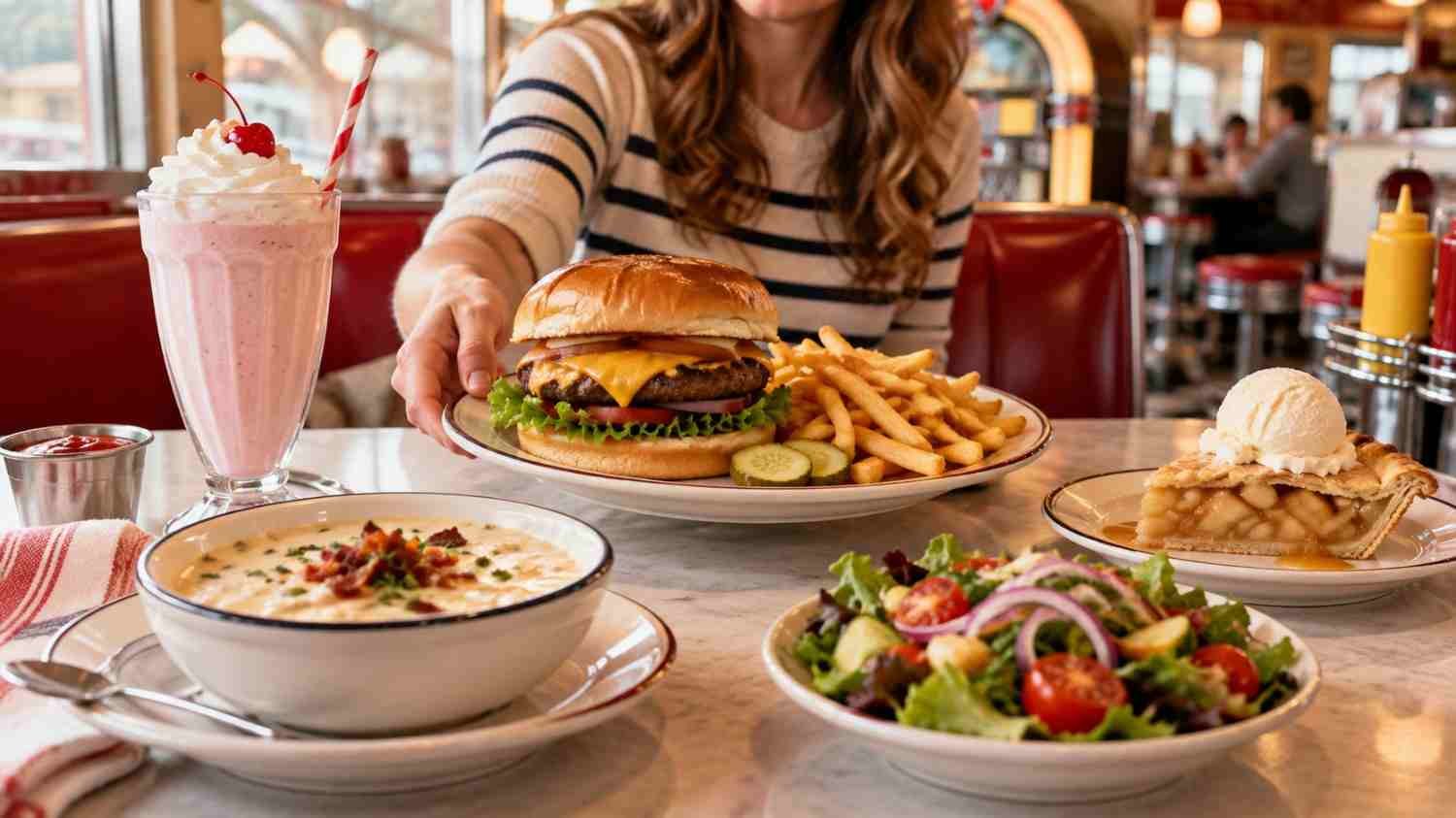
Choose one main dish and build around it instead of cooking an entire menu simultaneously. A burger can pair with hash browns, fries, and a milkshake. A patty melt works with soup and pie. For breakfast, pancakes, eggs, bacon, and potatoes make a satisfying spread.
Think about texture. If the main dish is rich and cheesy, add something crisp or acidic, such as pickles, slaw, or salad. If the meal is mostly soft, browned potatoes or toasted bread provide contrast. Retro American diner recipes inspired by neighborhood restaurants can help with combinations because the best diner meals feel balanced despite their comfort-food reputation.
Keep the serving style casual. Warm plates, toasted buns, extra napkins, and small bowls of ketchup, mustard, or pickles can make a kitchen table feel like a counter seat. You do not need themed decorations. Let the food carry the nostalgia.
FAQs: Restaurant-Style Diner Recipes That Are Easy to Recreate at Home
1. What is the easiest diner recipe for beginners?
A smash burger, grilled cheese, or hash browns are good starting points because they use few ingredients and teach basic skillet techniques.
2. What skillet works best for diner-style cooking?
Cast iron is excellent because it retains heat and encourages browning. A heavy stainless-steel skillet also works well when properly preheated.
3. How do I make hash browns crispy?
Rinse grated potatoes, remove as much moisture as possible, use enough cooking fat, and avoid moving them until the underside has browned.
4. What makes a homemade milkshake taste like a diner shake?
Use full-fat ice cream, very little milk, and blend briefly. Malt powder adds the familiar old-fashioned flavor found in many classic shakes.
The Little Details Worth Repeating
The appeal of diner food is not about recreating an entire restaurant. It comes from getting a few fundamentals right: a heated pan, generous browning, familiar seasonings, good bread, melted cheese, and something cold or sweet alongside the main dish. Those details make inexpensive ingredients feel special without turning dinner into a project.
Once those techniques become familiar, dinner cooking becomes flexible. A skillet can handle breakfast, burgers, sandwiches, and potatoes, while a homemade pie or shake gives the meal a satisfying finish. The result is comforting food that earns its place in the regular rotation.












One thought on “Restaurant-Style Diner Recipes That Are Easy to Recreate at Home”