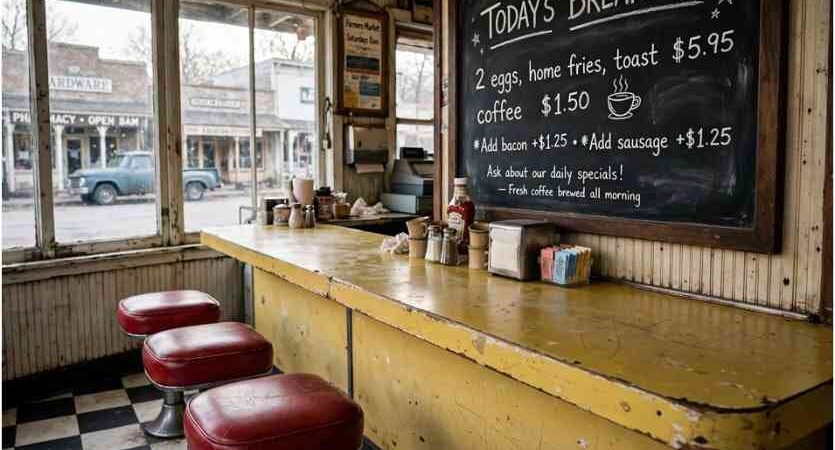
I sat at a scratched laminate counter in western Pennsylvania last month, watching the owner tally her weekly supply invoice by hand. Her butter costs had spiked, commercial egg flats were up 22%, and wholesale delivery fuel surcharges had doubled. Yet her hand-written menu board still listed two eggs, home fries, and toast for $5.95.
Understanding why small town diners are fading begins right at that register. While suburban brunch spots repackage skillet breakfasts for twenty dollars, independent rural eateries are quietly vanishing under an impossible set of economic pressures.
The decline is not about bad cooking or changing appetites. It is an structural squeeze driven by distributor isolation, shifting demographics, and a unique social contract that prevents owners from pricing food for survival.
The Fragile Math Behind the Small-Town Counter
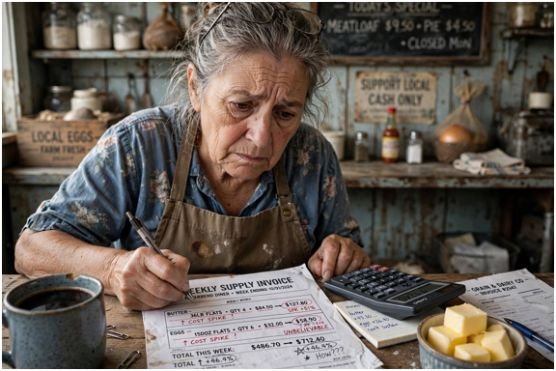
When you look at the books of an independent diner, food and labor should ideally consume no more than 60% to 65% of total revenue. In small rural communities, that ratio often explodes past 80%.
Independent operators face price volatility with zero corporate buffer. According to historical inflation benchmarks tracked by Federal Reserve Economic Data (FRED), cumulative wholesale input price surges have permanently raised the cost floor for animal fats, proteins, and dairy. A metropolitan bistro absorbs those spikes by adjusting its weekend prix fixe. A country cafe operates without that cushion.
Rural Diner Cost Breakdown (Typical Share of Revenue):
┌───────────────────────────────┬────────────┐
│ Expense Category │ Share (%) │
├───────────────────────────────┼────────────┤
│ Food & Wholesale Freight │ 42% – 48% │
│ Labor (Paid & Minimum Wage) │ 34% – 38% │
│ Utilities & Equipment Upkeep │ 11% – 14% │
│ Net Margin Buffer │ 2% – 4% │
└───────────────────────────────┴────────────┘
The Rural Utility Trap: Why Owners Cannot Raise Menu Prices
In small towns, diners do not function as recreational dining destinations. They function as public infrastructure. The regulars who occupy the corner booths every morning—retirees on fixed Social Security incomes, farmhands, and shift workers—view the coffee pot and breakfast plate as essential community services.
That social expectation creates the “Utility Trap.” If an owner raises a cup of coffee from $1.50 to $3.00, or a stack of pancakes from $6.00 to $10.00, the backlash is swift and personal.
When exploring why diner food feels nostalgic, consumers frequently connect low prices with warmth and authenticity. In rural settings, breaking that price expectation breaks the customer bond entirely. Caught between community loyalty and insolvency, owners choose to swallow the losses until their reserves run dry.
Geographic Isolation and the Surge in Distributor Minimums
Logistics represent another silent killer. Food distributors like Sysco or US Foods run regional routes based on drop density. If a refrigerated truck must travel forty miles off the interstate to deliver five cases of potatoes and three boxes of bacon, the distributor imposes stiff freight surcharges and high minimum drop fees.
Urban operators choose between dozens of competitive purveyors. Isolated cafes often have one distributor or must source bulk provisions at retail warehouse clubs hours away. The extra mileage and fuel subtract hours from the kitchen and eat away at the bottom line.
Empty Stools: Depopulation and the Vanishing Daily Regular
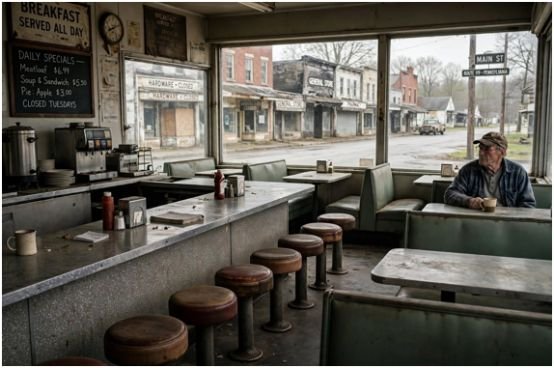
A rural diner survives on repeat frequency rather than sheer foot traffic. It does not need hundreds of rotating tourists; it needs forty loyal people who eat breakfast there five mornings a week.
When those forty customers shrink to twenty, the model breaks. Regional population data from the USDA Economic Research Service highlights persistent out-migration of young working adults from nonmetropolitan farming and manufacturing counties. As manufacturing hubs downsize and schools consolidate, towns lose the generational pipeline that sustains morning shifts.
Every time a regular customer passes away or moves into regional assisted care, that stool remains empty. Passing traffic rarely fills the gap.
The Generational Cliff and the Unpaid Labor Dilemma
Behind almost every enduring small-town restaurant stands an invisible balance sheet item: uncompensated family labor.
For decades, mom-and-pop diners balanced thin books because spouses worked opposite shifts, grandparents washed dishes, and teenagers bussed tables after school. When you remove those unpaid hours, the profitability disappears.
Today, diner owners are entering their late sixties and seventies with no succession plan in place. Their children witnessed the eighty-hour workweeks, the kitchen burns, and the lean winter revenues—and chose different careers.
Without an eager heir, selling an independent diner in a shrinking municipality is difficult. The commercial real estate holds little speculative value, the kitchen equipment is decades old, and local banks hesitate to write hospitality loans. When the owner retires, the locks are changed for good.
Two Different Realities: Urban Adaptation vs. Rural Erasure
City diners face real estate gentrification and rising minimum wages, yet they possess a massive structural advantage: customer density and pricing flexibility.
Urban operators can rebrand classic recipes into twenty-dollar specialty smash burgers, attract late-night crowds, and generate supplemental income through off-premise digital delivery channels. The trendy revival of retro diners thrives in high-density urban corridors because city dwellers will happily pay premium rates for mid-century ambiance and comfort classics.
Urban Revival vs. Rural Reality:
- Customer Flow: High foot traffic vs. Fixed regular base
- Delivery Apps: 20-30% order volume vs. Zero gig-economy apps
- Price Tolerance: $16 – 22entreesvs.Sub-9 spending cap
- Real Estate: High property sale value vs. Low liquidity collateral
Rural diners cannot pivot to third-party delivery apps because DoorDash and Uber Eats do not service their gravel roads. They cannot charge sixteen dollars for a patty melt because their customers will simply eat at home. While urban diners transform, rural diners disappear.
Survival Strategies Keeping Rural Counters Alive
Despite the pressures, several stubborn operators are finding paths forward without abandoning their small-town roots. The National Restaurant Association documents that successful independent operators increasingly diversify how they use their physical space.
- Dual-Use Operations: Several diner owners in the Midwest have converted back dining rooms into mini-groceries or regional pickup lockers, selling local honey, baked goods, and pantry staples alongside breakfast.
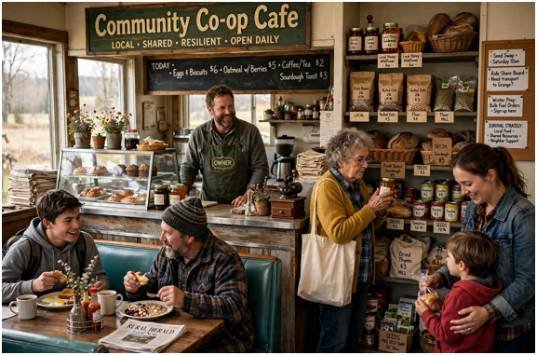
- Community Co-ops: Towns in Iowa and Minnesota have formed municipal or community-owned co-operatives to purchase their local diners, turning them into non-profit civic centers where members subsidize overhead costs.
- Limited Service Windows: Rather than running twelve-hour daily shifts, operators are condensing their hours to high-traffic windows—Thursday through Sunday mornings—drastically reducing utility and utility payroll strains.
Sassy Counter Confessions: Save Your Local Skillet Before It’s Gone
If you love the aroma of seasoned griddles and bottomless black coffee, sitting back and mourning closed diners on social media does nothing. Nostalgia does not pay the dairy distributor.
The next time you plan a weekend road trip, skip the highway fast-food drive-thru. Pull off the interstate, park on Main Street, and order the daily special at an independent lunch counter. Tip your server generously in cash. If we treat these establishments merely as museum pieces rather than viable businesses, we will wake up to an interstate landscape defined entirely by identical corporate drive-thrus.
Frequently Asked Questions
1. Why can’t rural diners just raise prices to match inflation?
Rural diners operate under extreme price sensitivity because local regulars view them as an affordable everyday utility rather than discretionary leisure dining.
2. How do distributor delivery surcharges harm small eateries?
Isolated locations incur steep freight fees and high minimum purchase thresholds from major food distributors due to long transit distances off main highway corridors.
3. Why don’t the owners’ children take over the family diner?
The intense physical toll, eighty-hour workweeks, and modest profit margins drive the next generation toward careers with better compensation and work-life balance.
4. Can rural diners survive using food delivery apps?
No, major gig-economy delivery platforms rarely operate in low-density rural zip codes, cutting off a key off-premise revenue stream.