I’ve always thought the best diner breakfasts are less about complicated cooking and more about the feeling around the plate. Pancakes, crisp potatoes, eggs, and coffee can make an ordinary weekend morning feel slower and more generous. Those familiar combinations are what make nostalgic diner breakfast and brunch recipes so appealing at home on a relaxed Saturday or Sunday.
I’ve found that recreating that feeling does not require restaurant equipment or a huge ingredient list. A hot skillet, good butter, and patience can get remarkably close. The trick is cooking each component for the texture people remember, then serving everything while it is still hot.
What Makes a Breakfast Taste Like a Diner Classic?
Diner food has a recognizable balance. It is hearty without being fussy, familiar without elaborate presentation, and built around ingredients that work well together. Butter, eggs, potatoes, toast, cheese, sausage, and maple syrup do much of the work.
Texture matters too. Pancakes should be tender inside with browned edges. Hash browns need a crisp crust rather than a soft center. Eggs should stay moist, while toast adds crunch. That contrast makes a simple breakfast plate satisfying.
A diner-style meal also feels generous. Pair a sweet favorite with a savory side. Pancakes work with bacon and eggs, while French toast can share the plate with sausage or crisp potatoes.
Sweet Favorites Worth Pulling Out the Griddle
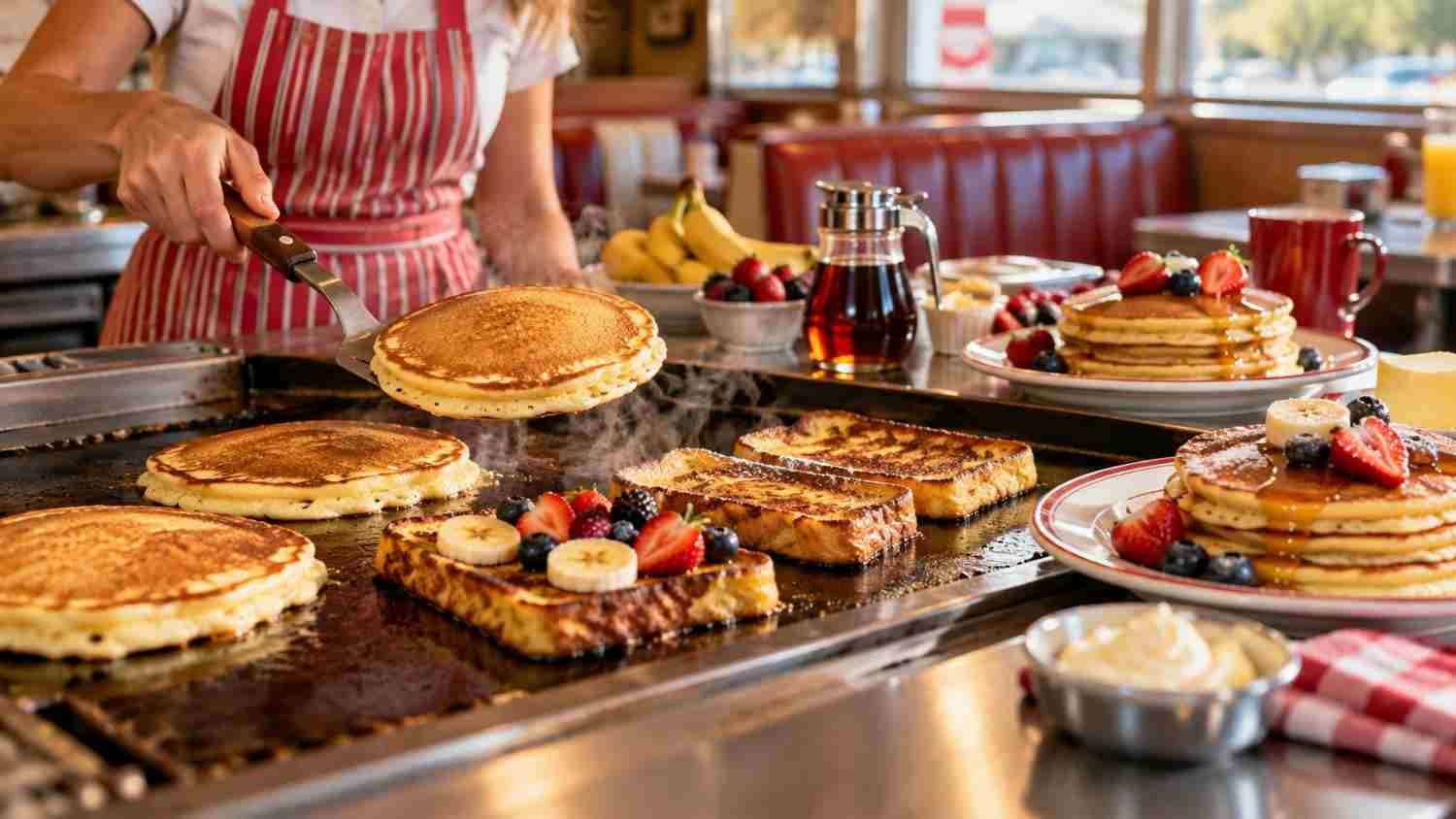
Buttermilk pancakes are an easy starting point. A dependable batter needs flour, sugar, baking powder, baking soda, salt, buttermilk, eggs, and melted butter. Mix just until the dry ingredients disappear. A few lumps are fine, and overmixing can make pancakes dense.
Cook them on a buttered griddle over medium heat. When bubbles form across the surface and the edges look set, flip once. Serve with butter and maple syrup, or add fresh berries.
French toast brings another kind of nostalgia. Thick slices of brioche, challah, or sturdy white bread soak up eggs, milk, vanilla, and cinnamon. Let the bread absorb enough custard to become tender without falling apart, then cook it in butter until golden.
Waffles add crispness. A good buttermilk waffle should have a browned exterior and soft center. Keep finished waffles on a rack in a low oven instead of stacking them, which helps preserve crisp edges.
Savory Staples for a Full Diner Plate
Crispy hash browns are worth the extra step. Shred russet potatoes, rinse away excess starch, and squeeze them extremely dry with a clean towel. Moisture is the enemy of browning. Cook the potatoes in hot oil and butter, spreading them into a thin layer. Leave them alone long enough to form a golden crust before turning.
A Western omelet brings eggs, ham, onion, green bell pepper, and cheddar together in one classic package. Beat the eggs gently with milk, then cook them in butter over moderate heat. Add the filling before the eggs become fully set so everything folds together without becoming dry.
Biscuits and sausage gravy make the meal feel substantial. Brown breakfast sausage, stir in flour, and cook it briefly before gradually adding milk. Keep the gravy at a gentle simmer until thick enough to coat a spoon. Spoon it over warm buttermilk biscuits and serve immediately.
These dishes make restaurant-style diner recipes that are easy to recreate at home feel practical rather than complicated. Each one relies on familiar ingredients and straightforward techniques.
Brunch Dishes That Work for a Crowd
A breakfast casserole works because ingredients can be assembled ahead. Egg, cheese, sausage, bread, or hash browns can become a hearty bake that serves several people.
An overnight French toast bake offers the same advantage on the sweeter side. Prepare the custard and bread the night before, refrigerate it, then bake it in the morning.
Eggs Benedict can also work for group brunches. An overnight casserole version combines English muffins, Canadian bacon, and egg custard, then finishes with poached eggs and hollandaise. It offers familiar diner appeal for a group.
Start with items that hold well, such as potatoes or a casserole, then finish pancakes, eggs, and toast close to serving time.
How to Build the Weekend Diner Plate
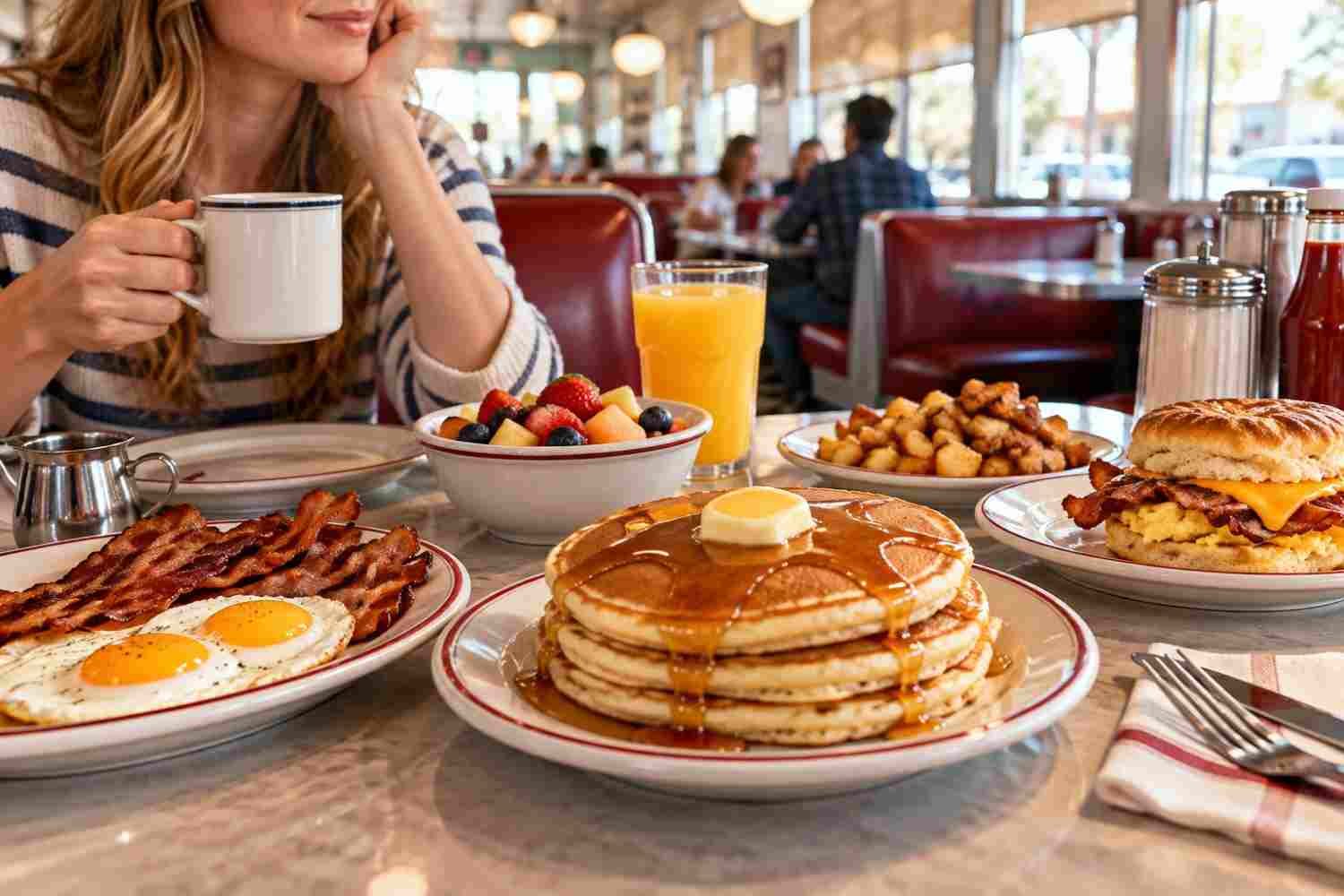
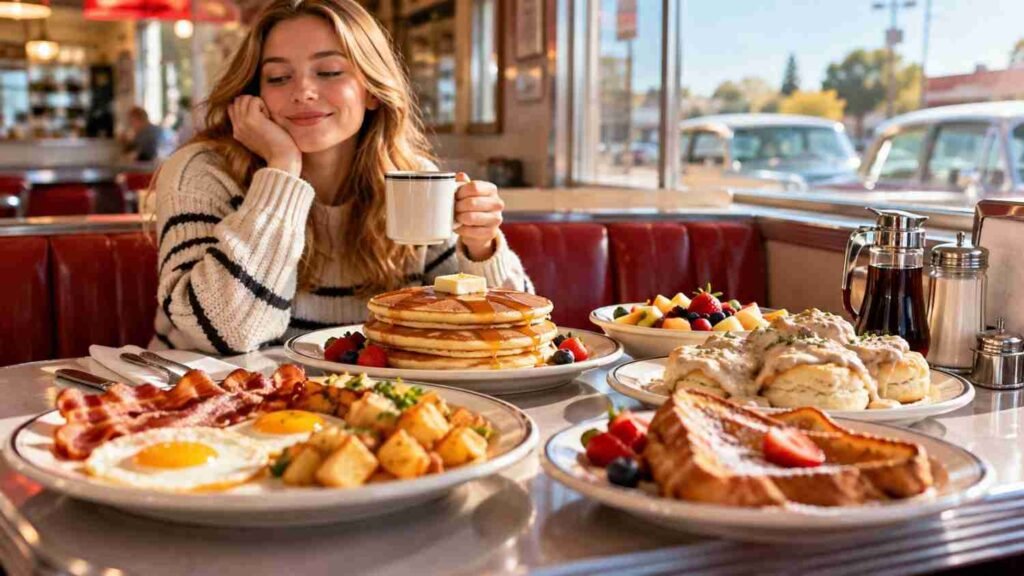
The best plate has contrast. Pair something crisp with something soft, something savory with something sweet, and something rich with something fresh. A classic combination might include pancakes, scrambled eggs, hash browns, bacon, and sliced fruit.
Cooking order makes a noticeable difference. Get potatoes started first, cook bacon while they brown, and use the rendered fat carefully for extra flavor. Pancakes can follow, with eggs cooked last because they lose their ideal texture quickly.
Warm the plates if possible, keep syrup ready, and serve butter while it is still soft enough to spread. Toast should reach the table immediately, and crispy potatoes should never sit covered for long.
That approach captures the spirit behind retro American diner recipes inspired by neighborhood restaurants. The goal is not to reproduce a professional kitchen. It is to recreate the generous, comforting breakfast that made diners memorable.
FAQs: Nostalgic Diner Breakfast and Brunch Recipes for Weekend Cooking
1. What is a classic diner breakfast?
A classic diner breakfast usually combines eggs with potatoes, toast, breakfast meat, or pancakes. Portions tend to be hearty and familiar.
2. How do I make crispy diner-style hash browns?
Rinse shredded russet potatoes, squeeze them very dry, and cook them in a thin layer of hot oil and butter without disturbing them too often.
3. What can I prepare before a weekend brunch?
Breakfast casseroles, pancake batter, French toast components, cooked bacon, and chopped vegetables can reduce morning work.
4. How do I keep pancakes warm?
Place finished pancakes on a wire rack in a low oven. Avoid stacking them tightly, because trapped steam can soften their browned edges.
Why Slow Weekend Breakfasts Still Feel Special
The charm of diner cooking comes from its simplicity. These meals use ordinary ingredients, but careful heat control, good timing, and attention to texture turn them into food people remember. Making them at home also gives the cook room to build breakfast around the people at the table instead of rushing through a restaurant order.
A good weekend breakfast does not need to be elaborate. It just needs to be warm, familiar, generous, and worth lingering over.