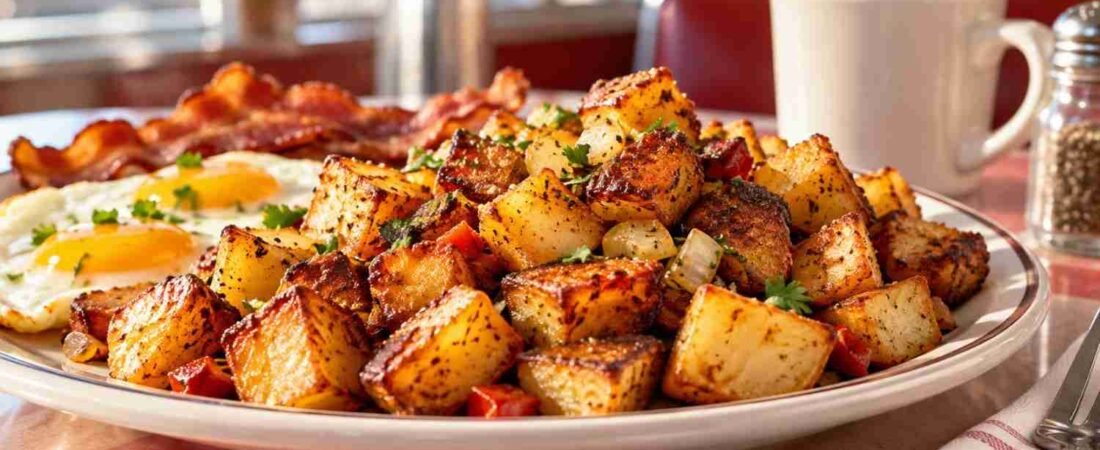
I have always liked the potatoes that arrive with a diner breakfast: browned enough to crunch when you bite them, but soft enough inside to soak up a runny egg yolk. When I make them at home, the biggest difference comes from treating the potatoes as more than a side dish. They need heat, space, and a little patience to develop that familiar skillet flavor.
I also noticed that seasoning alone never creates good breakfast potatoes. A generous shake of spices cannot rescue potatoes that are wet, crowded, or stirred every few seconds. Once the cooking process is right, a savory blend of paprika, garlic, onion, salt, and pepper gives the potatoes the deeper flavor I associate with a busy neighborhood breakfast counter.
What Makes Diner Breakfast Potatoes So Good
Good diner-style home fries balance two textures. The outside should have crisp, deeply browned edges, while the center stays fluffy and tender.
Potato choice matters, too. Yukon Gold potatoes have a naturally buttery texture and hold their shape well, while russets develop especially crisp surfaces because they contain more starch. Either works. Cut the pieces evenly so they finish cooking at roughly the same time.
Start With a Better Cooking Process
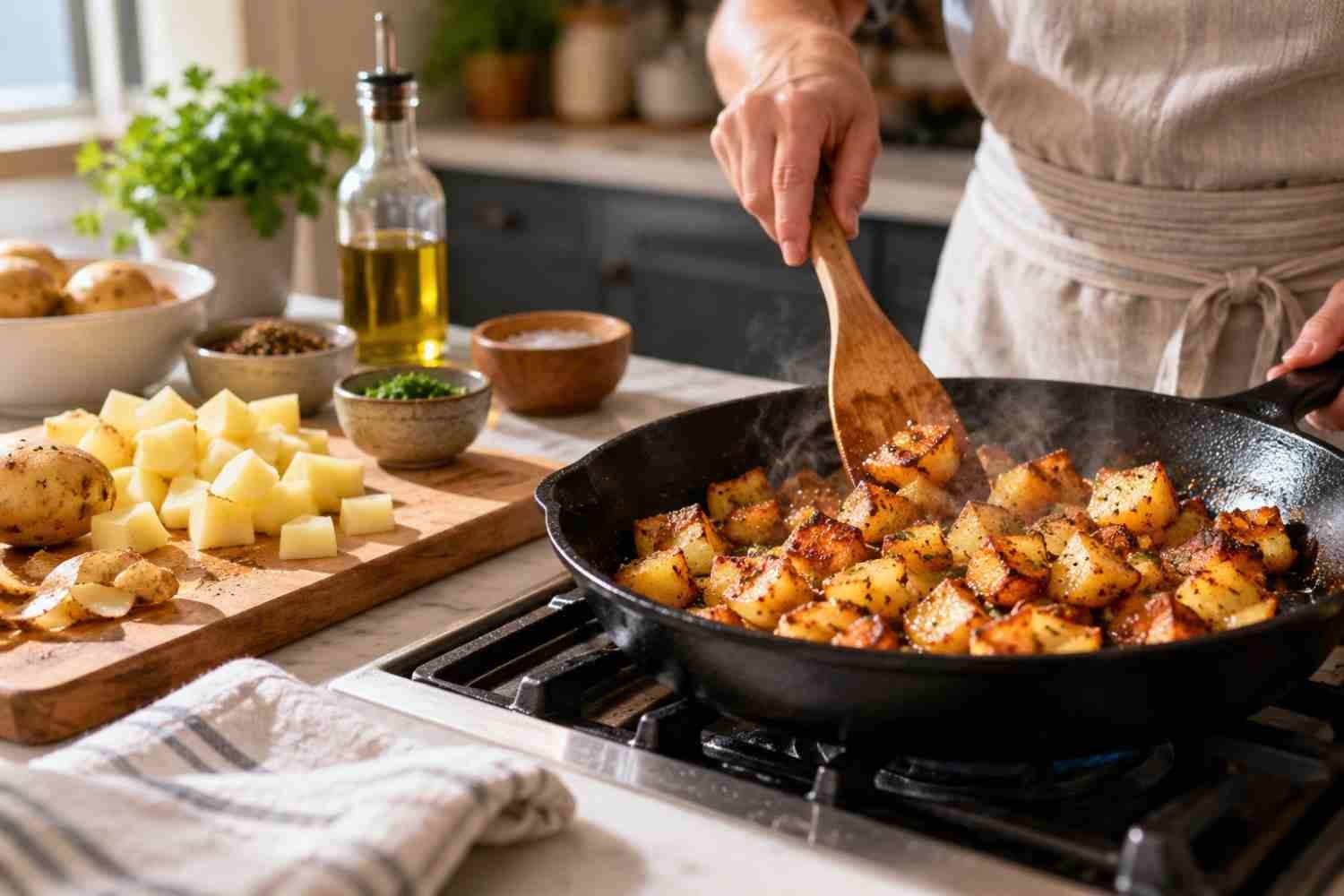
Parboiling is one of the easiest ways to get a tender center without burning the outside. Put the cubed potatoes into salted boiling water and cook them for about five to seven minutes. They should be partly tender around the edges but still firm enough to handle.
Drain them thoroughly and let excess moisture escape before frying. Wet potatoes steam in the skillet instead of building a crust. Pat them dry before frying.
Meanwhile, heat a large skillet over medium-high heat. Cast iron gives excellent browning, although a good nonstick pan can make the process easier. Add two to three tablespoons of olive oil, vegetable oil, or bacon fat. Bacon fat brings a distinctly old-school diner character, while neutral oil lets the seasonings stand out.
Give the Potatoes Room to Brown
Add the potatoes in a single layer. If they are packed tightly, moisture gets trapped between the pieces, and the potatoes soften instead of crisping. Use a larger pan or cook in batches when necessary.
This is also the moment to resist constant stirring. Let the first side cook undisturbed for roughly three to five minutes. Once a golden crust forms, turn the potatoes and continue cooking for about ten minutes, stirring occasionally rather than continuously.
The goal is not to make every cube perfectly brown. Some should be deeply crisp, some lightly golden, and a few softer around the edges. That uneven browning gives diner potatoes their character.
Build a Savory Seasoning Blend
A simple seasoning mix can deliver plenty of flavor without overpowering the potatoes. Start with paprika, garlic powder, onion powder, salt, and black pepper. Smoked paprika works when a subtle smoky note is welcome, but regular paprika keeps the flavor closer to a traditional breakfast plate.
Seasoning at the right time matters. Delicate spices can become bitter when exposed to intense skillet heat for too long, particularly when they land directly on a dry pan. Add the main spice mixture during the final stage of cooking, tossing gently so it coats the hot potatoes.
For more diner-style depth, diced yellow onion and green bell pepper can join the skillet near the end. They should soften and brown without becoming the dominant flavor.
Make the Breakfast Plate Feel Complete
These potatoes work best when they have something rich or creamy beside them. Fried or scrambled eggs are natural partners, while bacon and breakfast sausage add salt and savory fat. Toast, English muffins, or a simple biscuit can round out the plate without competing with the crisp potatoes.
They can also become part of brunch. Spoon the potatoes beneath fried eggs and avocado, fold them into a breakfast burrito, or serve them beside grilled tomatoes and sausage. For a broader meal, diner-style smash burger recipes with creative toppings can provide another hearty option later in the day.
Leftover potatoes reheat better in a skillet or air fryer than in a microwave. Give them a few minutes to regain their crisp edges.
Common Mistakes That Cost You Crispiness

The most common problem is overcrowding the pan. Even perfectly parboiled potatoes struggle to brown when piled together. Another issue is moving them too soon. A crust needs uninterrupted contact with the hot surface.
A few other details make a noticeable difference:
- Dry the potatoes thoroughly after boiling.
- Preheat the skillet before adding the fat and potatoes.
- Avoid adding cold, watery vegetables too early.
- Taste before serving and adjust salt after the potatoes finish cooking.
Bigger cubes need more time, while tiny cubes can become crisp before their centers soften. Consistent cuts make the process easier.
The same principle applies when adapting classic diner recipes updated for modern home kitchens. Traditional diner food often succeeds because the technique is straightforward, ingredients are familiar, and each component gets enough attention.
FAQs: Crispy Diner Breakfast Potatoes With Savory Seasoning and Golden Edges
1. What potatoes are best for crispy breakfast potatoes?
Russets create crisp surfaces, while Yukon Golds offer a richer, buttery interior. Both are excellent choices.
2. Should breakfast potatoes be boiled first?
Parboiling helps soften the centers before frying, reducing the chance of burnt outsides and undercooked interiors.
3. Why are my breakfast potatoes not crispy?
Excess moisture, a crowded skillet, low heat, or frequent stirring can prevent proper browning. Dry the potatoes and give them space.
4. Can I make these potatoes ahead?
Yes. Cook them until browned, cool them, then refrigerate. Reheat them in a skillet or air fryer to bring back the crisp edges.
Why Golden Edges Are Worth the Extra Minute
The best breakfast potatoes are not complicated, and that is part of their appeal. A few ordinary ingredients can create something that feels distinctly diner-like when the potatoes are cooked with enough space and patience. The crisp edges, fluffy centers, savory seasoning, and browned onions all work together without requiring an elaborate recipe. Even small adjustments, such as drying the potatoes better or waiting before flipping them, can noticeably improve the final plate.
That little extra patience is what turns simple potatoes into the part of breakfast everyone reaches for first.