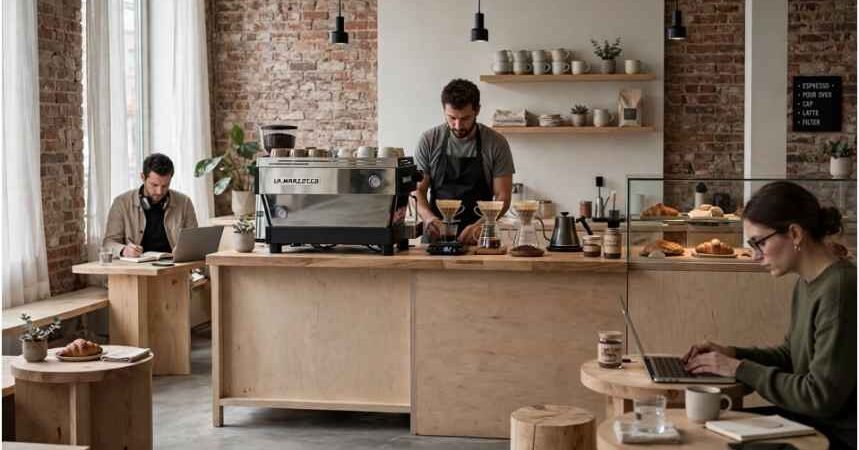
The primary difference between a coffee shop and a classic diner comes down to culinary priority, hospitality style, and floor mechanics. A coffee shop designs its entire operation around precision-extracted specialty beverages, minimalist counter service, and quiet dwell time. A classic diner functions as a high-output, full-service kitchen engineered around expansive menus, rapid table turnover, and hearty American comfort food.
Having spent years working behind third-wave espresso bars and sitting at greasy laminate counters across the United States, I have seen firsthand how these spaces serve completely different human needs.
The Core Contrast: Third-Wave Sanctuary vs. Working-Class Engine
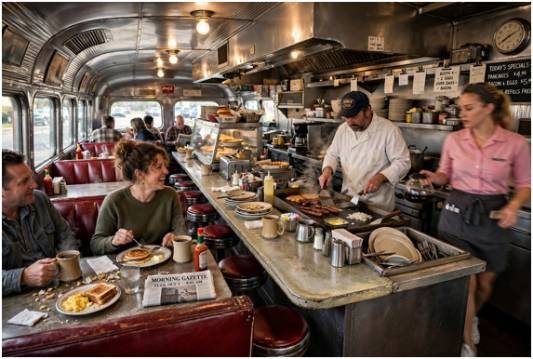
Step into a specialty coffee shop at 8:00 AM, and you encounter subdued acoustics, clean lines, and an intense focus on beverage craft. Step into an authentic diner at that exact same hour, and you hear the scrape of spatulas against a seasoned flat-top, the clatter of heavy ceramic mugs, and servers shouting tickets across the counter.
While both establishments serve caffeine and breakfast, they operate on opposing business philosophies. Modern specialty coffee shops descend directly from the third-wave coffee movement. They treat roasted beans like fine wine.
Classic diners evolved from late-nineteenth-century horse-drawn lunch wagons, eventually transforming into prefabricated stainless-steel dining cars built for quick, cheap, and filling meals, as documented by the Smithsonian Institution.
Where one prioritizes sensory restraint and intellectual solitude, the other provides unpretentious, high-calorie hospitality designed for everybody.
Coffee Philosophy: Precision Extraction vs. Bottomless Batch Brew
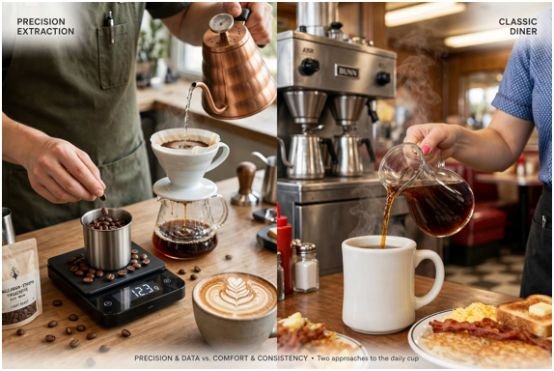
The beverage program marks the sharpest division between these two venues.
Single Origins, Scales, and Extraction Yields
In a specialty coffee shop, coffee is the main event. Baristas dial in grinders every morning to account for ambient humidity, barometric pressure, and bean degassing rates.
When you order an espresso or a pour-over, the barista doses roasted beans down to a tenth of a gram, monitors water temperature between 195°F and 205°F, and watches total contact time against guidelines established by the Specialty Coffee Association (SCA).
You pay five to eight dollars per cup because you buy single-origin terroir, complex acidity, and labor-intensive prep. Refills do not exist; each drink requires a distinct transaction.
The Boundless Glass Carafe
In a classic diner, coffee is a hot, dark utility. You do not ask for the elevation of the washed Ethiopian lot. You ask for a mug, and it arrives before you even open your menu.
Diner coffee is brewed by the gallon in commercial drip machines, kept hot on heated burner plates, and poured freely by servers pacing the floor with glass carafes. It is formulated to cut through heavy griddled bacon and maple syrup.
The coffee itself costs pennies to brew, and your mug comes with unlimited refills. You pay for the seat, the conversation, and the meal; the caffeine flows as an act of fundamental hospitality.
Culinary Scope and Kitchen Mechanics
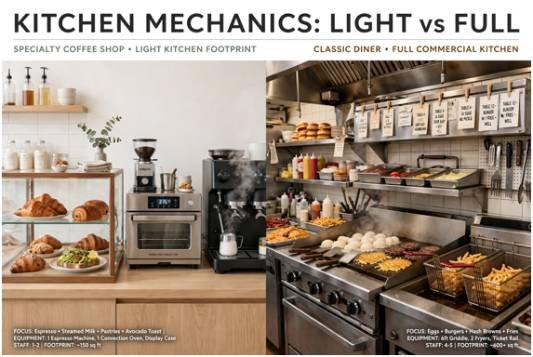
Look beyond the counter, and the back-of-house equipment reveals everything about what these establishments can actually feed you.
Display-Case Pastries and Small-Batch Toast
Coffee shops operate on light kitchen footprints. Most do not have commercial Type 1 exhaust hoods, grease traps, or gas ranges.
Their food menus reflect these mechanical limits:
- Pre-baked pastries, croissants, and scones sourced from local wholesale bakeries.
- Assembled avocado toasts or breakfast sandwiches warmed inside rapid-cook convection ovens.
- Grab-and-go chia puddings, yogurt parfaits, and pre-packaged snack boxes.
The culinary program exists to complement the coffee, soak up caffeine, and boost the average ticket size without slowing down the beverage queue.
The Flat-Top Griddle and Short-Order Line
A classic diner is a fully equipped commercial kitchen crammed into a narrow strip behind a stainless counter. Often operating as a greasy spoon restaurant, its heart and soul is the flat-top chrome griddle.
Diner menus run for pages, featuring all-day breakfast, triple-decker clubs, patty melts, crinkle-cut fries, and meatloaf platters. A skilled short-order cook works in plain sight, managing dozens of eggs, hash browns, and burger patties simultaneously. Orders move through a distinct rhythm shaped by common diner lingo, turning complex custom orders into immediate physical plates within six to eight minutes.
┌─────────────────────────────────────────────────────────────┐
│ KITCHEN & PRODUCT COMPARISON │
├──────────────────────────────┬──────────────────────────────┤
│ Specialty Coffee Shop │ Classic Diner │
├──────────────────────────────┼──────────────────────────────┤
│ Focus: Beverage Craft │ Focus: Full Comfort Meals │
│ Equipment: Espresso & Steam │ Equipment: Griddle & Fryers │
│ Food: Display-case pastries │ Food: Multi-page hot menus │
│ Pricing: High beverage cost │ Pricing: Low coffee, meal $$ │
└──────────────────────────────┴──────────────────────────────┘
Atmosphere, Spatial Architecture, and Social Function
The architectural layout dictates how you behave the moment you step across the threshold.
Acoustic Solitude and the Laptop Economy
Specialty coffee shops embrace Scandinavian minimalism, exposed brick, raw wood, and concrete floors. You order at a point-of-sale terminal, tap your card, pick up your drink from a wooden ledge, and search for an open seat.
The atmosphere leans contemplative. Small round tables, banquettes, and bar-height counters equipped with duplex electrical outlets encourage solitary stays. People work on laptops, study, read, or hold low-volume conversations. The music playlist leans toward indie folk, lo-fi beats, or ambient instrumental tracks designed not to break focus.
Communal Counter Culture and Vinyl Booths
A classic diner is an acoustic echo chamber of active human life. The spatial layout revolves around deep, upholstered vinyl booths and a long, continuous laminate counter equipped with fixed, spinning chrome stools.
Diners enforce direct eye contact. You are greeted at the door or directed to choose an open booth. Servers take your order table-side with pen and pad. At the counter, truck drivers sit next to college students, retirees, and off-duty police officers.
The soundscape combines clattering plates, spinning milkshake spindles, laughter, and chatter. It functions as an unpretentious civic gathering place where isolation is nearly impossible.
The Bottom Line Economics: Table Turns vs. Dwell Times
The fundamental difference between a coffee shop and a classic diner appears most starkly on the operator’s profit-and-loss sheet.
According to operational data tracked across the food service industry by the National Restaurant Association, prime costs—the sum of labor and raw ingredients—dictate completely different survival strategies for these two models.
┌────────────────────────────────────────────────────────────────┐
│ FINANCIAL OPERATING PROFILES │
├───────────────────────────────┬────────────────────────────────┤
│ Specialty Coffee Shop │ Classic Diner │
├───────────────────────────────┼────────────────────────────────┤
│ COGS: 15% – 25% (High Margin) │ COGS: 28% – 35% (Medium Margin)│
│ Average Ticket: $6 – $11 │ Average Ticket: $14 – $24 │
│ Dwell Time: 60 – 180 minutes │ Dwell Time: 30 – 45 minutes │
│ Service Model: Counter Service│ Service Model: Full Table Wait │
└───────────────────────────────┴────────────────────────────────┤
- The Coffee Shop Math: The product margin on a seven-dollar oat milk latte is exceptional—often exceeding 80%. However, the low average check size means a shop must process high transaction volumes during morning rushes to pay rent. The greatest economic threat to a coffee shop is the “table camper”—a patron who occupies valuable square footage for three hours on a single five-dollar drip coffee.
- The Diner Math: Diners carry higher food costs and substantial labor overhead, as they employ hosts, waitstaff, prep cooks, and dishwashers. To remain profitable on modest food margins, a diner relies on rapid table turns. A party must sit down, order, eat, settle the bill, and clear the booth within 35 to 45 minutes during peak breakfast and lunch windows.
Frequently Asked Questions
1. What is the main difference between a coffee shop and a classic diner?
A coffee shop focuses on handcrafted specialty coffee and counter service, whereas a diner is a full-service restaurant serving large comfort food meals.
2. Is coffee cheaper at a diner or a coffee shop?
Diner coffee is significantly cheaper, typically offering bottomless batch-brewed cups for a couple of dollars, while specialty coffee shops charge per individual beverage.
3. Can you sit and work on a laptop at a diner?
Working on a laptop during quiet afternoon hours is sometimes tolerated, but camping during busy breakfast or lunch shifts disrupts the diner’s required table turnover.
4. Do classic diners serve specialty espresso drinks?
Traditional diners rarely offer espresso drinks, relying instead on high-capacity commercial drip carafes, though some modern diners now feature basic espresso machines.
The Final Check: Pick Your Counter Wisely
Choose a specialty coffee shop when you want single-origin beans, a perfectly steamed flat white, and two uninterrupted hours to answer client emails. Choose a classic diner when you want real butter on a hot griddle, crisp hash browns served in five minutes, and a bottomless porcelain mug filled by a server who calls you “honey.” Both are American institutions, but they fulfill entirely different appetites.