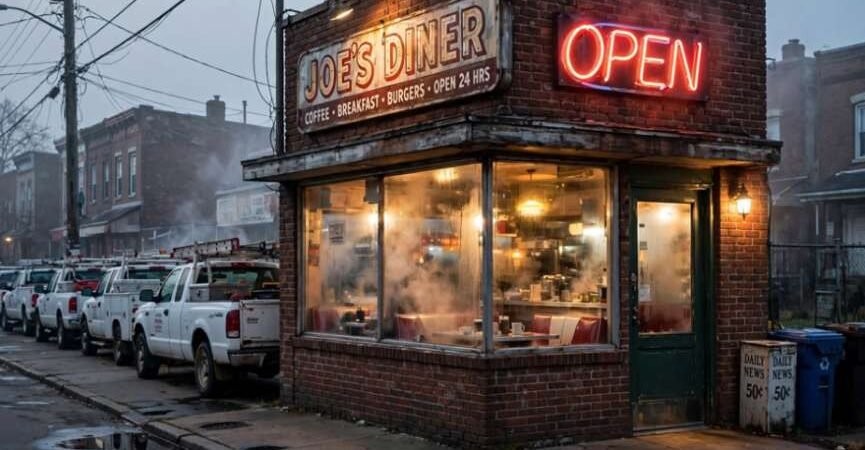
Slide onto a duct-taped vinyl stool at 6:00 AM, and the rhythm hits you immediately. Bacon snaps on seasoned rolled steel, black drip coffee fills thick ceramic mugs, and a short-order cook works magic with two metal spatulas. If you have ever wondered what is a greasy spoon restaurant, it is an independent, low-cost eatery specializing in hearty griddled comfort food, no-frills hospitality, and unpretentious neighborhood charm.
These small diners and roadside lunch counters prioritize substance over aesthetic perfection. They skip artisanal garnishes in favor of honest food, hot coffee, and welcoming regulars.
The Anatomy of a True Greasy Spoon
I spent years traveling interstate corridors for regional food writing, and genuine greasy spoons share unmistakable hallmarks across state lines. They are rarely designed by corporate committees. Instead, they reflect decades of hands-on utility.
The Flat-Top Grill: Where Flavor Actually Lives
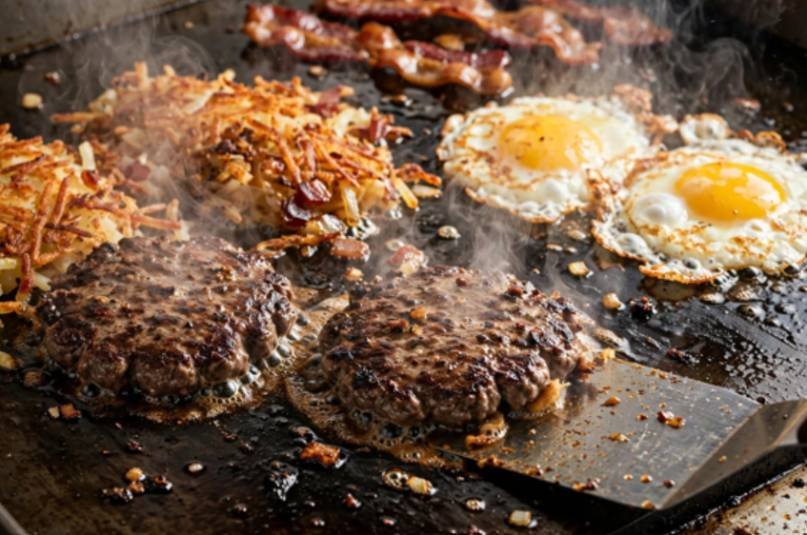
In a classic diner, the flat-top griddle stands front and center. Everything cooks on this shared surface: smash burgers, hash browns, griddled rye, and sunny-side eggs. Over decades of daily service, high-heat oil carbonizes onto the flat-top, creating a natural non-stick polymer glaze.
Line cooks scrape it constantly, yet the surface retains an indelible seasoning that infuses distinct savory depth into every order.
Counter Culture, Vinyl Booths, and the Open Kitchen
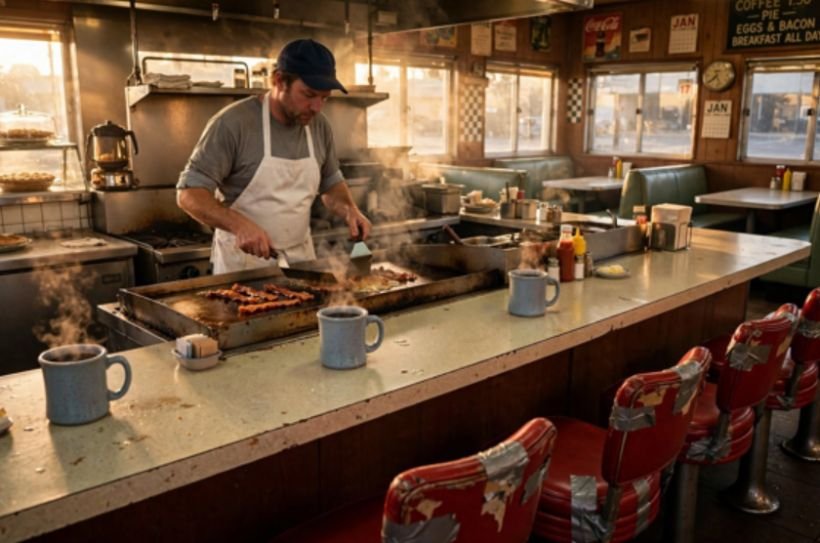
Seating is deliberate. You have a row of fixed swivel stools bolted along a laminate counter, bordered by cozy booths upholstered in heavy vinyl. The layout keeps the kitchen fully visible.
You see the tickets spin on the wheel, hear the spatula rhythm, and smell the crisping potatoes before your plate arrives. condiment caddies remain fixed to every table: yellow mustard, glass ketchup bottles, hot sauce, and salt shakers with grains of dry rice to absorb humidity.
This combination of familiar seating, casual interaction, and a welcoming neighborhood atmosphere is what makes a neighborhood restaurant a true third place.
The Origin Story: From Slander to Badge of Honor
The phrase did not start out as a compliment. According to historical records cataloged by the Oxford English Dictionary, references to “greasy spoons” date back to the late nineteenth century.
Why Cutlery Cleanliness Sparked the Name
During the Industrial Revolution, workers rushed into cheap city lunch wagons and roadside canteens between grueling factory shifts. Quick turnover and rudimentary dishwashing meant flatware frequently carried an oily residue from earlier fried meals. Patrons coined the term as a warning about questionable hygiene.
As the Library of Congress notes in its archives on American roadside dining, these humble dining carts gradually grew into permanent brick-and-mortar prefabricated diners manufactured by companies like Worcester and Jerry O’Mahony.
This evolution helped establish the classic American diner counter as a defining feature of these increasingly permanent neighborhood eateries.
By the mid-twentieth century, the term lost its bite. Blue-collar workers and midnight travelers embraced it as a testament to hearty, affordable fare that fueled everyday life.
The Flavor Science: Why Nothing Tastes Like Griddle Fare
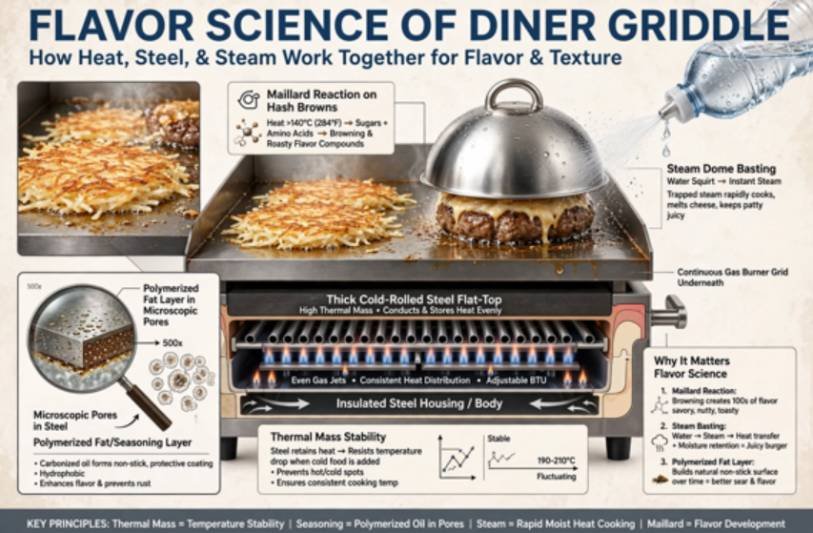
People often ask why home cooks struggle to recreate diner-style hash browns or griddle cakes. The answer lies in heat retention and seasoned steel.
The Seasoned Steel Advantage
Standard home skillets are lightweight aluminum, ceramic, or cast iron that cools rapidly when cold ingredients hit the surface. Greasy spoon flat-tops consist of thick cold-rolled steel plates heated by continuous gas burner grids underneath.
- Thermal Mass Stability: Cold potatoes or raw ground beef do not drop the plate’s surface temperature. The moisture flashes off instantly as steam, triggering an aggressive Maillard reaction instead of boiling the food in its own juices.
- Polymerized Fat Transfer: Decades of bacon fat, clarified butter, and vegetable shortening bond to microscopic pores in the metal plate. This thin seasoning layer delivers subtle umami undertones impossible to replicate with a pristine non-stick pan.
- The Steam Lid Technique: When melting sharp cheddar over a patty or cooking eggs over easy, cooks squirt tap water directly beside the food and drop a stainless steel dome over it. The trapped steam flash-cooks the tops while the bottom maintains a crisp crust.
Greasy Spoon vs. Modern Fast-Casual: What Sets Them Apart
The modern dining landscape features plenty of upscale diner concepts and fast-food chains, but authentic greasy spoons occupy a distinct category.
| Feature | Authentic Greasy Spoon | Fast-Casual Chain | Modern Trendy “Neo-Diner” |
| Ownership | Mom-and-pop, single location | Corporate franchise | Hospitality restaurant group |
| Grill Setup | Open seasoned steel flat-top | Automated conveyor / clamshell | Open kitchen, high-end plancha |
| Coffee Service | Bottomless drip in ceramic mug | Espresso machine, paper cups | Single-origin pour-overs ($6+) |
| Average Ticket | $7 to $12 | $14 to $19 | $20 to $30 |
| Speed | 4 to 8 minutes from ticket drop | 5 to 10 minutes | 15 to 25 minutes |
Chain restaurants rely on frozen portion packs and strict corporate manuals. Greasy spoons rely on personal touch. When you pull up a chair, the cook makes your food to order right in front of you.
Slang, Secrets, and Surviving Your First Counter Order
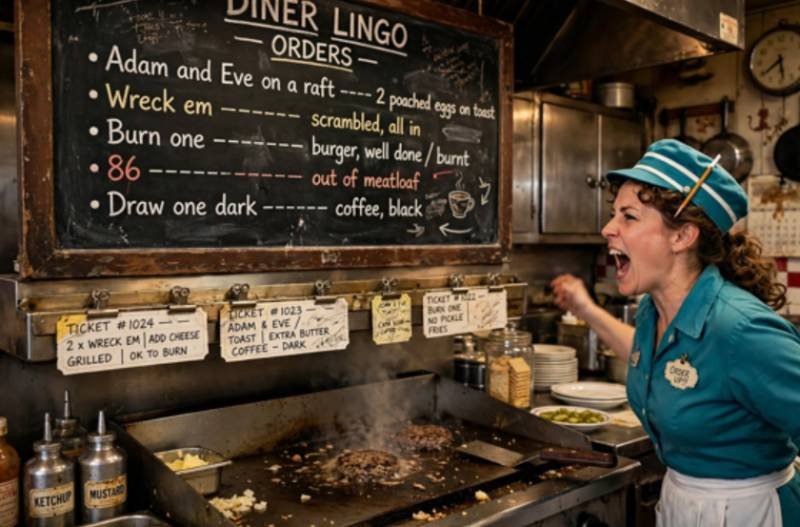
Early twentieth-century lunch counters operated at furious speed. Waitstaff shouted orders down the line using colorful shorthand to cut through kitchen noise. Familiarity with common diner lingo enriches the experience.
- “Adam and Eve on a raft”: Two poached eggs on toast.
- “Wreck ’em”: Scramble the eggs instead of serving them whole.
- “Burn one”: Drop a burger patty onto the griddle.
- “Burn the British”: Toast an English muffin.
- “Draw one, dark”: Pour a cup of black coffee without cream.
- “Eighty-Six (86)”: The item is completely out of stock.
These phrases represent lasting dining traditions celebrating working-class camaraderie, as detailed by cultural historians at Smithsonian Magazine. While you do not need to speak shorthand to order your breakfast today, hearing a seasoned server drop these phrases connects you directly to a century of counter craft.
Park Your Boots: How to Spot the Real Deal
Finding an authentic spot requires looking past polished marketing and curated reviews. Watch for these three reliable green flags:
- A fleet of utility pickup trucks parked outside at 6:30 AM. Tradespeople and local workers know where breakfast is served fast, hot, and cheap.
- Menus without laminated glossy pictures. A true greasy spoon relies on simple paper place mats, dry-erase daily specials boards, or slotted plastic menu boards mounted high on the wall.
- Pots of coffee that never stop brewing. If the server approaches with a glass carafe to top off your mug before you even open the menu, you have found the right place.
Leave your diet restrictions at the door, order two eggs over easy with crispy hash browns, and savor an irreplaceable American original.
Frequently Asked Questions
1. Is a greasy spoon restaurant dirty?
No, the phrase is a historical nickname from the 1800s, and modern greasy spoons must pass the same municipal public health inspections as any other restaurant.
2. What is the British equivalent of an American greasy spoon?
In the United Kingdom, they are called “caffs” or transport cafes, famous for serving strong builder’s tea and traditional full English breakfasts.
3. Why don’t most greasy spoon restaurants serve alcohol?
Most greasy spoons focus on early morning through afternoon meal service, making expensive liquor licenses economically impractical for their low-margin business model.
4. What food is most popular at a greasy spoon?
The most popular dishes are griddled breakfast staples like eggs, bacon, crispy hash browns, buttermilk pancakes, and classic smash burgers.