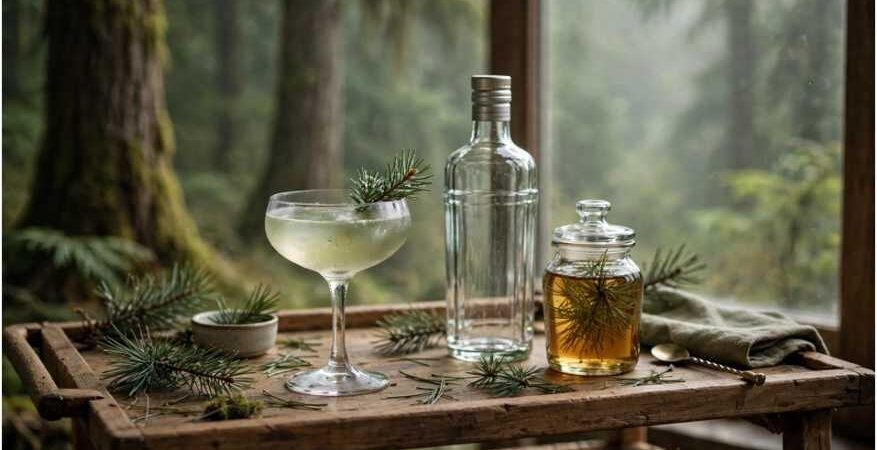
I spent years treating simple syrup as an afterthought—just granulated sugar melted into water to tame acid. That changed the afternoon I brought a handful of fresh Eastern white pine needles into my kitchen, bruised them with a muddler, and folded them into warm sugar. The result transformed my bar cart. If you enjoy bright, resinous, forest-forward drinks, exploring pine syrup cocktail recipes gin drinks will change how you approach botanical mixology.
Combining conifer syrups with juniper-forward spirits creates an aromatic bridge that standard bar syrups cannot replicate.
[ Juniperus communis ] [ Pinus strobus ]
(Gin Botanicals) (Pine Needles)
\ /
\– [ Alpha- & Beta-Pinene ] —-/
|
[ Balanced Citrus Acid ]
|
[ Cohesive Forest Profile ]
The Chemistry of Pine and Gin: Why It Works
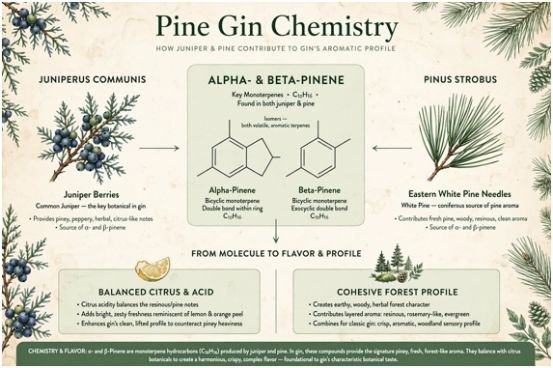
The pairing succeeds because it relies on identical organic compounds. Both juniper berries (Juniperus communis) and edible pine needles get their clean, evergreen scent from monoterpenes—specifically alpha-pinene and beta-pinene.
Research archived by the National Center for Biotechnology Information highlights pinene as one of the most widespread aromatic compounds in conifer species, responsible for that crisp, walk-in-the-woods aroma.
When you pour London Dry gin over ice, those volatile top notes hit your nose immediately. Adding standard simple syrup sweetens the drink, but it dilutes the spirit’s aromatic punch.
Pine syrup reinforces the base botanicals of the gin rather than masking them. The sweetness carries the heavier, resinous oils across your palate, while lime or lemon juice slices through the woodsy finish so the drink never tastes like household disinfectant.
Sourcing Needles: Safe Foraging and What to Avoid
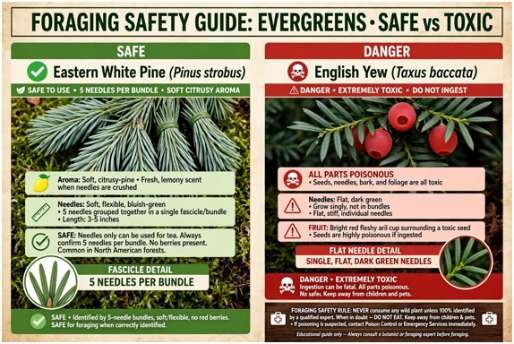
Before lighting your burner, you must properly identify your evergreen source. You cannot harvest random branches from an ornamental bush in your front yard.
EVERGREEN IDENTIFICATION
|
Does it grow needles in clusters (fascicles)?
/ \
YES NO
/ \
TRUE PINE (Pinus) Flat single needles?
2, 3, or 5 per bundle |
Check needle count RED FLESHY CUPS?
5 = White Pine (Ideal) |
[ DANGER: YEW ]
EXTREMELY TOXIC!
Edible Pines vs. Toxic Look-Alikes
True pines belong to the genus Pinus, documented extensively by the USDA Forest Service. True pines always carry their needles in small papery sheaths called fascicles, grouped in bundles of two, three, or five.
- Eastern White Pine (Pinus strobus): The gold standard for syrups. It grows needles in soft bundles of five. It delivers a soft, citrusy, approachable sweetness without bitter astringency.
- Spruce (Picea) and Fir (Abies): While not true pines, their needles grow singly on branches and are safe, highly aromatic alternatives. Fir yields tangerine-like citrus oils, while spruce tips deliver clean, bright acidity.
- The Fatal Danger: English Yew (Taxus baccata): Never consume yew. Yew features flat, dark-green needles growing singly without sheaths and produces soft red berries with exposed center seeds. Every part of this plant contains deadly taxine alkaloids that cause rapid cardiac failure.
Harvest your needles at least 50 feet away from busy roads to avoid vehicle exhaust deposits. Never strip the terminal leader branch of a young sapling; clip modest side branches to allow healthy growth.
Two Ways to Make Pine Syrup: Simmered vs. Cold-Fermented Cheong
Your syrup extraction technique dictates how your finished drink balances in the shaker.
+——————+—————————–+——————————-+
| Attribute | 24-Hour Heated Syrup | Cold-Fermented Cheong |
+——————+—————————–+——————————-+
| Extraction Style | 1:1 simple syrup simmer | 1:1 dry weight, zero water |
| Prep Duration | 24 hours | 30 to 60 days |
| Flavor Notes | Warm resin, mellow wood | Sharp citrus, tangy, intense |
| Viscosity | Light bar syrup (50 Brix) | Thick, glossy nectar (65 Brix)|
| Cold Shelf Life | 3 to 4 weeks | 6 to 12 months |
+——————+—————————–+——————————-+
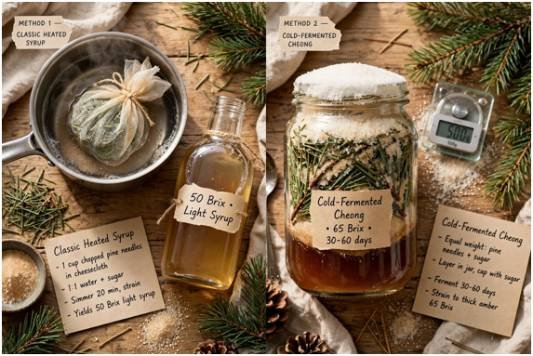
Method 1: The Classic 24-Hour Heated Simple Syrup
This quick infusion handles high-acid sours effortlessly:
- Bring 1.5 cups of filtered water and 1.5 cups of white sugar to a gentle simmer until dissolved.
- Cut the heat and dump in 1 packed cup of cleaned, finely chopped Eastern white pine needles.
- Cover the pot with a tight lid. Let it steep undisturbed at room temperature for 24 hours.
- Strain out the solids through a fine-mesh sieve lined with cheesecloth, then bottle and refrigerate.
Method 2: Korean Solnip-Cheong (Zero-Water Cold Maceration)
For dense viscosity and raw, unheated citrus brightness, make solnip-cheong.
Weigh cleaned, dry needles on a gram scale. Toss them with an equal weight of white sugar. Pack the mixture into a clean glass jar, top with an extra half-inch sugar cap to block air, and seal the lid.
Over 30 to 60 days at cool room temperature, the sugar draws the intracellular moisture and volatile terpenes out of the needles through pure osmosis. The resulting syrup carries a deep amber hue, honeyed mouthfeel, and an electric citrus snap that outlasts any boiled recipe.
4 Tested Pine Syrup Cocktail Recipes with Gin
These four balanced recipes showcase how pine syrup works across diverse cocktail families.
1. The Alpine Pine Needle Gimlet
This clean build remains my household favorite. The sharp lime edge cuts directly through the syrup’s botanical weight.
[ 60 ml Gin ] + [ 20 ml Fresh Lime ] + [ 30 ml Pine Syrup ]
|
Shake hard with ice for 12 seconds
|
Double strain into a chilled coupe glass
- 60 ml (2 oz) London Dry Gin (such as Tanqueray or Ford’s)
- 30 ml (1 oz) Pine simple syrup
- 20 ml (0.75 oz) Freshly strained lime juice
- Garnish: Small pine needle sprig or fresh lime wheel
Add all ingredients to an ice-filled shaker tin. Shake vigorously for 12 seconds until the exterior walls frost over. Double strain into a chilled coupe glass. The aromatic pine vapors greet you before the first sip touches your tongue.
2. Foraged Pine & Tonic
Highball drinks require room for effervescence. Use a dry, quinine-forward tonic to avoid cloying sweetness.
- 50 ml (1.75 oz) Citrus-forward gin (like The Botanist or Hendrick’s)
- 15 ml (0.5 oz) Pine syrup
- 120 ml (4 oz) Quality Indian tonic water
- Garnish: Bruised pine sprig and cracked juniper berries
Fill a highball glass with dense ice spears. Pour the gin and pine syrup down the inside wall, then stir gently with a bar spoon to combine. Top with chilled tonic water, lifting the ice once with your spoon to integrate the layers without losing carbonation.
3. The Winter Conifer Negroni
Bitter gentian and bitter orange pair seamlessly with pine resin. If you enjoy bold, winter-weight drinks like a smoked cedar plank cocktail, this stirred aperitivo hits those same rich, aromatic notes.
- 30 ml (1 oz) Navy strength or juniper-heavy gin
- 30 ml (1 oz) Campari
- 20 ml (0.75 oz) Sweet vermouth (like Carpano Antica)
- 10 ml (0.33 oz) Cold-fermented pine cheong
- Garnish: Expressed orange peel
Combine spirits, vermouth, and pine cheong in a mixing glass packed with cracked ice. Stir for 30 revolutions. Strain over a single large, clear ice cube into a double rocks glass. Express the orange oils over the rim to tie the pine notes to the bitter citrus peel.
4. High-Altitude Pine Gin Fizz
The egg white creates an airy, meringue-like foam cap that traps delicate pinene aromas right at the rim of your glass.
- 50 ml (1.75 oz) Gin
- 25 ml (0.85 oz) Fresh lemon juice
- 25 ml (0.85 oz) Pine simple syrup
- 1 Fresh egg white (or 25 ml aquafaba)
- 45 ml (1.5 oz) Club soda
Combine gin, lemon juice, pine syrup, and egg white in a dry shaker without ice. Shake hard for 10 seconds to emulsify the proteins. Open the tin, fill with cubed ice, and shake hard a second time for 15 seconds.
Pour 45 ml of club soda into the bottom of an un-iced Collins glass. Strain the shaken cocktail slowly over the soda. The foam cap will rise cleanly above the rim. In autumn, I often swap the soda for a splash of dry apple cider to bring orchard fruit notes into the mix.
Frequently Asked Questions About Pine Cocktails
1. Can you use any evergreen tree needles to make cocktail syrup?
No, never use yew trees or Norfolk Island pine because they contain dangerous toxins.
2. How long does homemade pine simple syrup last in the fridge?
Heated pine simple syrup stays fresh for 3 to 4 weeks when stored in an airtight glass container.
3. Does boiling pine needles ruin their aromatic flavor?
Yes, high boiling temperatures destroy fragile citrus terpenes, which is why steeping off the heat works best.
4. What gin style pairs best with pine needle syrup?
Traditional juniper-forward London Dry gins provide the strongest chemical and flavor affinity with pine.
Ditch the Store Syrups and Take Your Bar Outside
Stop settling for artificial melon cordials or flat, uninspired bar mixers. A quick afternoon walk with a clean pair of kitchen shears can upgrade your entire home cocktail repertoire. Mix up a batch of Eastern white pine syrup this weekend, break out your favorite shaker tin, and pour a drink that tastes like a clean morning in an old-growth forest.