
Long before American diners turned the “lumberjack breakfast” into a mountain of eggs, bacon, sausage, hash browns, and pancakes, men in remote logging camps were sitting down to a very different kind of meal. When I looked into what lumberjacks eat for breakfast, I found a food culture built around survival, calories, storage, and speed rather than presentation.
Real logging-camp tables could hold baked beans, salt pork, biscuits, flapjacks, oatmeal, fried potatoes, doughnuts, molasses cookies, pie, and intensely strong tea or coffee. The exact menu depended on whether the crew worked in Maine, Minnesota, Michigan, Wisconsin, or the Pacific Northwest, but breakfast had one purpose: fuel men performing exhausting physical labor in freezing conditions.
What Was a Real Lumberjack Breakfast Like?
A historic lumberjack breakfast was large because logging demanded extraordinary amounts of energy.
A federal summary of research conducted on Maine lumbermen described their diet as heavy in baked beans, bread, cakes, vegetables, fruit, and varying amounts of meat. Researchers connected the enormous quantities consumed with severe outdoor labor and exposure to cold and wet conditions.
The famous 1902 Maine dietary research is especially revealing. Later historical analyses of the study estimate that the lumbermen consumed roughly 6,000 to 8,000 calories per day, with baked beans accounting for a significant share of both calories and protein. Individual consumption could reach roughly one to one-and-a-half pounds of beans daily.
That makes today’s oversized diner breakfast seem less exaggerated than it first appears, even if the ingredients have changed.
Why Did Lumberjacks Eat So Many Baked Beans?
Beans were one of the defining foods of American lumber camps, particularly in Maine and other northeastern operations.
Bean-hole beans could cook slowly underground overnight. A camp helper heated a pit, prepared soaked beans with ingredients such as salt pork, onions, and molasses, buried the covered pot among hot coals, and dug it up the following morning.
The Maine State Museum describes bean-hole beans as a logging-camp staple, while Minnesota historical accounts say pork and beans sometimes appeared as often as three times a day.
For workers, beans were almost ideal. They stored easily, fed large crews cheaply, and delivered substantial carbohydrates and protein.
The emphasis on filling, practical foods also connects with high fiber breakfast ideas without protein powder, which can use naturally fiber-rich ingredients to create satisfying meals without relying on supplements.
Did Lumberjacks Really Eat Pancakes and Flapjacks?
They certainly did, although pancakes were only one part of the menu.
Historical logging records describe buckwheat cakes, hotcakes, and flapjacks cooked directly on large ranges that acted like giant griddles. Forest History Society records indicate that turn-of-the-century Pacific Northwest loggers might begin the day with combinations of flapjacks, eggs, bacon, fried pork, hash, potatoes, oatmeal, fruit, doughnuts, and biscuits.
In some camps, cooks maintained sourdough starters for pancakes and biscuits. Molasses or blackstrap offered a cheap, calorie-heavy topping. Johnnycakes and fried breads also fit naturally into a logging diet because flour and meal could be transported into isolated camps more reliably than delicate fresh foods.
So when people ask what did lumberjacks eat for breakfast, pancakes deserve a place in the answer—but not the entire spotlight.
Were Bacon and Eggs Part of a Lumberjack Breakfast?
Yes, depending on the period and camp.
Salt pork was especially practical because curing made meat easier to store before modern refrigeration. Fried side meat, pork sausages, bacon, ham, and other preserved proteins appeared in various logging-camp accounts.
Fresh meat was not completely absent, either. Some larger camps obtained fresh beef, pork, sausages, eggs, and even milk, demonstrating why it is misleading to imagine one universal logging-camp menu.
Fish also appeared. Historical Maine menus included salt fish, cod, mackerel, and other preserved or fresh varieties.
Why Did Lumberjacks Eat Doughnuts, Cookies, and Pie for Breakfast?
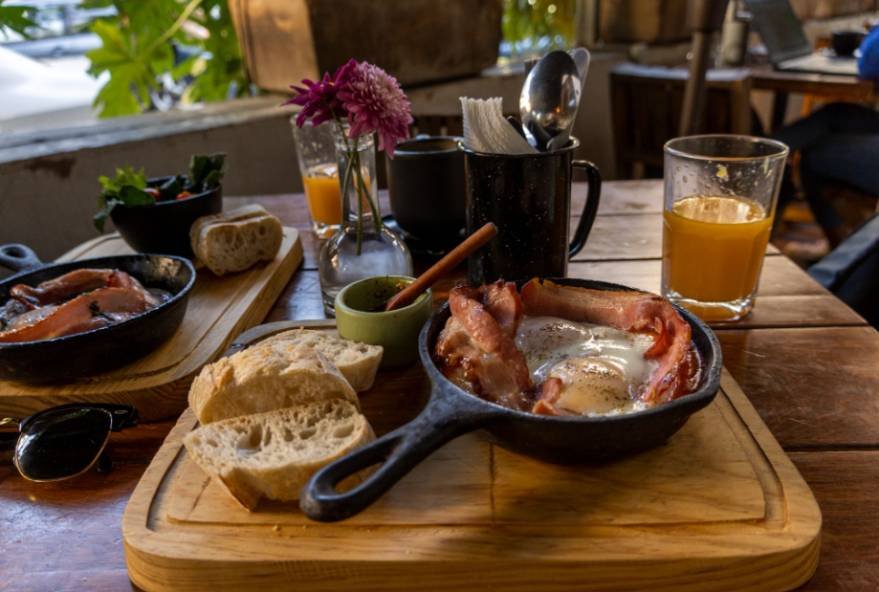
One of the most surprising things I discovered is how much dessert-like food appeared in camp meals.
Maine records mention doughnuts, cookies, mince pies, baked beans, yeast bread, meat or fish hash, and other substantial foods. Camp menus elsewhere included dried-fruit pies, raisin pie, apple pie, and even vinegar pie.
These foods made practical sense. Doughnuts, cookies, and pies supplied concentrated calories, while dried fruit and pantry ingredients survived better than many fresh foods in remote winter camps.
Camp cooks were not trying to create a modern balanced breakfast plate. They were trying to keep physically exhausted workers fed.
What Did Lumberjacks Drink Before Going to Work?
Tea dominated some early camps. Forest History Society accounts describe strong black tea accompanying the comparatively simple New England and Great Lakes combination of salt pork, beans, bread, and molasses. As logging expanded westward and camp provisioning improved, coffee became increasingly prominent.
Some cooks started work before dawn simply to prepare breakfast and grind enough coffee for the crew. One Michigan lumber company history describes kitchen work beginning around 3:00 a.m., with fried potatoes, beans, pancakes, biscuits, meat, coffee, and molasses among the breakfast possibilities.
Did Lumberjacks Really Eat Breakfast in Total Silence?
This strange-sounding rule has a genuine historical basis, but it wasn’t necessarily followed in every American camp.
Minnesota accounts say many cooks prohibited talking during meals, and historical Adirondack sources document dining halls where signs specifically banned conversation.
The reason was practical. Dozens of hungry men needed to eat quickly and get into the woods. Silence reduced delays and disagreements.
Some reconstructed Wisconsin lumber-camp materials describe workers getting only about 15 minutes to eat, while other historical accounts report similarly short meals. Breakfast might begin near daybreak, although exact starting times varied by camp and season rather than universally occurring at 4:00 a.m.
How Is a Real Lumberjack Breakfast Different From Today’s Version?
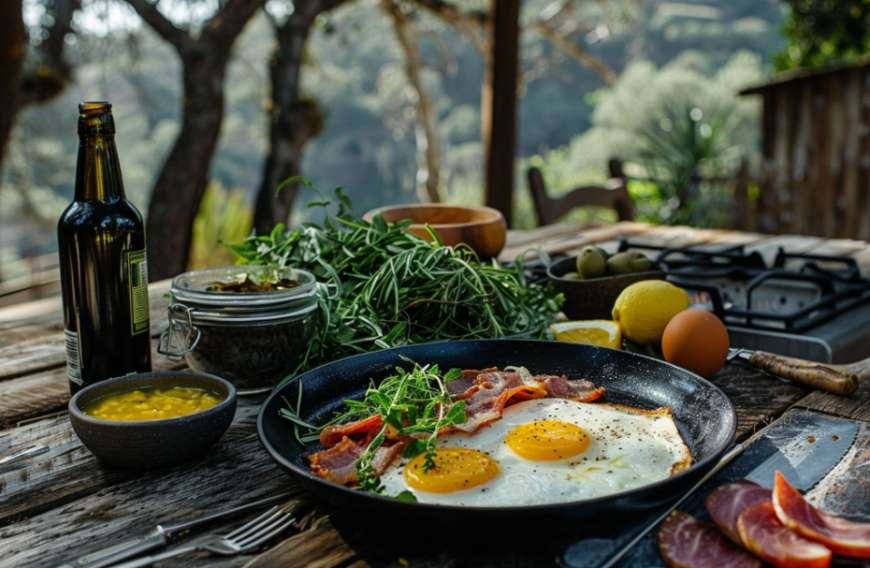
Today’s American lumberjack special usually combines pancakes, eggs, bacon, sausage, toast, and fried potatoes on one oversized plate.
The historical version was less standardized.
A Maine crew could depend heavily on bean-hole beans, biscuits, molasses, pork, and tea. A Great Lakes camp might serve pork and beans, potatoes, meat, or buckwheat cakes. By the time large Pacific Northwest companies operated better-supplied camps, workers could encounter eggs, bacon, oatmeal, fruit, doughnuts, and a considerably wider variety of food.
That regional evolution is what makes logging-camp food more interesting than the modern stereotype.
The hearty nature of these meals also reflects the enduring appeal of why mashed potatoes are a comfort food staple, particularly when familiar, filling side dishes become associated with warmth and satisfaction.
Modern adaptations can also broaden the traditional plate with healthy breakfast ideas with whole grains, incorporating ingredients such as oats, whole-wheat breads, barley, and other nutrient-rich grains into a more contemporary morning meal.
Frequently Asked Questions
1. How many calories did a lumberjack eat per day?
Historical research on heavily working lumbermen indicates that daily intake could reach roughly 6,000 to 8,000 calories under particularly demanding conditions. The amount varied with workload, climate, individual size, and camp provisions.
2. Did lumberjacks eat baked beans every day?
In some Maine logging camps, beans were consumed remarkably frequently. Historical research and museum records identify baked beans, including bean-hole beans, as major staples.
3. Why did lumberjacks eat such heavy breakfasts?
Logging involved hours of cutting, hauling, lifting, and moving through cold forests. High-calorie foods containing carbohydrates, fat, and protein helped workers maintain energy.
4. What was the most common lumberjack breakfast?
There was no single national menu. If I had to summarize what lumberjacks eat for breakfast across American logging regions, I would include beans, flapjacks or other breads, preserved pork, potatoes, oatmeal, biscuits, baked goods, and tea or coffee.
A Breakfast Built for the Woods
The real lumberjack breakfast was not created as a restaurant gimmick. It developed because logging crews needed inexpensive, durable, calorie-dense food that cooks could prepare in enormous quantities.
What fascinates me most is the variety. Bean-hole beans could share a table with salt pork and molasses in Maine, while later western camps might offer flapjacks, eggs, bacon, potatoes, oatmeal, fruit, biscuits, and doughnuts.
Modern diners preserved the idea of the enormous lumberjack meal, but the historical story is richer: it is a distinctly American tale of regional ingredients, demanding labor, creative camp cooks, and men eating enough before sunrise to face another punishing day among the trees.