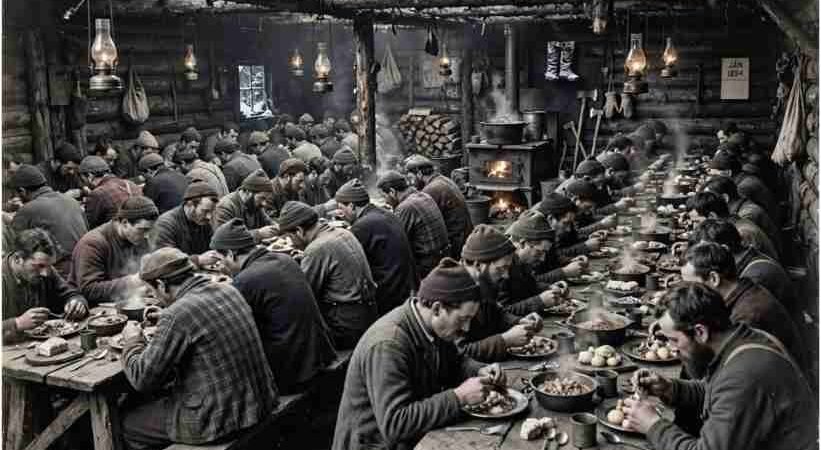
Walking into an authentic reproduction of a timber mess hall in northern Maine years ago, the first detail that struck me was not the smell of cured bacon or woodsmoke. It was the crushing, institutional quiet preserved in the archival journals. Communal dining traditions in historic logging camps were never designed around cozy camaraderie or frontier fellowship.
They operated as hyper-engineered, high-volume caloric refueling stations where silence kept the peace, efficiency ruled the benches, and food determined whether a timber company survived the winter cut.
Stepping Into the Cook Shanty: Silence as an Industrial Weapon
The cookhouse, or cook shanty, was always the first permanent building raised when establishing a winter timber claim. It had to be. Loggers could sleep in crude bunks stuffed with fir boughs, but they would mutiny overnight if the kitchen failed. When the crew stepped inside, a strict social contract took over.
The 20-Minute Fueling Window
The most famous custom across 19th-century timber country was the rule of absolute silence. Diners sat elbow-to-elbow along rough pine trestle tables, yet no one spoke. The room echoed only with the clatter of tin plates, iron utensils, and the heavy breathing of hungry men.
Camp bosses enforced a rigid 15- to 20-minute eating limit. Idle conversation slowed down the chewing process. In winter sub-zero temperatures, every minute spent chatting at the table was a minute where wood-fired stoves burned fuel needlessly and daylight evaporated.
Much like later silver dining car restaurants that optimized counter turnover during urban rushes, the logging mess room was engineered for maximum throughput. Men shoveled food, wiped their mouths on their sleeves, and vacated the benches for the next shift.
Eliminating Camp Frictions Before They Began
The silence rule served an urgent social purpose. Logging crews brought together French-Canadians, Finns, Scots-Irish settlers, and native-born Americans.
Squeezing sixty to a hundred exhausted, overworked men into a steamy shanty invited immediate cultural clashes, political arguments, and barroom-style brawls.
Prohibiting speech in the lumber camp mess hall removed disputes entirely. At the tables, everyone was equal, everyone was silent, and everyone focused exclusively on fuel.
The 8,000-Calorie Engine: What Kept Lumberjacks Moving
A landmark 1904 study published by the United States Department of Agriculture titled Studies of the Food of Maine Lumbermen (based on 1902 University of Maine field measurements) revealed astonishing numbers.
The researchers discovered that winter lumberjacks routinely burned between 6,000 and 8,000 calories every single day while swinging axes and dragging crosscut saws through frozen timber.
Bean Holes and Sourdough Culture
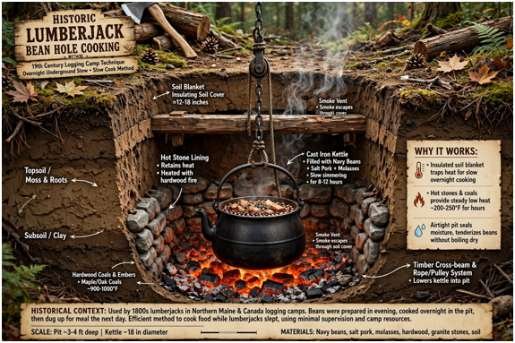
To supply that energy, camp tables groaned under enormous quantities of fat and starch. The backbone of logging cuisine was the bean-hole bean. Cooks dug deep pits into the earth, lined them with hot stones and hardwood coals, and lowered massive iron kettles filled with navy beans, salt pork, and blackstrap molasses into the ground. The kettles simmered underground for 18 to 24 hours under a blanket of soil.
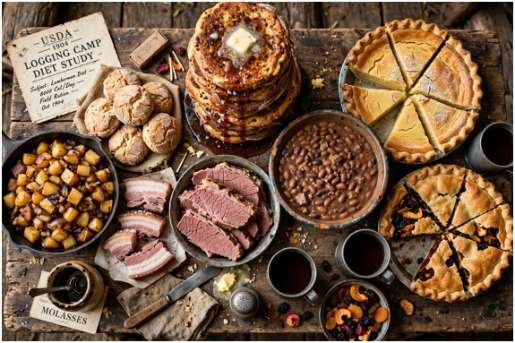
A single lumberjack routinely consumed over a pound of these rich, slow-simmered beans daily. Alongside the bean kettles stood tall stacks of sourdough flapjacks and sourdough biscuits, mixed from starters tended through bitter winters with obsessive care.
| Staple Category | Historic Camp Ingredients | Nutritional Purpose |
| Sustained Starches | Sourdough flapjacks, saleratus biscuits, fried potatoes | Slow-burning complex carbohydrates |
| Fats & Proteins | Salt pork, corned beef, subterranean baked beans | Calorie density and muscle recovery |
| Metabolic Boosters | Dried fruit pies, vinegar pie, blackstrap molasses | Fast glycogen restoration in sub-zero cold |
| Hot Fluids | Strong black tea, heavily sweetened boiled coffee | Core temperature defense and caffeine stimulant |
Vinegar Pies and Dessert for Breakfast
Pies were not saved for evening treats. Camp cooks baked dozens of dense pies every afternoon and served them starting at 5:00 AM.
In the depth of winter when fresh apples dried up, cooks crafted vinegar pie—a thick custard made of vinegar, eggs, sugar, and flour that mimicked lemon curd.
Slices of sugar-laden pie provided immediate glucose spikes that helped men endure the bone-chilling trek from camp to the timber stands before dawn.
Cookhouse Tyranny: How the Bull Cook Controlled Camp Labor
The head cook was almost always the highest-paid employee in a logging camp, frequently pulling a higher wage than the woods foreman. He carried absolute jurisdiction over his kitchen and dining tables.
No foreman dared override a cook’s rules. If a lumberjack violated table etiquette—by speaking loudly, showing up late, or criticizing the rations—the cook could throw him out of the shanty. A logger without access to the table could not work, making the cook’s word effectively a dismissal from camp.
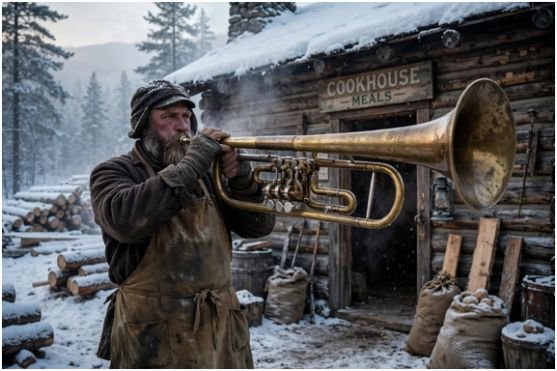
Every morning and evening, the kitchen staff sounded the “Gabriel Horn”—a massive brass trumpet often four to six feet long. Its blast echoed across the valleys, summoning woodsmen back to camp. When the Gabriel Horn sounded, men dropped their tools immediately. Missing the opening bell meant missing your seat.
Preserving the Timber Table: From Shanty to Family Style
As mechanized chainsaws and skidders replaced hand labor following World War II, temporary logging camps dissolved. Yet remnants of this food culture remain accessible. The Samoa Cookhouse in Samoa, California, founded in 1893 by the Vance Lumber Company, represents the last operational lumber camp cookhouse in the American West.
Visiting these surviving kitchens reveals how camp dining evolved into family-style service. While patrons no longer face expulsion for speaking across the table, the giant platters of smoked meats, potatoes, scratch biscuits, and house-made pies continue to celebrate the industrial fuel that cleared the continent.
Frequently Asked Questions About Logging Camp Foodways
1. Why was talking banned in logging camp dining halls?
Silence sped up meal turnover and prevented violent fistfights among exhausted, diverse crews.
2. How many calories did historic lumberjacks eat per day?
Active lumberjacks consumed between 6,000 and 8,000 calories daily to survive freezing conditions.
3. What was a Gabriel Horn in a logging camp?
It was a long brass horn blown by cooks to summon timber crews from the woods for meals.
4. What is a traditional lumberjack bean hole?
It is an underground pit lined with hot coals where beans and salt pork simmer for up to 24 hours.
Put the Griddle on: Your Turn at Historic Frontier Cooking
Try making a batch of historic vinegar pie or cast-iron sourdough flapjacks this weekend to taste true camp fuel. Experiencing the heaviness of those traditional staples gives you immediate respect for the immense physical energy early woodsmen expended every time they picked up a felling axe.