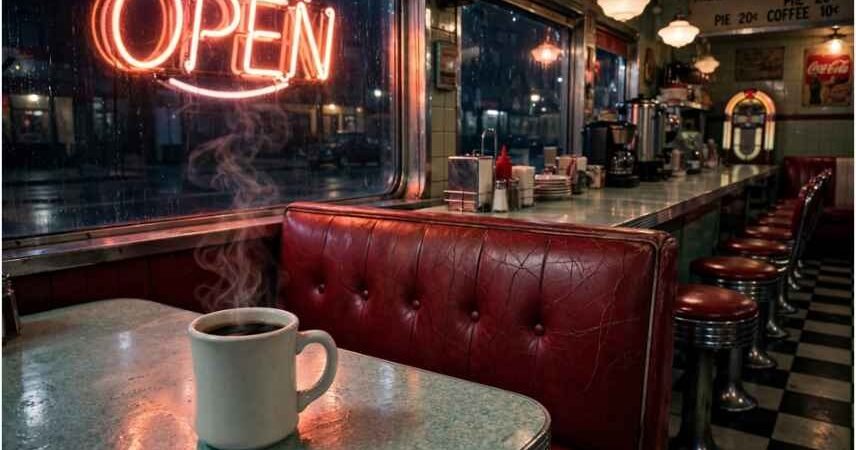
I still remember sliding into a crackled red vinyl booth at 2:00 a.m., clutching a thick ceramic mug filled with burnt drip coffee. For decades, those glowing neon beacons kept third-shift nurses, line cooks, and wandering road-trippers fed. Yet between the late 1950s and the early 2000s, over half of America’s traditional diners vanished from our roadsides. Understanding the decline and revival of retro diners requires unpacking how cheap fast food nearly crushed them, and why an unexpected wave of modern nostalgia brought them roaring back.
The Slow Squeeze: Why America Walked Away from the Counter
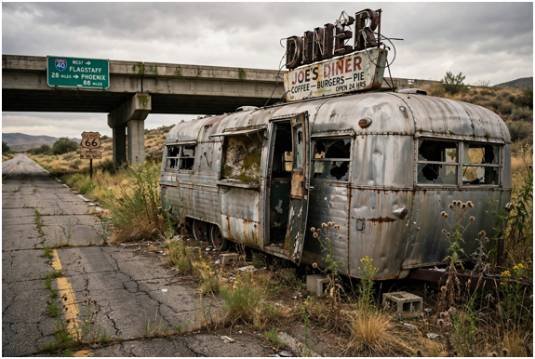
At their peak in the 1950s, more than 6,000 classic diners dotted American highways and downtown street corners. By the turn of the 21st century, that number plunged below 2,500.
Having mapped historic routes across the Northeast, I witnessed countless abandoned dining cars rotting behind overgrown weeds. Their downfall did not stem from a single misstep. A series of cultural, structural, and economic shocks eroded their core business model over several decades.
Car Culture, Bypassed Highways, and Drive-Thrus
Post-war transportation policy forever altered roadside hospitality. When the Federal Highway Administration accelerated the Interstate Highway System in 1956, multi-lane bypasses pulled vehicles off the two-lane state roads where independent diners thrived.
Simultaneously, suburban car culture birthed the fast-food drive-thru. McDonald’s and Burger King offered cheap, factory-standardized meals in under three minutes without requiring drivers to unbuckle their seatbelts.
Mom-and-pop diners could not compete with the speed or corporate purchasing power of national franchises. As sit-down chains like Denny’s and IHOP replicated griddled comfort food inside carpeted, suburban family plazas, the original prefabricated diner car began to look obsolete.
The Silent Extinction of the 24-Hour Dining Room
For generations, round-the-clock service formed the diner’s operational spine. That model suffered an irreversible collapse during the early 2020s. According to sector data tracking food service shifts, 24-hour restaurant locations fell by 11% nationwide between 2020 and 2025. In competitive urban hubs like New York City, nearly 13% of all-night staples permanently shut their doors.
Skyrocketing back-of-house labor expenses, chronic staffing gaps, and shifts in nocturnal habits delivered the knockout blow. Gen Z consumes demonstrably less alcohol than previous generations, largely ending the late-night post-bar breakfast rush.
Meanwhile, multi-generational operators found themselves sitting on highly valuable urban parcels. Without willing family heirs to work grueling 80-hour weeks, selling out to commercial real estate developers became an inevitable financial exit.
The Architecture of Nostalgia: How Prefab Steel Shaped the Social Scene
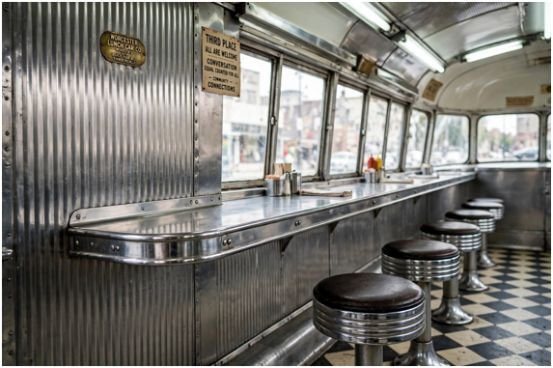
Classic diners look distinct because their builders manufactured them as mobile railcars and modular wagons rather than traditional brick-and-mortar buildings. If you ever wondered why do vintage diners have stainless steel walls, the answer lies in 1940s industrial assembly.
Companies like Worcester Lunch Car Company and Paramount used ribbed stainless steel, baked enamel, and heavy-duty linoleum for fire safety, quick hygiene sweeps, and resistance to heavy daily grease.
The Egalitarian Magic of the Counter Stool
Beyond building materials, the diner’s physical floor plan shaped American democratic culture. Sociologists classify the diner as the original urban “Third Place”—an accessible refuge distinct from home and the workplace.
Unlike partitioned restaurant dining rooms, a continuous counter with bolted chrome stools removes social hierarchies.
I have sat at diner counters where a construction laborer, a corporate lawyer, and a college sophomore ate their eggs side by side, naturally drawn into the same conversation.
Expansive panoramic plate-glass windows illuminated by fluorescent lighting dissolved the boundary between the lonely sidewalk and the warmth inside.
Surviving Through Reinvention: The Three Waves of Diner Resurgence
The traditional diner never died entirely; it survived by evolving across three distinct cultural chapters.
| Resurgence Era | Driving Force | Core Strategy & Culinary Transformation |
| The 1970s Immigrant Wave | Greek & Mediterranean Families | Rescued distressed prefabricated cars; expanded the modest burger-and-egg roster into massive laminated multi-page menus offering spanakopita, moussaka, and gravies. |
| The 1980s–1990s Kitsch Era | High-Concept Restaurateurs | Recontextualized diner aesthetics for metropolitan nightlife (e.g., Manhattan’s Empire Diner); traded bottomless filter brew for craft cocktails and international bistro dishes. |
| The Modern “Retro-Chic” Shift | Boutique Preservationists | Restored original mid-century structural skeletons; replaced processed ingredients with heritage griddled smashburgers, farm-fresh eggs, and curated design nostalgia. |
The Boutique Renaissance: Why Retro Diners Are Back in Style
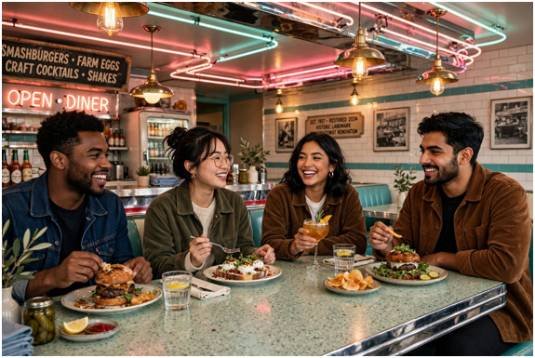
Today, diners are undergoing an undeniable renaissance. Instead of acting as cheap greasy spoons, new-wave diners cater to diners hungry for authenticity and connection. Modern diners run intentional design playbooks: high-gloss chrome finishes, restored neon tubes, and vintage Formica, paired with chef-driven comfort food.
There is an emotional reason why diner food feels nostalgic. In an era dominated by ghost kitchens and contactless delivery apps, people crave tactile, human-centered hospitality. Dining at a vibrant counter offers the communal warmth modern digital dining strips away.
Architectural conservationists have stepped in to protect the remaining historical structures. Multiple historic roadside diners now hold protected spots on the National Register of Historic Places.
By safeguarding these physical spaces, cities protect architectural heirlooms of 20th-century Americana. According to culinary trends tracked by the National Restaurant Association, heritage comfort concepts consistently lead consumer sentiment polls nationwide.
Frequently Asked Questions
1. Why did so many classic 24-hour diners close after 2020?
Rising hourly labor costs, overnight staffing shortages, and shrinking late-night foot traffic made round-the-clock operations economically unviable.
2. What is the primary difference between traditional diners and modern retro-chic diners?
Traditional diners focused on fast, cheap sustenance from massive menus, whereas retro-chic spots emphasize artisanal ingredients, craft drinks, and curated design.
3. How did Greek immigrants preserve American diner culture?
Greek entrepreneurs bought failing diners during the 1970s, revitalized suburban neighborhoods, and expanded classic menus into multi-cuisine culinary powerhouses.
4. Are original vintage diners protected as historical landmarks?
Yes, numerous authentic mid-century prefabricated diners are now recognized on the National Register of Historic Places to prevent redevelopment demolition.
The Bill Comes Due: Don’t Let the Last Booth Fade
The revival of retro diners proves that genuine community spaces never go completely out of style. Clean aesthetic nostalgia gets people through the door, but genuine human connection keeps them seated.
Next time you spot a flickering neon arrow along an old two-lane highway, skip the drive-thru window. Pull into the gravel lot, sit at the counter, order a short stack of pancakes, and leave a generous cash tip for the line cook.