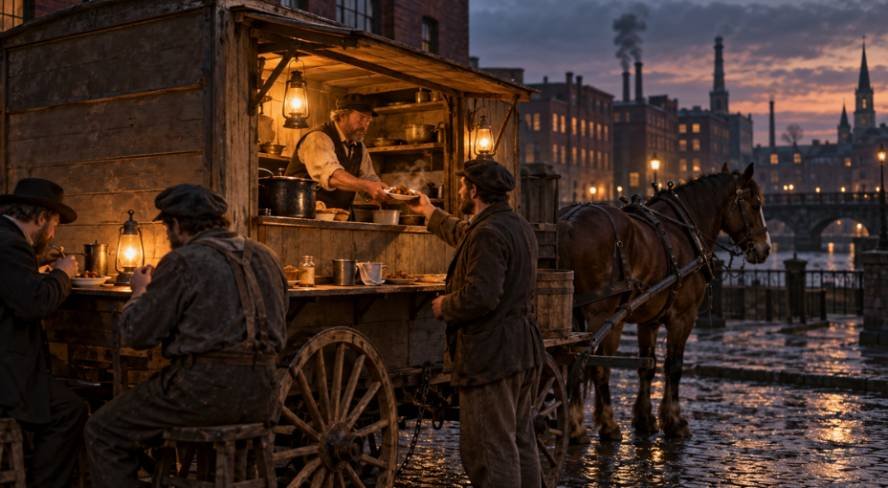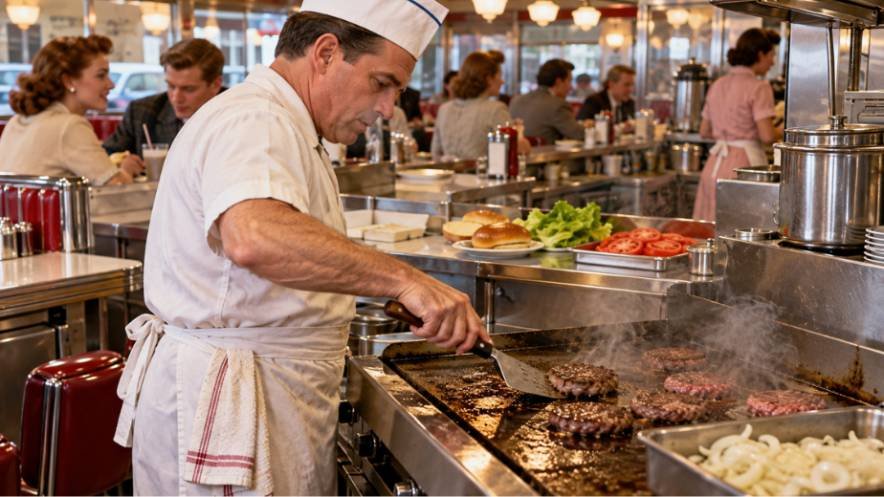
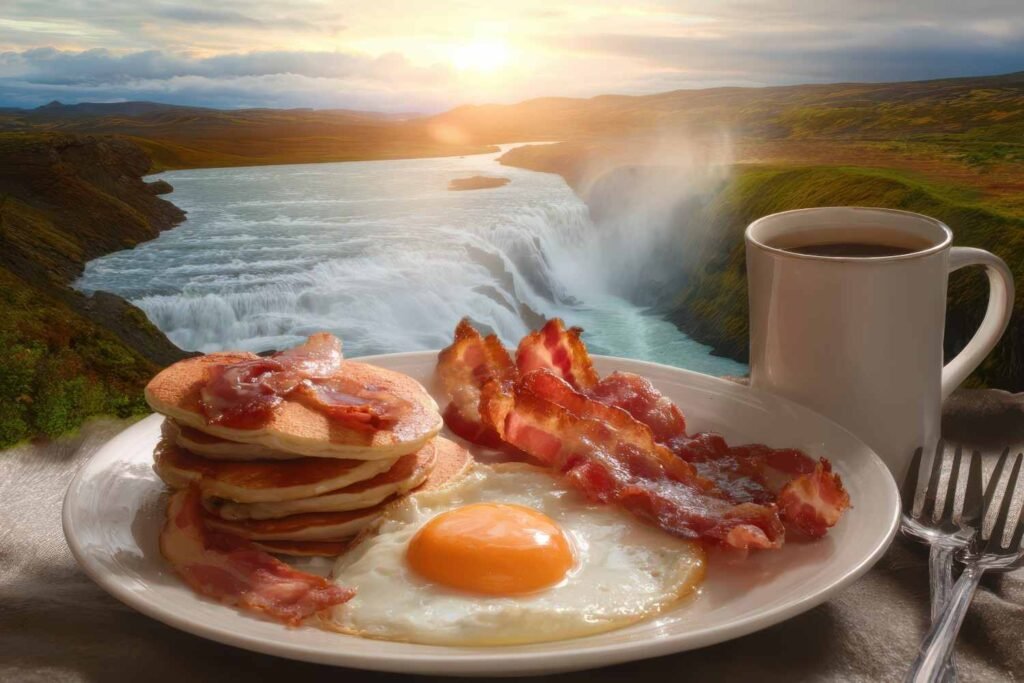
Before sunrise in an old American logging camp, the cook shack was already one of the busiest places in the woods. Bacon hissed in heavy pans, potatoes browned in rendered fat, coffee boiled by the pot, and cooks worked quickly to feed dozens of men before they headed out for another demanding day.
A lumber camp bacon-and-eggs breakfast was not simply a rustic version of a modern diner meal. It was part of a larger food system designed around hard labor, cold weather, limited supplies, and the need to serve large crews efficiently.
Today, we often picture a lumberjack breakfast as eggs, bacon, sausage, pancakes, potatoes, biscuits, and coffee piled onto one oversized plate. That image has some historical truth behind it, but real logging camp menus varied by region, decade, season, and access to fresh food.
Did Lumberjacks Really Eat Bacon and Eggs for Breakfast?
Yes, bacon and eggs appeared in many North American logging camps, particularly in camps with dependable supply routes.
Bacon made obvious sense. Cured and salted pork kept far longer than fresh meat and could survive the difficult journey into remote timber country. Eggs were more complicated because they were fragile and perishable, so their availability depended on how close a camp was to farms, towns, rail lines, or regular wagon routes.
By the late nineteenth and early twentieth centuries, better-supplied logging operations could serve surprisingly elaborate breakfasts. Along with bacon and eggs, workers might receive sausage, ham, fried potatoes, pancakes, biscuits, oatmeal, beans, baked goods, fruit, steak, and plenty of coffee.
That means the familiar lumberjack breakfast is not entirely a restaurant invention. It simply compresses decades of logging-camp food traditions into one recognizable plate.
Why Was Bacon Perfect for Remote Logging Camps?
Bacon fit the realities of camp life better than many fresh foods.
Logging camps could sit miles from established towns, and winter weather often made transportation difficult. Cooks needed ingredients that could survive storage and still provide enough energy for physically exhausting work.
Salted pork, smoked bacon, and ham performed well under those conditions. They were durable, calorie-dense, flavorful, and easy to cook in large quantities.
I also think bacon had another practical advantage: very little went to waste. The rendered fat could be reused for cooking potatoes, frying eggs, or adding richness to other dishes.
In a camp kitchen where every ingredient had value, that mattered.
How Were Bacon, Eggs, and Potatoes Cooked in Camp?
Cooking for a logging crew was very different from making breakfast for a family.
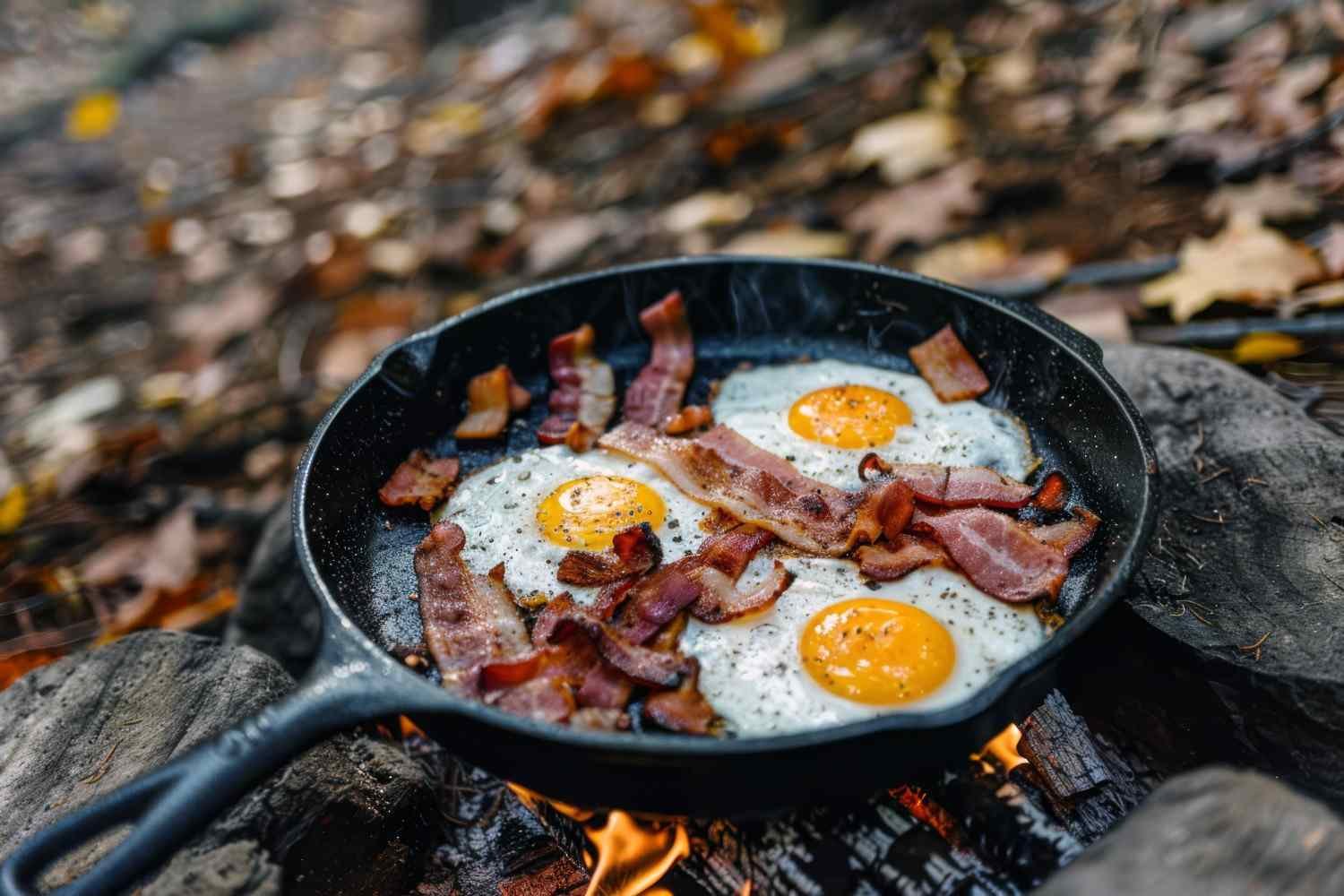
Camp cooks often worked around large wood-fired stoves, griddles, and heavy cast-iron cookware. In smaller or more temporary camps, open-fire cooking could also play a role.
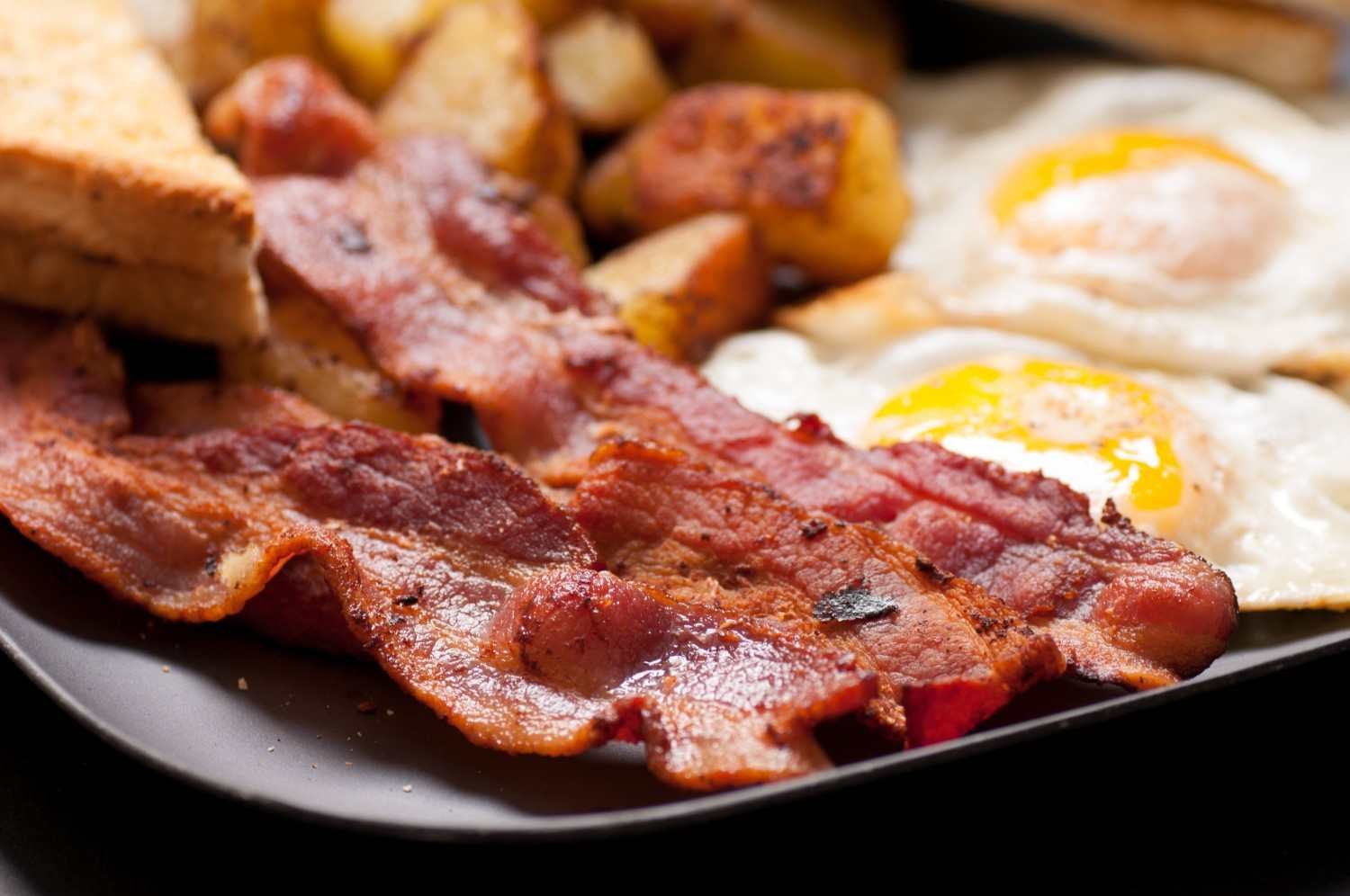
Bacon could be cooked in batches, with the rendered fat saved for frying potatoes. Eggs might be fried, scrambled, or prepared in whatever way allowed the cook to serve the crew quickly.
Potatoes were especially useful because they were inexpensive, filling, and relatively easy to store. A pan of potatoes cooked in bacon drippings created a hearty side without requiring complicated ingredients.
This practical style of cooking helped create the rich, savory breakfast flavors that people now associate with rustic camp food.
What Else Was Served With Bacon and Eggs?
The lumber camp bacon and eggs breakfast was rarely limited to just two foods.
A well-stocked camp could put several proteins and starches on the table at once. Bacon might appear beside sausage links, slices of country ham, or occasionally steak.
Potatoes could be fried or served in a hash-style preparation. Biscuits provided an inexpensive source of carbohydrates and, in some regions or later interpretations of the lumberjack meal, could be paired with gravy.
Pancakes and hotcakes also became strongly associated with logging camps. Flour stored well, batter could be mixed in large quantities, and a broad griddle allowed cooks to turn out pancakes rapidly for an entire crew.
Oatmeal, porridge, beans, bread, doughnuts, cakes, and other baked goods could appear as well.
The meal changed according to what the cook had available, but the overall goal remained the same: send workers into the woods well fed.
Did Lumberjacks Really Eat Huge Stacks of Pancakes?
The towering pancake stack seen in advertisements and modern diners is probably more theatrical than historical, but pancakes themselves absolutely fit logging camp cooking.
Flour transported easily and could be stored for long periods. Pancakes were also efficient because one cook could prepare many at once on a large griddle.
Depending on location and era, cooks might serve hotcakes with butter, syrup, molasses, or other available sweeteners.
Modern buttermilk flapjacks covered in maple syrup are a polished version of that tradition, but the basic idea is historically believable.
For a hungry logger facing hours of cold-weather work, pancakes were more than a sweet breakfast treat. They were another dependable source of calories.
Why Was Coffee So Important in Logging Camps?
Coffee was one of the defining drinks of the logging camp breakfast.
Cooks could prepare it in enormous quantities, and workers often drank it strong and black. Hot coffee was especially welcome on freezing mornings when crews had to leave the cook shack and immediately begin physical work outdoors.
Logging culture even developed slang for it. Coffee could sometimes be called “slush” or “blackjack.”
It is easy to understand why the drink became so closely linked to camp life. It was hot, familiar, relatively easy to prepare, and perfectly suited to an early morning routine.
Today’s image of a lumberjack gripping a steaming mug beside a plate of bacon and eggs has more historical grounding than many people might assume.
What Did Lumberjacks Call Bacon and Eggs?
Logging camps developed their own colorful vocabulary.
Eggs were sometimes called “cackleberries,” while bacon could be known as “sow bosom.” Biscuits were sometimes called “doorknobs,” and butter could be nicknamed “skid grease.”
These terms varied among regions and crews, but they reveal something important about lumber camp culture.
Meals were not simply fuel. The cook shack was one of the main gathering places in camp, and food became part of the humor, language, and identity of the men who worked there.
I find this old slang especially interesting because it makes the historical breakfast feel much more human. A plate of “cackleberries and sow bosom” sounds almost like a camp joke, but it referred to familiar foods workers genuinely valued.
How Did Camp Cooks Feed So Many Lumberjacks?
The camp cook carried enormous responsibility.
A logging crew could include dozens of workers, and breakfast needed to be ready early enough that nobody lost valuable working hours.
Cooks often started their day long before the rest of the camp. They managed fires, prepared meat, mixed batter, baked bread, fried potatoes, made coffee, and coordinated assistants who helped serve and clean.
Speed mattered, but quality mattered too.
Logging companies understood that good food helped keep workers satisfied. In physically demanding jobs, a badly run kitchen could quickly become a serious problem.
A skilled cook who consistently produced filling meals could become one of the most valued people in camp.
Why Were Lumberjack Breakfasts So Large?
Lumberjacks burned enormous amounts of energy.
Cutting trees was only one part of the job. Workers also lifted equipment, handled horses, moved logs, climbed difficult terrain, and spent long periods outside in snow and freezing temperatures.
A breakfast that looks excessive by modern standards made much more sense in that environment.
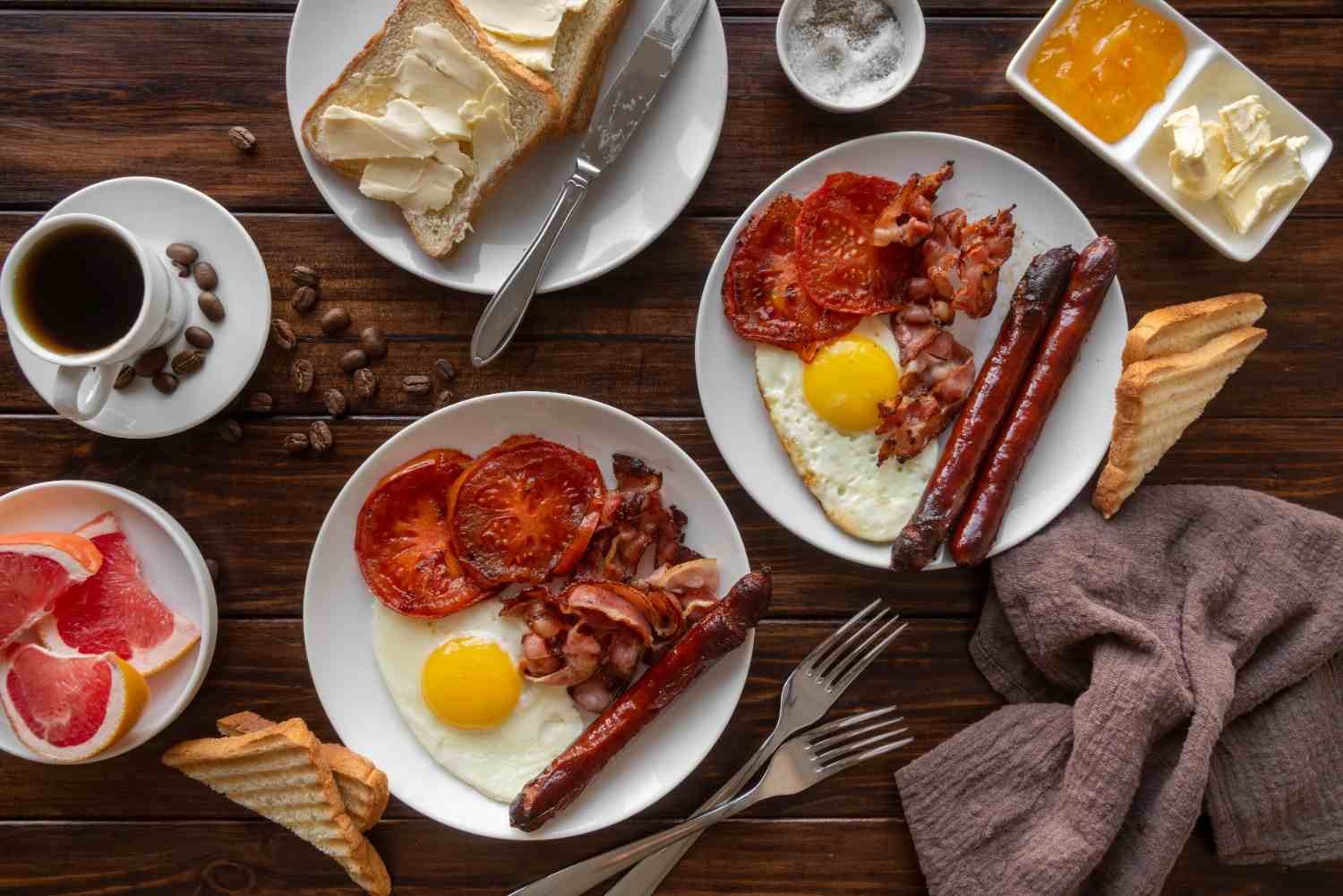
Protein from bacon, eggs, sausage, or ham combined with carbohydrates from potatoes, biscuits, pancakes, cereal, and bread. Fat supplied additional energy, while coffee provided warmth and stimulation before work began.
The meal was designed around labor rather than moderation.
How Does the Modern Lumberjack Breakfast Compare?
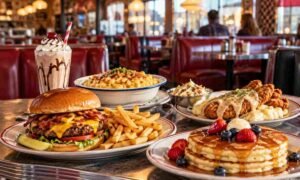
Today’s lumberjack breakfast usually brings many traditional elements together on one restaurant plate.
A diner might serve several eggs, thick-cut bacon, sausage, ham, pancakes, hash browns, toast, biscuits, and coffee. Some versions add country gravy or extra sides.
The historical reality was less standardized.
One camp might serve bacon and potatoes one morning, beans and biscuits another, and eggs only when fresh supplies arrived. Wealthier or better-connected camps could provide much more variety than isolated operations.
That is why I see the modern lumberjack breakfast as a tribute to logging camp abundance rather than an exact reproduction of one historical menu.
Final Thoughts
The history behind the lumber camp bacon and eggs breakfast is more interesting than the oversized plates we see in diners today.
Bacon earned its place because it stored well, traveled easily, supplied plenty of calories, and produced valuable cooking fat. Eggs appeared when camp supply lines made fresh food practical. Potatoes, ham, sausage, pancakes, biscuits, oatmeal, beans, baked goods, and strong coffee completed meals built for demanding work.
The image of lumberjacks sitting down to a huge breakfast before sunrise may have become romanticized, but its basic idea is historically sound. In America’s logging camps, breakfast was serious business because the work waiting outside the cook shack was even more serious.
Frequently Asked Questions (FAQs)
1. What did lumberjacks usually eat for breakfast?
Lumberjacks could eat bacon, eggs, sausage, ham, fried potatoes, pancakes, biscuits, oatmeal, beans, bread, baked goods, and coffee. The exact menu depended on the camp’s location, period, and access to supplies.
2. Did lumberjacks eat bacon every day?
Not every camp served bacon every day, but cured pork was extremely practical because it lasted longer than many fresh meats and provided plenty of calories.
3. What did lumberjacks call eggs?
Eggs were sometimes called “cackleberries” in old logging camp slang.
4. What did lumberjacks call bacon?
Bacon could be referred to as “sow bosom,” although logging slang varied from one region or crew to another.
5. Did lumberjacks really eat pancakes?
Yes. Pancakes and hotcakes suited logging camps because flour stored well and cooks could prepare large batches quickly on a griddle.
5. Why did lumberjacks eat such heavy breakfasts?
Logging demanded intense physical effort in difficult outdoor conditions. Large meals supplied the protein, carbohydrates, and calories workers needed to stay productive for hours.
Conclusion
A traditional lumber camp breakfast was never just about eating big for the sake of it. Every part of the meal had a purpose. Bacon and ham stored well, eggs added valuable protein when fresh supplies were available, potatoes and pancakes delivered filling carbohydrates, and strong coffee helped crews start work before sunrise.
Like many traditional southern breakfast dishes, these meals depended on hearty, familiar ingredients that could provide lasting energy without unnecessary complexity.
What makes the history of the lumber camp bacon and eggs breakfast so interesting is how closely the food reflects the realities of logging life. Remote locations, cold weather, demanding labor, and limited supply routes all shaped what ended up on the table.
The modern lumberjack breakfast may be more polished and predictable, but its roots still trace back to hardworking crews who needed serious fuel before heading into the woods.