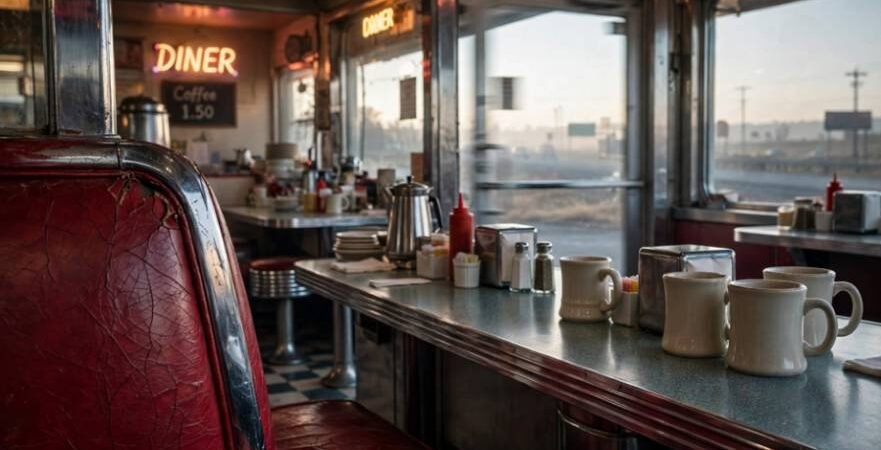
The heavy glass door swings shut behind me, instantly silencing the drone of highway traffic. I slide into a cracked crimson vinyl booth, and before I glance at the laminated menu, the smell hits: burnt drip coffee, clarified butter caramelizing on a flat-top, and griddled onions. My shoulders drop two inches.
I don’t visit roadside greasy spoons purely for culinary artistry. I come because why diner food feels nostalgic comes down to biology, architecture, and emotional security acting together as a physical time machine.
The Proust Phenomenon: How Scent Bypasses Logic
I have eaten exquisite smash burgers at upscale bistros, yet none spark the immediate warmth of a simple patty melt served on a paper-lined plastic basket. Neuroscience explains this difference through the way our bodies process sensory inputs.
Incoming Aromas (Bacon, Coffee, Griddled Toast)
│
▼
Olfactory Bulb
│
├───────────────────────┬───────────────────────┐
▼ ▼ ▼
Amygdala Hippocampus Limbic Cortex
(Emotional Response) (Long-Term Memory) (Autobiographical Recall)
│ │ │
└───────────────────────┴───────────────────────┘
│
▼
Immediate Nostalgic Immersion
(Bypasses the Thalamus)
Olfactory Wiring and Childhood Recall
Most sensory signals—vision, touch, sound—route through the thalamus, which serves as the brain’s central relay station. Smell does not.
When bacon fat vaporizes over an open grill, those microscopic odor molecules travel straight from the nasal cavity into the olfactory bulb. This structure shares direct neural pathways with the amygdala (the core of emotion) and the hippocampus (the vault for associative memories).
Researchers refer to this sensory gateway as the Proust phenomenon. Peer-reviewed studies cataloged by the National Institutes of Health confirm that odor-evoked autobiographical memories carry higher emotional potency and vividness than recollections triggered by verbal or visual cues.
When I catch the aroma of malted batter hitting a seasoned iron waffle press, my brain does not compute an abstract meal. It plunges straight into the sensation of eight-year-old Sunday mornings, swinging my legs beneath the table while waiting for maple syrup. For more background on these neural paths, explore our deep dive on the psychology of sensory memory.
Food as a Relational Anchor
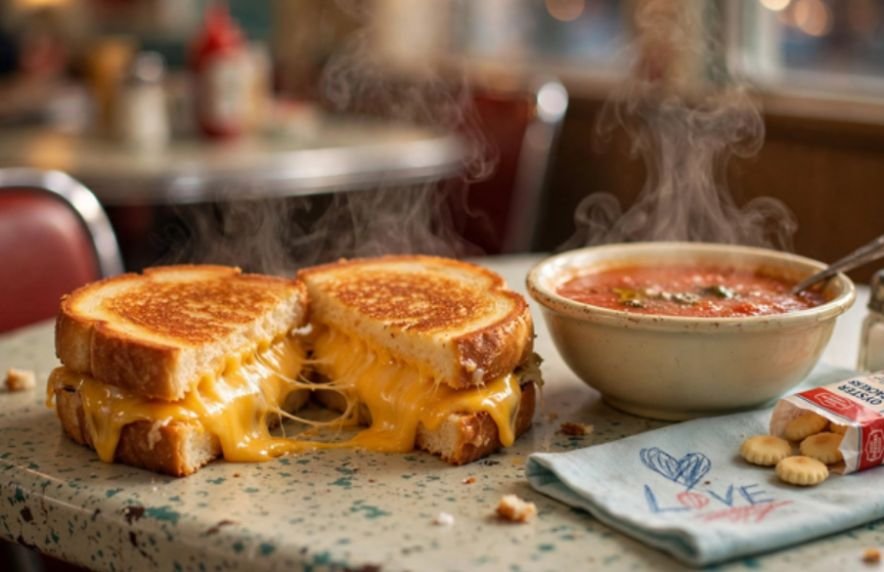
The food itself operates as an emotional surrogate. Groundbreaking research published by the Association for Psychological Science led by psychologist Dr. Jordan Troisi reveals that comfort foods fulfill our fundamental drive for social belonging.
We do not crave grilled cheese sandwiches simply for their carbohydrates and melted cheddar. We crave them because our subconscious associates those staple recipes with caregivers who made them when we were sick, cold, or celebratory. The diner becomes a stage for communitas—a democratic sanctuary where everyone shares the same communal broth, neutralizing isolation during stressful weeks.
The Power of Non-Digital Architecture
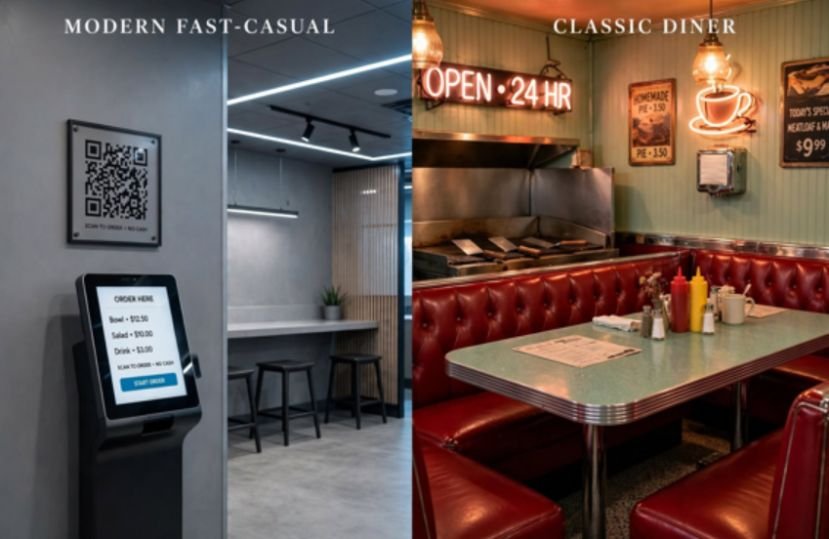
Step outside and observe modern fast-casual dining: muted gray drywall, app-ordering kiosks, polished concrete, and QR-code menus. Everything optimizes for rapid customer turnover and minimal human contact. Diners run on an inverted philosophy.
┌───────────────────────────────────────┬───────────────────────────────────────┐
│ Modern Fast-Casual Spaces │ Preserved Classic Diners │
├───────────────────────────────────────┼───────────────────────────────────────┤
│ Smooth, touch-free glass tablets │ Grooved Formica, vinyl with friction │
│ QR-code ordering, silent pickup bays │ Direct banter across a low counter │
│ Recessed LED strip lighting │ Warm neon glow & polished chrome trim │
│ Minimalist acoustic dampening │ Rhythmic soundtrack: spatulas & mugs │
│ Built for frictionless transaction │ Built for lingering, unhurried stay │
└───────────────────────────────────────┴───────────────────────────────────────┘
The roadside diners preserved across the United States—documented thoroughly by the National Trust for Historic Preservation—maintain the Streamline Moderne aesthetic born from converted 1940s railcars.
These preserved spaces also retain distinctive details that shaped the visual identity of American diners, including the history of pie display cases in American diners, which made desserts part of the dining room experience rather than something hidden behind the kitchen.
Tactile Permanence in a Touchscreen Culture
Modern professional life unfolds behind smooth panes of tempered glass. We swipe across flat screens, speak to digital voices, and read immaterial text.
A diner forces tactile confrontation with reality:
One of the clearest examples is the familiar heavy coffee cup, whose weight and heat contribute to the sensory experience explored in why do diners always serve coffee in thick ceramic mugs.
- The substantial heft of a thick-walled ceramic mug that warms cold palms.
- The gentle mechanical resistance of an unyielding vinyl stool swiveling on a bolted chrome stalk.
- The paper ticket placed upside down by a server who knows when to top off your black coffee without being asked.
This analog texture matters. When you sit in a space that has rejected decorative redesigns for forty years, the ambient anxiety of rapid technological disruption evaporates.
That sense of continuity is closely tied to the evolution of 24-hour roadside diners, whose enduring layouts, materials, and service traditions helped preserve a recognizable dining experience across generations.
You exist in an unbroken historical timeline.
Predictable Menus as a Psychological Buffer
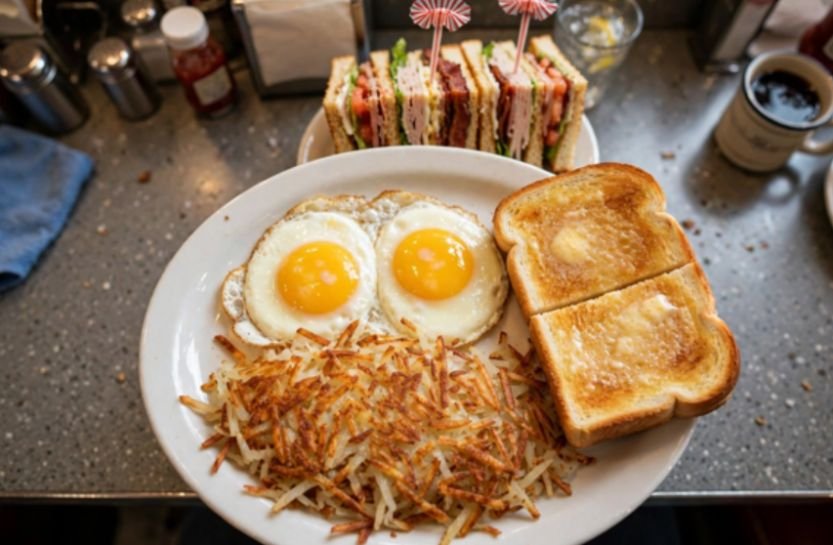
I can walk into a diner in rural Pennsylvania, coastal Maine, or suburban Ohio, and the core card reads identically: two eggs over easy, hash browns scraped flat against a seasoned flattop, buttery white toast, and club sandwiches held together by plastic frill picks.
External Macro Stress
(Inflation, job pressure, screen fatigue)
│
▼
Diner Threshold
│
├─ Sensory Consistency: Recipes unaltered for decades
├─ Cognitive Ease: No menu redesigns or surprise ingredients
└─ Operational Warmth: Direct human check-in
│
▼
Restored Baseline: Emotional stability and low friction
Sensory Continuity Against Daily Chaos
Human beings experience decision fatigue at unprecedented levels. In a world defined by shifting work demands, volatile economic trends, and algorithmic churn, predictability transforms into a rare luxury.
Diners provide sensory continuity. The flavor profile of griddled corned beef hash does not evolve with seasonal trends. It delivers the exact salinity, crunch, and tenderness you encountered fifteen years ago.
This hyper-consistency gives our nervous system permission to power down its threat detectors. You do not need to analyze the dish or brace for experimental culinary techniques. If you want to replicate these reliable classics at home, check out our guide on traditional comfort food recipes.
Frequently Asked Questions
1. What makes diner coffee taste so specific and nostalgic?
Commercial drip coffee brewed at high heat through industrial batch machines absorbs subtle carafing notes, producing a low-acidity, roasty profile closely tied to breakfast rituals.
2. Why do diners use vinyl booths and chrome counters?
Early diners adapted surplus railroad dining cars and used durable, non-porous materials like Formica, stainless steel, and vinyl for quick sanitization and long-lasting heavy commercial use.
3. Is comfort food nostalgia universal across cultures?
Yes, every culture relies on carbohydrate-rich, accessible staple dishes tied to childhood care and family gatherings to trigger emotional comfort during distress.
4. Why are diners considered America’s premier “third places”?
Sociologist Ray Oldenburg defined third places as welcoming social grounds outside work and home where regular conversation thrives and social hierarchies disappear.
Step Up to the Counter: Reclaim Your Third Place
The magic of diner food does not live in an artisanal secret sauce or an exotic spice blend. It lives in the unpretentious communion of warm griddles, heavy ceramic mugs, and a physical space that refuses to trade its soul for sterile modern trends.
Next time life feels overly fast, pixelated, or demanding, skip the mobile drive-thru. Find a local roadside diner with a glowing neon sign. Sit at the low counter, order a plate of eggs and buttered sourdough, listen to the rhythmic clack of the spatula