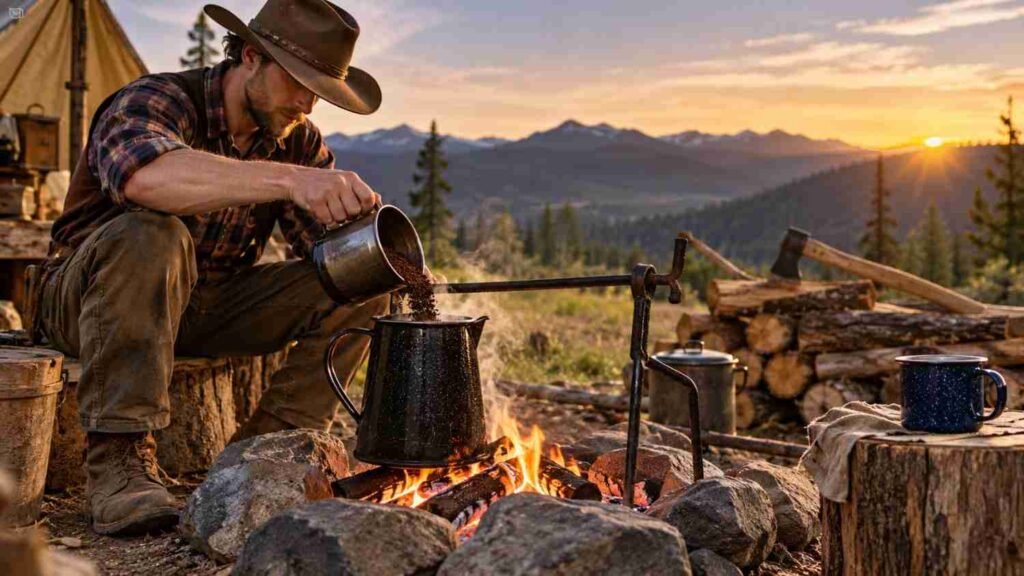
I first became interested in logging camp coffee because it sounds like the kind of breakfast drink that should be rough around the edges. There is no paper filter, countertop machine, or complicated setup. Just a pot, hot water, coffee, and a fire. That simplicity is part of the appeal. A strong cup beside a campfire can feel satisfying, especially on a cool morning when breakfast needs to be practical and pleasantly simple.
I also noticed that “cowboy coffee” gets treated as one fixed recipe, even though outdoor cooks have always adapted it to their equipment, water, fire, and crew size. Logging camps had their own food traditions, and coffee was a practical part of the workday. A logging camp approach is less about following a sacred formula and more about brewing a sturdy pot that can serve hungry people without special equipment.
What Makes Logging Camp Cowboy Coffee Different?
The basic idea is simple: coffee grounds go directly into the water instead of being separated by a filter. That makes the method closer to boiled coffee than the drip coffee most people make at home.
For a logging camp style, the goal is a bold but drinkable pot. Coarse grounds are useful because they are easier to settle and less likely to produce a cup packed with fine sediment.
Logging crews needed food that could support long hours of physical work. Coffee fit naturally because it was inexpensive, easy to store, and simple to prepare in quantity.
What You Need for the Pot
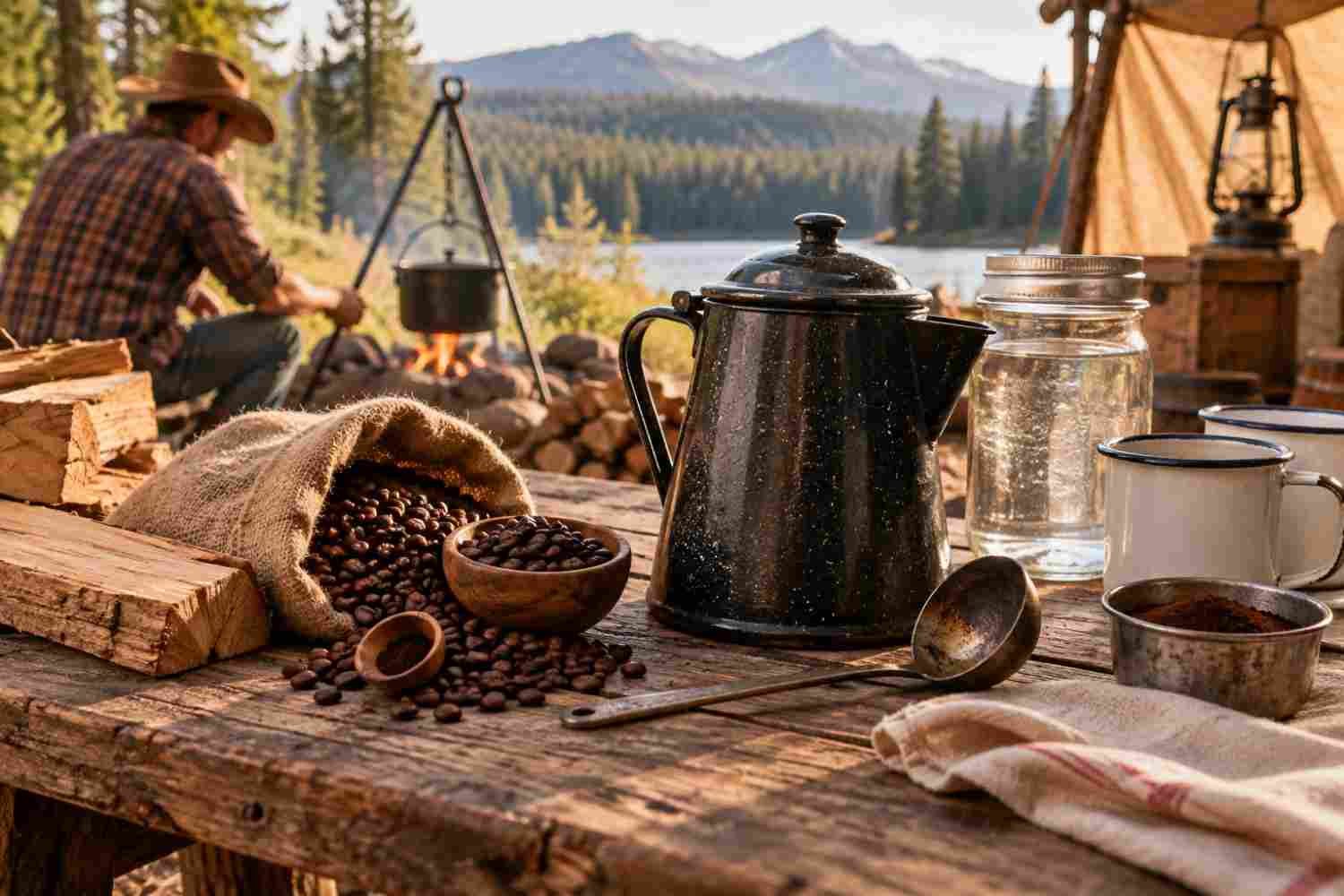
Keep the equipment basic. A sturdy metal camp pot or kettle, a heat source, and a way to measure coffee and water are enough.
For a four-cup batch, use about one quart of fresh water and roughly one-quarter cup of coarse coffee grounds. That works out to about two tablespoons per eight ounces of water. Adjust the amount if you prefer milder or stronger coffee.
Fresh, clean water makes a noticeable difference. Use safe drinking water rather than assuming a clear-looking stream is suitable.
Keep some cold water nearby to help settle the grounds.
How to Brew Logging Camp Cowboy Coffee
1. Heat the water
Fill the pot, leaving enough room to prevent a messy boil. Set it over the campfire or camp stove and bring the water close to a boil.
2. Add the grounds
Add the coarse coffee directly to the hot water. Stir gently so the grounds become fully saturated. Once everything is wet, let the heat do the work.
3. Boil briefly
Bring the coffee to a rolling boil and maintain it for roughly four minutes. Watch the pot because coffee can foam and rise quickly. If it threatens to spill, move it from the hottest part of the fire.
Timing varies with the fire and batch size. Prolonged high heat can push the flavor toward harsh bitterness, so controlled heat matters more than an exact minute.
4. Let the pot settle
Remove the pot from direct heat and let it stand for one or two minutes. This gives the grounds time to settle.
5. Add cold water
Pour roughly one-half to one cup of cold water around the inside edge or through the spout. The temperature change helps floating grounds sink. Let the pot rest another minute or two.
6. Pour slowly
Pour carefully into mugs, keeping the pot steady as you reach the bottom. Stop before the sediment starts flowing. A little grit is part of cowboy coffee, but nobody needs a mouthful of sludge.
How to Keep the Coffee From Turning Bitter
The biggest mistake is treating the fire like a burner that can be left at full power. Campfires fluctuate, and the hottest flames can boil coffee too aggressively.
Coarse grounds also matter. Fine grounds expose more surface area and make separation harder. If the first batch tastes muddy, use a coarser grind and pour more carefully.
Salt, eggshells, and other old-school additions sometimes appear in cowboy coffee traditions. They are optional rather than necessary. Start with good coffee, clean water, and sensible heat before experimenting.
Serving a Logging Camp Breakfast
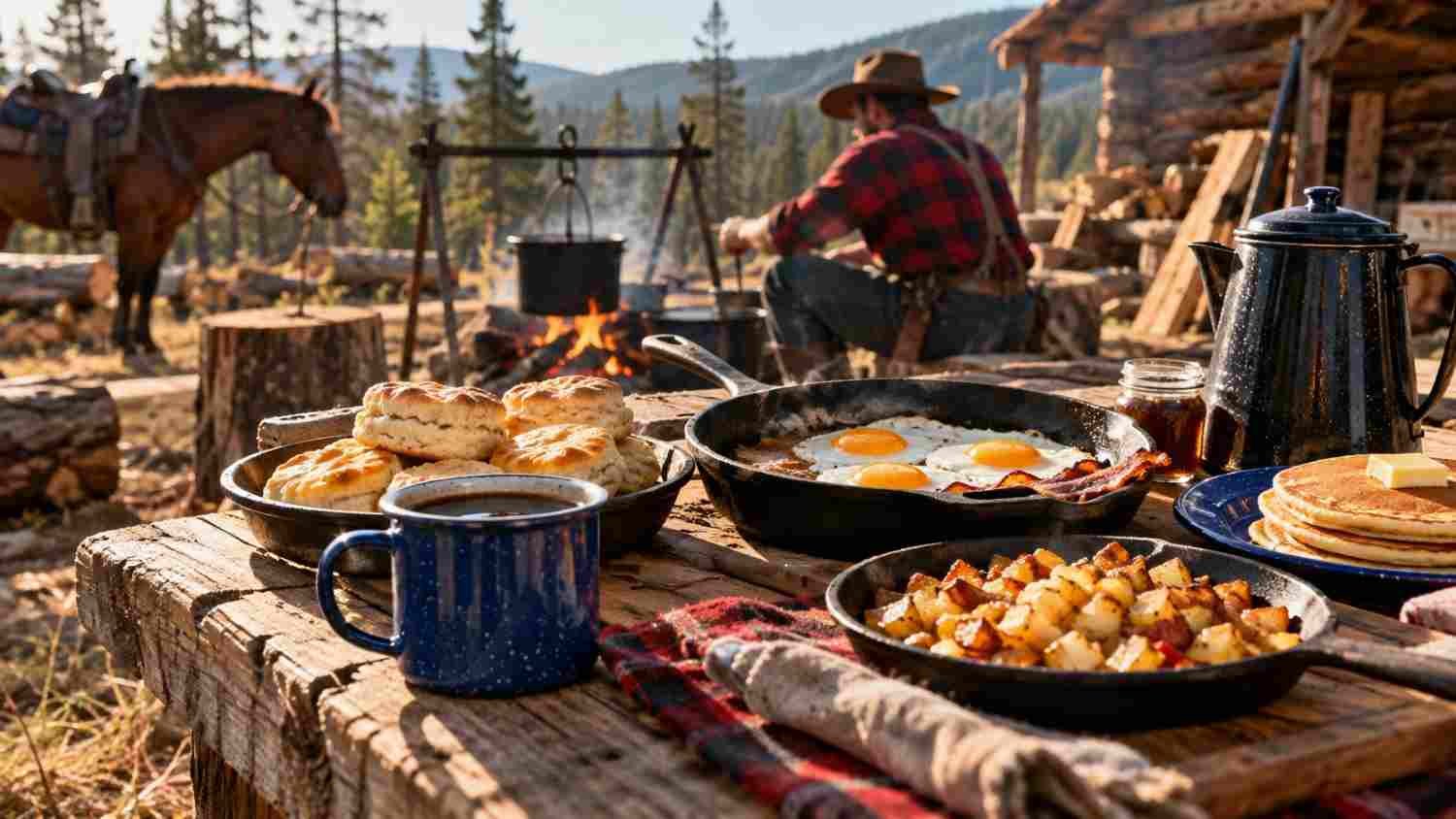
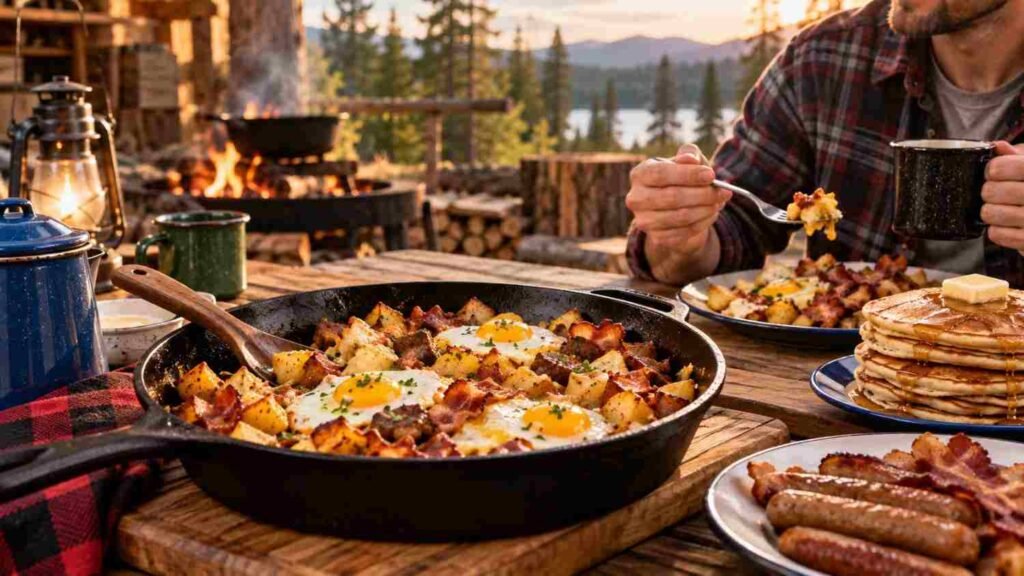
Coffee made this way suits food that is hearty and uncomplicated. Eggs, bacon, sausage, biscuits, potatoes, pancakes, and skillet breads all make sense beside a steaming mug.
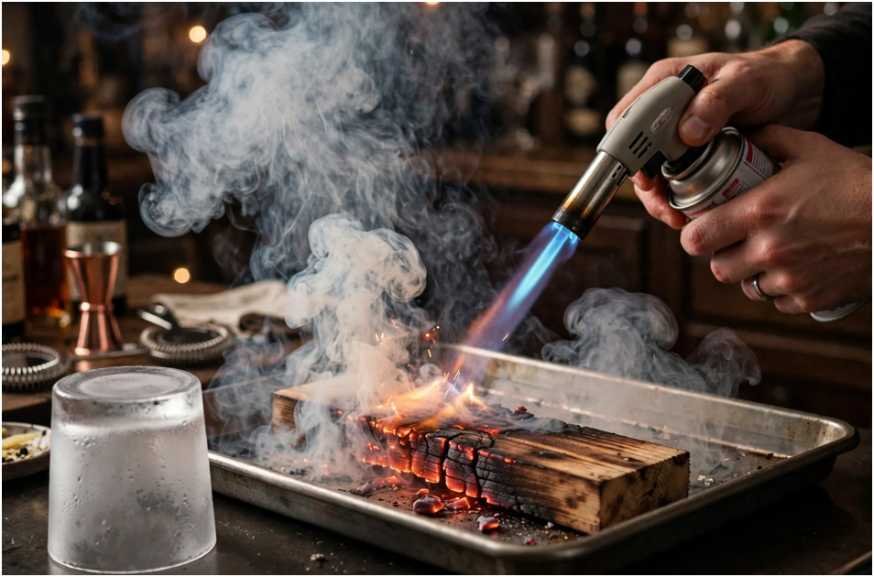
The drink can also fit a broader brunch spread. A sweeter option can suit guests who prefer something less rugged, and a bourbon cold brew cocktail recipe can work as a later, more polished choice.
The charm is not in making the coffee complicated. One pot can serve several people while breakfast comes together around it.
A Modern Campfire Version
You do not need an open fire to capture the spirit of the method. A propane camp stove works well and gives you tighter control over the heat, especially during fire restrictions or at a developed campground.
The method scales easily. For a larger group, maintain the coffee-to-water ratio, use a bigger pot, leave headroom for boiling, and let the grounds settle before serving.
For a fall gathering, another drink can sit alongside it. A hard cider mimosa for fall brunch brings a lighter seasonal contrast.
FAQs: How to Brew Logging Camp Cowboy Coffee the Traditional Way
1. Can I make cowboy coffee without a campfire?
Yes. A camp stove, grill, or kitchen burner can provide the heat. The important part is direct brewing and careful heat control.
2. Why use coarse coffee grounds?
Coarse grounds are easier to settle and produce less fine sediment. They also make slow pouring easier.
3. Does cowboy coffee have to boil for four minutes?
No. Four minutes is a useful starting point, but fire intensity and batch size affect extraction. Avoid prolonged, violent boiling.
4. How do I get fewer grounds in my cup?
Let the pot rest after brewing, add cold water to encourage settling, and pour slowly without disturbing the bottom.
Why Simple Coffee Still Works
A good logging camp coffee pot does not depend on perfect equipment. It depends on the water, grounds, heat, and pour. That makes the method useful beyond its historical associations. It offers a practical way to make coffee when convenience disappears, while leaving room for preference. The result may not look polished, but it can taste right beside a fire.
Sometimes the best camp coffee is the pot that asks for almost nothing and gives everyone a warm cup.