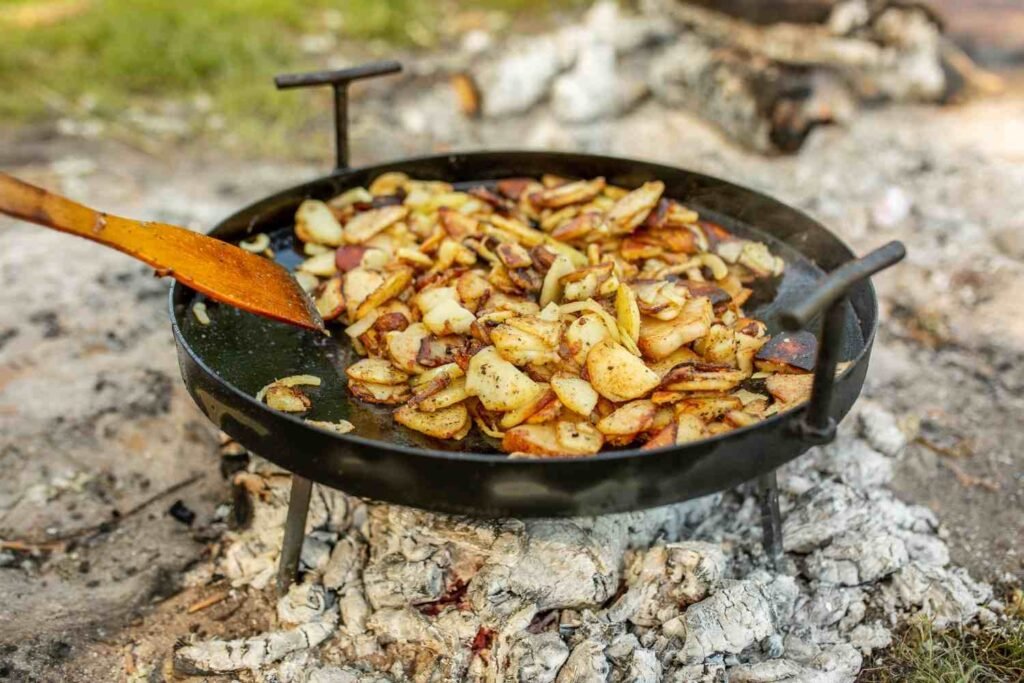
Long before breakfast skillets became a diner favorite, logging camps across the American Northwoods were serving heavy morning meals designed for men heading into hours of demanding physical work. Potatoes fit perfectly into that routine. They were affordable, filling, easy to store, and simple to cook in large quantities.
That is why logging camp breakfast potatoes became such a natural companion to bacon, flapjacks, biscuits, eggs, oatmeal, and strong coffee. The traditional version was far simpler than many modern breakfast skillets, but its appeal came from exactly that simplicity: potatoes browned in bacon fat, onions softened in the same skillet, and plenty of crisp edges.
Today, I like to think of this dish as part food history and part practical campfire recipe. You can keep it rustic and traditional or turn it into a fuller lumberjack-style skillet with eggs, cheese, peppers, and sausage.
What Are Logging Camp Breakfast Potatoes?
Logging camp potatoes are rustic skillet-fried potatoes associated with the hearty breakfasts served in historic American logging camps.
They are sometimes described today as lumberjack potatoes, camp-fried potatoes, or campfire home fries. Unlike shredded hash browns, they are usually made from larger chunks or slices of potato cooked until tender inside and browned on the outside.
The classic approach relies on simple ingredients such as potatoes, onions, bacon drippings, salt, and black pepper.
That simplicity mattered in logging camps. Cooks often had to feed large crews quickly, sometimes in remote areas where ingredients had to be stored carefully and used efficiently.
Why Did Lumberjacks Eat Potatoes for Breakfast?
Logging was physically exhausting work, especially during cold Northern winters.
Workers spent long days cutting trees, hauling timber, handling heavy tools, and moving across rugged terrain. Breakfast therefore had to provide substantial energy and keep crews satisfied for hours.
Potatoes worked extremely well for that purpose.
They supplied carbohydrates, paired easily with high-calorie foods such as bacon and sausage, and could be purchased and stored in bulk. They were also versatile enough to appear at multiple meals.
If boiled or baked potatoes remained from dinner, cooks could reuse them the next morning by slicing and frying them in bacon fat.
That kind of efficiency was especially important in isolated camps.
What Did a Traditional Logging Camp Breakfast Include?

A historic lumberjack breakfast could be much larger than what most Americans eat in the morning today.
Potatoes might appear alongside bacon, pork, eggs, oatmeal, biscuits, flapjacks, molasses, doughnuts, pie, and coffee. These meals were designed around the calorie demands of hard manual labor rather than modern portion expectations.
Camp-fried potatoes worked particularly well because they could be prepared on a large cooking surface while other breakfast foods were being made.
That same tradition survives today in Northwoods-inspired restaurants that serve oversized lumberjack breakfasts featuring potatoes, pancakes, eggs, ham, sausage, biscuits, and gravy.
What Makes Camp-Fried Potatoes Different From Regular Home Fries?
The biggest difference is the cooking style.
Modern home fries often include several seasonings, peppers, herbs, butter, garlic, and other additions. Traditional camp potatoes relied much more heavily on rendered animal fat, onions, salt, and proper browning.
Bacon grease was especially useful because cooks could fry bacon first, remove it, and use the flavorful drippings to cook the potatoes.
The potatoes were also generally cut into chunks or slices rather than shredded.
That gives them a texture somewhere between skillet potatoes and rustic home fries: crisp around the edges, tender inside, and rich with smoky flavor.
How to Make Traditional Logging Camp Breakfast Potatoes
For a historically inspired version, I would keep the ingredient list simple.
For 4 to 6 generous servings, use about 5 pounds of Russet potatoes, half a pound of thick-cut bacon, one large yellow onion, salt, and coarse black pepper.
Russet potatoes work particularly well because they develop crisp edges while remaining fluffy inside. Leaving the skins on adds extra texture and makes the dish feel more rustic.
Start by cutting the potatoes into roughly half-inch cubes.
If you want faster cooking, parboil them first. Place the cubed potatoes in boiling water for about 5 to 7 minutes, then drain and allow them to cool.
Next, heat a large cast-iron skillet over medium heat and cook the chopped bacon until crisp.
Remove the bacon pieces, but leave the rendered fat in the skillet.
Add the diced onion and cook it for a few minutes until it begins to soften.
Then add the potatoes.
Spread them into as even a layer as possible and let them cook undisturbed for several minutes. This is important because constant stirring prevents a proper crust from forming.
Turn the potatoes occasionally until several sides are golden brown.
Season with salt and coarse black pepper, then stir the cooked bacon back into the skillet.
That is the version I would consider closest to traditional logging camp breakfast potatoes.
How Do You Get Campfire Potatoes Crispy Without Burning Them?

The biggest mistake is cooking over heat that is too intense.
Campfire cooking works best when you use steady coals rather than tall flames. Place your skillet on a sturdy grate and let the cast iron heat gradually.
Once the potatoes go in, give them time to brown before stirring.
If the outside begins to darken before the centers become tender, add 2 to 3 tablespoons of water and cover the skillet tightly with a lid or aluminum foil.
Let the potatoes steam for about 5 minutes.
Then remove the cover and continue cooking until the moisture evaporates and the edges crisp again.
This steam-then-brown technique works particularly well with raw potatoes.
Should You Parboil Potatoes Before Camping?
I recommend it when convenience matters.
Parboiling potatoes at home can dramatically shorten cooking time at the campsite.
Cube the potatoes, simmer them for about 5 to 7 minutes, and stop cooking while they are still firm enough to hold their shape.
Cool them completely before storing them in an airtight container in your cooler.
At camp, the potatoes only need to heat through and brown.
That makes breakfast faster and reduces the chance that you will end up with potatoes that are burned outside but still hard in the middle.
How to Make a Modern Lumberjack Breakfast Skillet
If you want something more substantial, you can build on the traditional recipe.
After cooking the bacon, add a diced bell pepper and a small amount of jalapeño with the onions.
Once the potatoes are browned, season them with garlic powder, smoked paprika, seasoned salt, and black pepper.
Stir the bacon back into the pan.
Then create several small wells between the potatoes and crack eggs directly into them.
Scatter shredded cheddar over the top, cover the skillet, and let everything cook for another 2 to 3 minutes, or until the egg whites are set.
This version is not meant to be a strict historical recreation. It is better understood as a modern campfire lumberjack skillet inspired by traditional logging camp food.
That distinction keeps the history accurate while giving modern campers a more complete one-pan breakfast.
Bacon Grease vs. Butter: Which Is Better for Camp Potatoes?
Bacon grease gives the dish its strongest old-fashioned flavor.
It adds smokiness and richness while helping the potatoes develop browned edges.
Butter works too, but it can burn faster over campfire heat.
If I were cooking these indoors, I might use a mixture of butter and oil. For a more traditional camp-style flavor, however, bacon drippings make the most sense.
Sausage drippings can also work if sausage is part of the breakfast.
Logging Camp Potatoes vs. Hash Browns: What Is the Difference?
Hash browns are usually shredded or finely chopped potatoes fried until crisp.
Camp-fried potatoes are larger and more rustic.
Because of their size, they retain a softer interior while developing browned surfaces on the outside.
They also tend to incorporate bacon drippings and onions more directly.
That gives them a different texture and flavor from diner-style hash browns.
What Should You Serve With Logging Camp Potatoes?
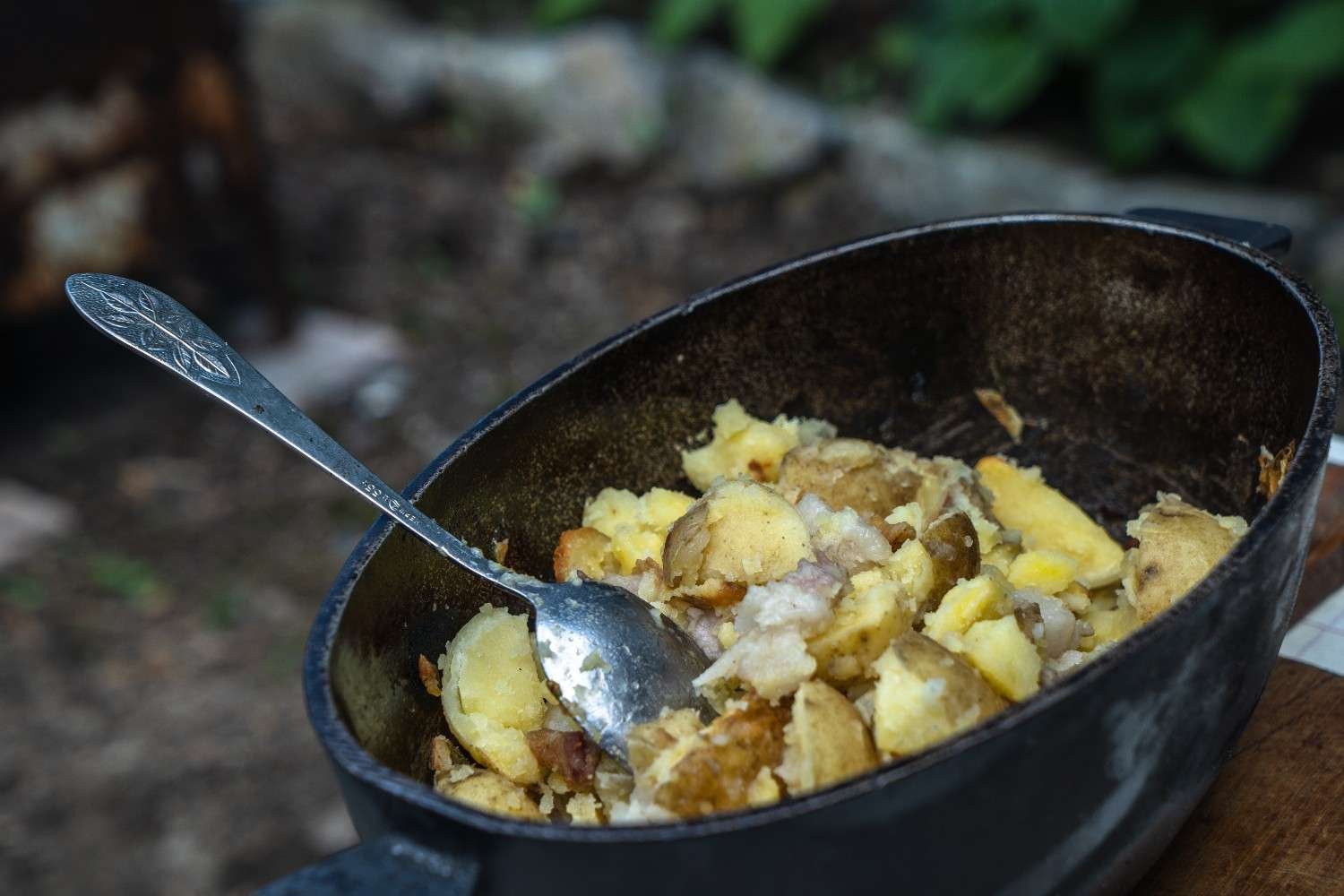
For a full lumberjack-style breakfast, I would pair the potatoes with eggs, bacon or sausage, biscuits, pancakes, and coffee.
You could also add country ham, sausage gravy, or thick toast.
At a campsite, however, the potatoes and eggs may be enough on their own.
The beauty of the dish is that it can serve as either a side or the foundation of a complete skillet breakfast.
Frequently Asked Questions (FAQs)
1. What are the best potatoes for logging camp breakfast potatoes?
Russet potatoes are one of the best choices because they become crispy outside while staying fluffy inside. Yukon Gold potatoes also work well if you prefer a creamier texture.
2. Were fried potatoes really served in logging camps?
Yes. Potatoes, often described as fried potatoes or “spuds,” appeared as part of hearty American logging camp breakfasts alongside foods such as bacon, pancakes, biscuits, oatmeal, eggs, molasses, and coffee.
3. Can I make camp-fried potatoes without bacon grease?
Yes. Vegetable oil, butter, or sausage drippings can all work. Bacon grease simply creates the strongest traditional smoky flavor.
4. Should I use raw or precooked potatoes?
Both methods work, but precooked or parboiled potatoes are faster and easier to brown evenly. Raw potatoes usually benefit from being covered briefly so steam can soften the centers.
5. Can I cook lumberjack potatoes over a campfire?
Yes. A cast-iron skillet placed over steady campfire coals works extremely well. Avoid high flames, rotate the pan as needed, and use a lid or foil if the potatoes need extra steaming time.
6. Are logging camp potatoes the same as home fries?
They are similar, but logging camp potatoes are usually more rustic and traditionally rely on bacon drippings, onions, and simple seasoning rather than the larger variety of spices and vegetables commonly used in modern home fries.
Why This Old-Fashioned Breakfast Still Works Today
What I appreciate most about old logging camp cooking is how practical it was.
There was no unnecessary complexity. Ingredients had to be useful, filling, and easy to prepare for a crowd.
Logging camp breakfast potatoes still work for the same reason. Much like many traditional southern breakfast dishes, they rely on simple ingredients, generous portions, and hearty flavors that hold up well after a long morning of physical work.
Whether you cook them over a campfire, on a backyard griddle, or in a cast-iron skillet at home, potatoes fried with bacon and onions deliver the kind of simple, satisfying flavor that does not need much improvement.
You can keep them traditional or add eggs, peppers, cheese, and sausage for a modern variation.
Either way, the dish offers a flavorful connection to one of the most recognizable traditions in American logging-camp food.