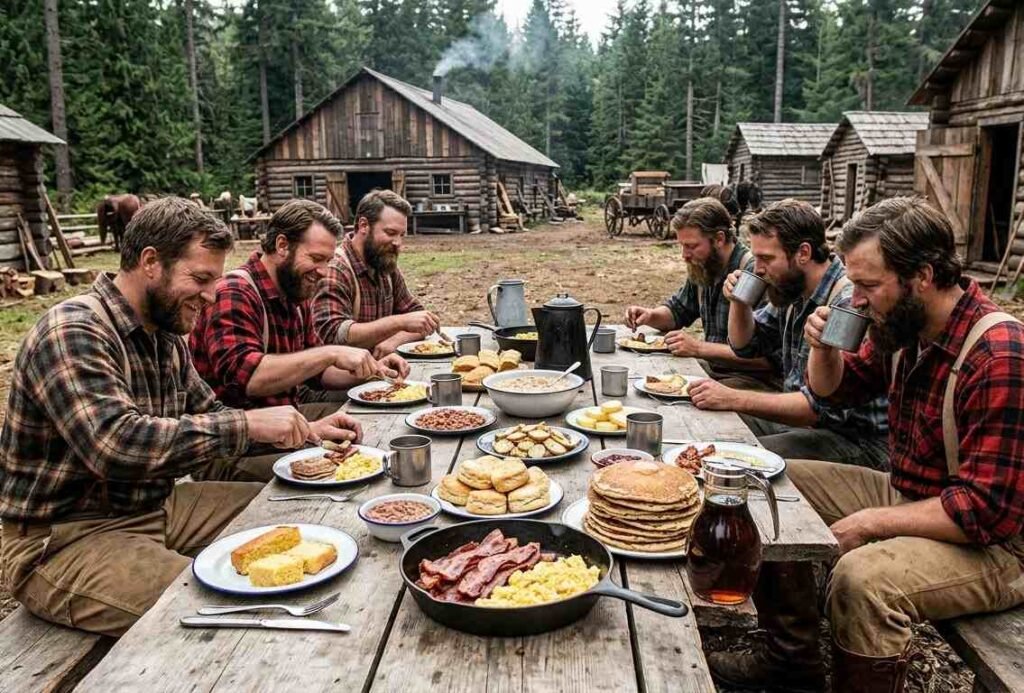
A freezing morning in an American logging camp did not begin with a delicate breakfast. Before crews headed into snowy forests to cut, haul, and move timber, the cook shack had to produce enough food to fuel hours of exhausting physical work. I find historic logging camp brunch foods fascinating because they reveal a side of American food history that goes far beyond the oversized pancake breakfasts we now associate with lumberjacks.
From sourdough hotcakes and cornmeal mush to salt pork, bean-hole beans, fried potatoes, pies, and strong coffee, the real lumberjack breakfast was built around calories, practicality, and ingredients that could survive remote camp conditions.
What Did Lumberjacks Really Eat for Breakfast?
The answer depended on the region, decade, season, and supplies available to each logging operation. Camps in Maine, Michigan, Minnesota, Wisconsin, and the Pacific Northwest did not necessarily serve identical meals.
Still, historical accounts show a familiar pattern. Logging camp food commonly included flour-based breads, pancakes, potatoes, oats, beans, preserved meats, dried or canned fruit, sweets, and coffee.
The Forest History Society notes that lumberjacks working long days in brutal winter conditions required substantial meals, while historical camp menus included baked beans, bread, potatoes, vegetables, fruit, meat, soups, and desserts.
What stands out to me is the variety. The real logging camp table looked more like an enormous workingman’s spread than today’s standardized bacon-and-pancake platter.
Why Did Logging Camps Serve Such Heavy Breakfasts?
Logging was intensely physical work. Crews could spend long days cutting trees, moving logs, handling horses, clearing roads, and working outdoors in severe winter weather.
That made calorie-rich food an operational necessity.
Carbohydrates from potatoes, bread, hotcakes, biscuits, oats, and cornmeal provided energy. Beans and meat added protein, while pork fat, gravy, butter, molasses, and desserts increased the calorie density of meals. Some of these hearty foods also shared similarities with traditional southern breakfast dishes, especially meals built around biscuits, pork, gravy, cornmeal, and filling starches.
A logging camp cook was therefore doing more than preparing breakfast. He was helping keep the entire operation moving.
Were Sourdough Hotcakes and Biscuits Common Lumberjack Foods?
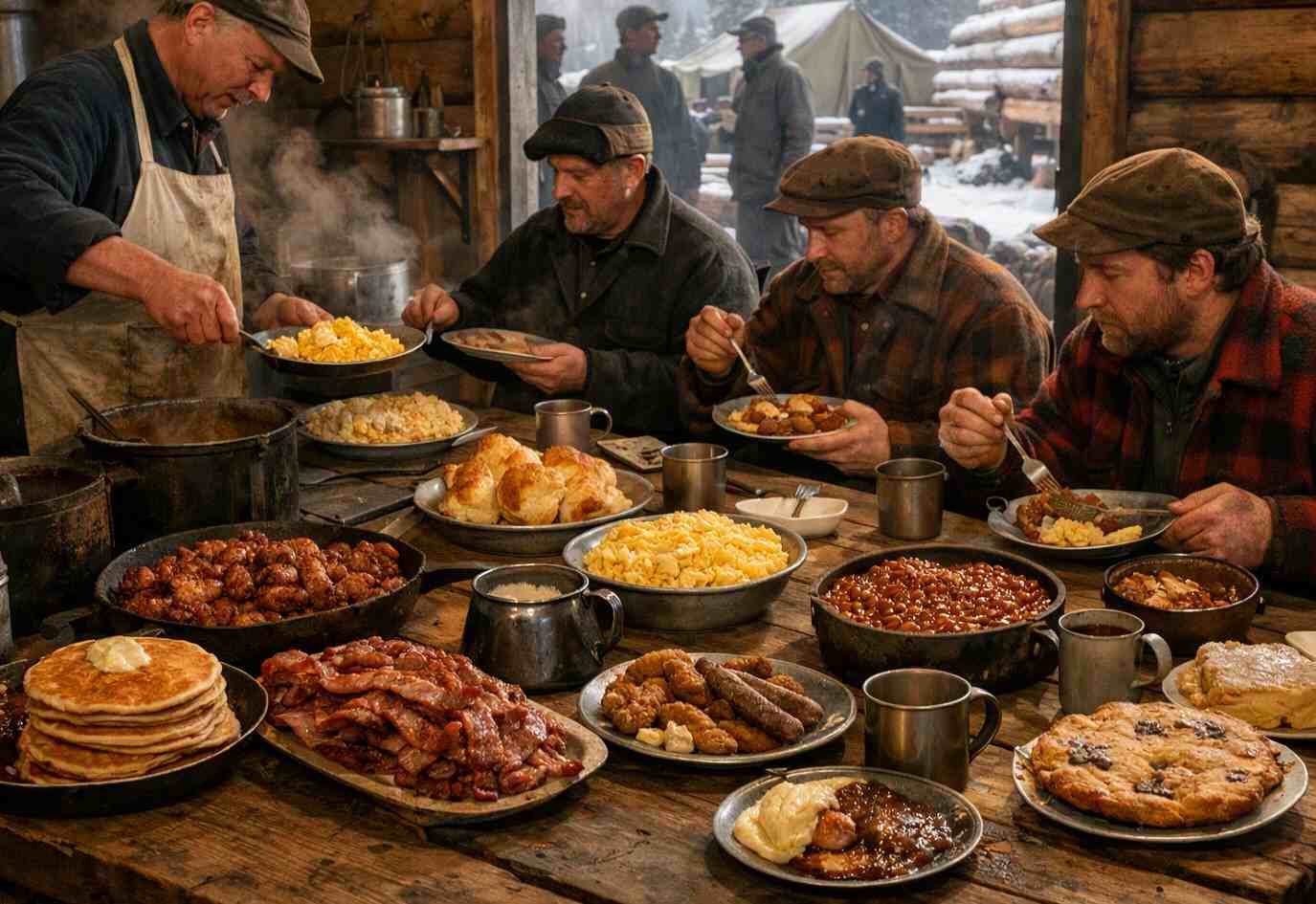
Hotcakes became one of the foods most closely associated with American lumberjack culture. Camp cooks could prepare large quantities of batter and turn out pancakes quickly on broad greased cooking surfaces.
Sourdough versions also fit remote camp life because a maintained starter allowed cooks to continue producing breads and hotcakes from basic supplies. In cold regions, keeping that starter active required care.
Biscuits provided another versatile staple. Workers could eat them with gravy, butter, preserves, syrup, or molasses.
Molasses was especially useful because it stored well and could sweeten hotcakes, oatmeal, baked beans, and other inexpensive foods without requiring fresh ingredients.
Did Lumberjacks Eat Johnny Cakes and Cornmeal Mush?
Wheat flour was important, but it was not the only grain available to camp kitchens.
Johnny cakes and cornmeal mush gave cooks inexpensive alternatives. Cornmeal stored well, worked in simple camp cooking, and could become anything from dense cakes to hot breakfast porridge.
Oatmeal served a similar purpose. Large pots of hot oats offered a warm, filling breakfast that cooks could prepare for many workers at once.
Cooks sometimes paired hot cereal with dried or preserved fruit such as apples, peaches, or prunes, creating a practical breakfast long before fresh fruit could be shipped reliably into remote winter camps.
Why Were Donuts and Pies Served in Logging Camps?
Dessert at breakfast sounds unusual today, but lumberjacks were not eating for modern nutritional restraint.
Donuts, cookies, and pies supplied portable carbohydrates and sugar. They could also be prepared in batches and carried by workers who spent much of the day away from the main cookhouse.
Some logging traditions even developed colorful slang around pies. High-calorie fruit and pantry-based pies could appear alongside regular meals rather than being reserved for special occasions.
Dried apple pie made practical sense because dried fruit traveled and stored easily. Frugal recipes such as vinegar pie could also produce a sweet-tart dessert from inexpensive pantry ingredients when fresh fruit was scarce.
What Meat Did Lumberjacks Eat in Logging Camps?
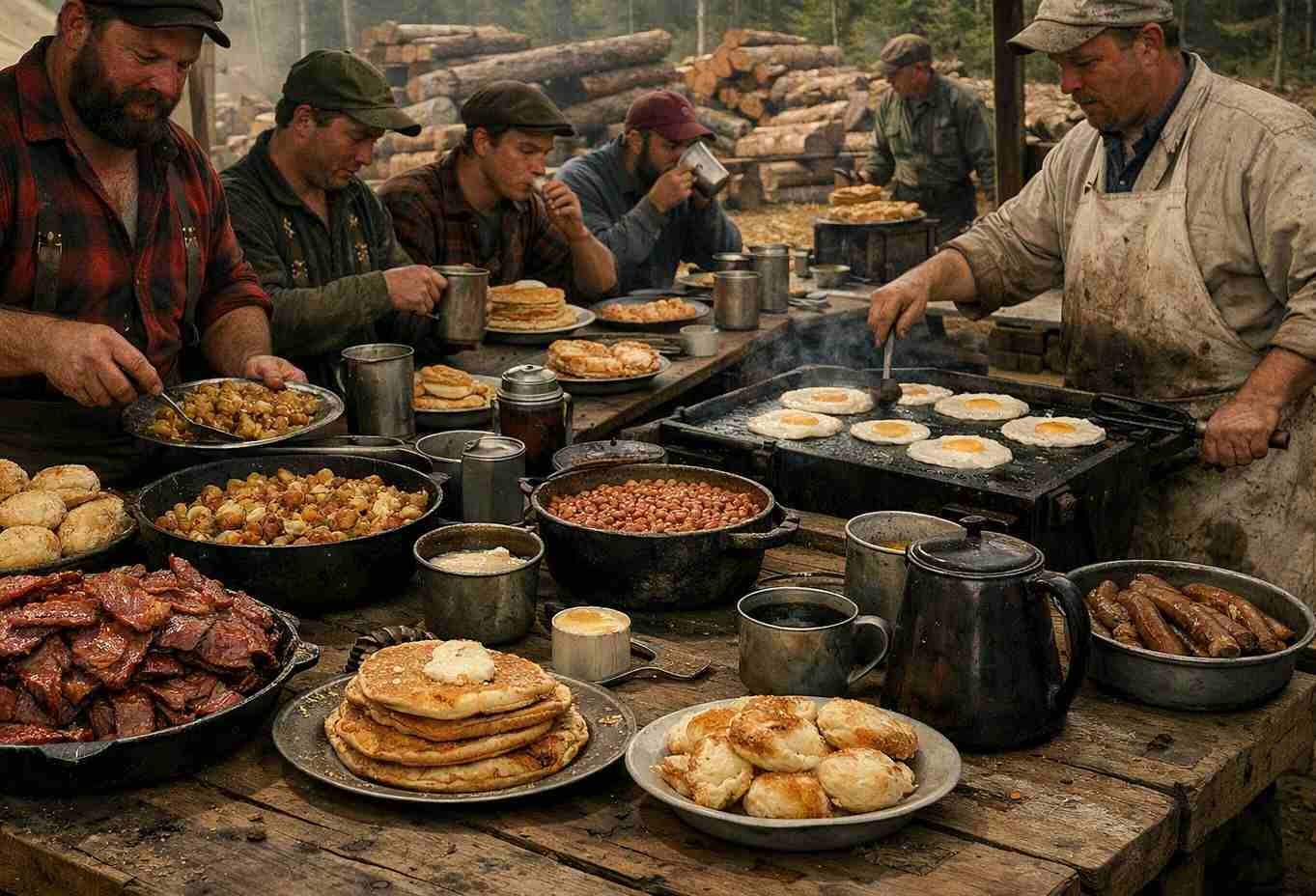
Salt pork was especially practical in the era before reliable refrigeration.
Its heavy curing allowed it to remain usable longer than fresh meat, while its high fat content made it well suited to workers performing demanding outdoor labor.
Cured ham, pork chops, beef, corned beef, and meat served with gravy also appeared in various camp meals depending on location and supply.
Fried side meat could produce flavorful drippings that cooks turned into pan gravy with flour. That gravy could then cover biscuits or potatoes, stretching relatively simple ingredients into a heavier meal.
What Was Red Flannel Hash?
Red flannel hash is one of the most memorable old New England-style breakfast dishes.
It traditionally combines chopped potatoes, corned beef, and beets, with the beets giving the hash its recognizable reddish color. It also reflects a practical principle common to camp and working-class kitchens: use substantial ingredients and make leftovers useful again.
For an article about old lumberjack food, hash matters because potatoes and preserved meat were exactly the kinds of ingredients suited to hearty breakfasts.
What Were Bean-Hole Beans?
Bean-hole beans are among the most distinctive foods associated with traditional logging camp cooking.
Cooks or assistants could build a fire in a ground pit, create a bed of hot coals, and lower a covered pot of beans into it. The pot might contain soaked beans, salt pork, and molasses before being covered and left to cook slowly for hours.
The method effectively created a low-maintenance outdoor slow cooker.
Beans were inexpensive, filling, easy to store, and suitable for feeding large crews, making them a natural part of remote camp life.
What Did Lumberjacks Drink With Breakfast?
Coffee was one of the defining beverages of logging camp mornings.
Camp cooks needed to brew enough for large crews rather than make individual cups, so coffee could be prepared in oversized pots, kettles, or other camp cookware.
The result was usually straightforward and strong.
Tea was also available in some camps, but coffee became particularly intertwined with the popular image of the American lumberjack. A steaming mug before heading into a frozen forest was as practical as it was comforting.
How Was a Real Logging Camp Breakfast Different From Today’s Lumberjack Breakfast?
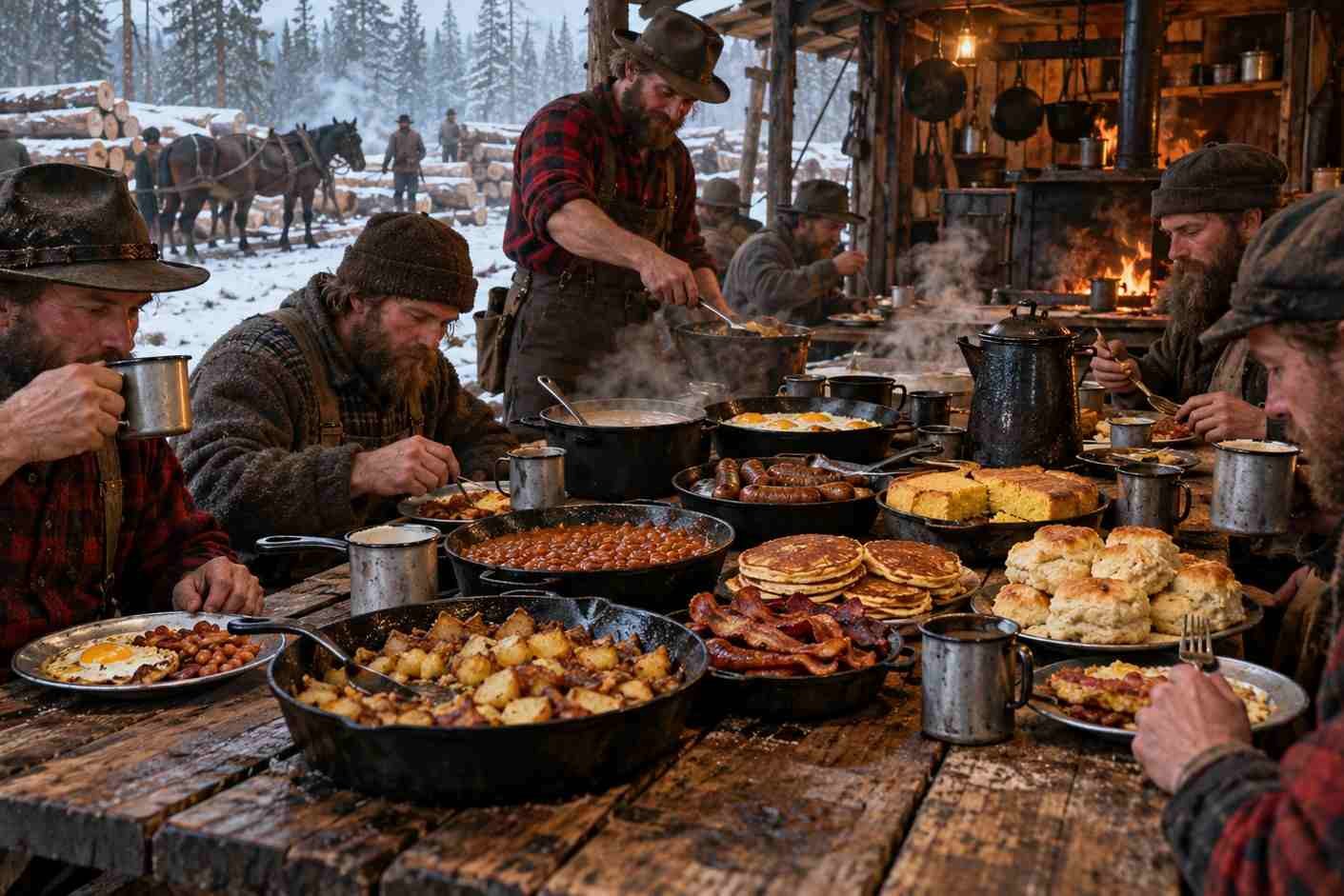
Today’s lumberjack breakfast usually means pancakes, eggs, bacon or sausage, potatoes, biscuits, and perhaps toast.
Historic meals were less standardized.
Actual historic logging camp brunch foods could extend from flapjacks and biscuits to oats, prunes, johnny cakes, cornmeal mush, salt pork, beans, fried potatoes, hash, gravy, donuts, preserved fruit, molasses, and pie.
That difference matters because the modern restaurant version compresses generations of regional logging camp cooking into one recognizable platter.
The historical version was shaped by storage, weather, cost, geography, and the challenge of feeding an entire crew.
Frequently Asked Questions (FAQs)
1. What was a typical lumberjack breakfast?
A logging camp breakfast could include pancakes or hotcakes, biscuits, oatmeal, fried potatoes, beans, preserved meat, gravy, fruit, baked goods, and coffee. Menus differed significantly by region and historical period.
2. Did lumberjacks really eat pancakes every morning?
Pancakes were strongly associated with logging camps and appear in historic logging imagery and menus, but they were only one part of a much broader camp diet.
3. Why did lumberjacks eat beans for breakfast?
Beans were inexpensive, easy to store, filling, and suitable for large-batch cooking. Bean-hole cooking also allowed camp cooks to prepare large quantities slowly with relatively little supervision.
4. Did lumberjacks eat dessert for breakfast?
Sweet baked foods could appear frequently in camp meals. Donuts, cookies, preserved-fruit pies, syrup, molasses, and other calorie-rich foods provided additional energy for workers performing strenuous physical labor.
5. Why was the logging camp cook so important?
A camp depended on its cook to feed large groups quickly and consistently. Good food supported worker energy and morale, making the cookhouse an important part of daily logging camp life.
Why Logging Camp Food Still Matters in American Food History
When I look beyond the Paul Bunyan image, I see logging camp meals as a practical record of American working life. Cooks had to transform inexpensive, durable ingredients into enormous meals while operating far from modern supermarkets, commercial kitchens, and refrigeration.
That is what makes historic logging camp brunch foods worth exploring today. Hotcakes, bean-hole beans, red flannel hash, salt pork, biscuits, cornmeal, pies, oatmeal, molasses, and strong coffee were not created for an Instagram-worthy brunch table. They helped workers get through another exhausting day in America’s forests.