I’ve always thought the best diner desserts have a little imperfection to them. A tall meringue can lean slightly, a crust can brown unevenly, and a slice of pie can look generous rather than carefully measured. When I make these desserts at home, that relaxed quality is part of the appeal. Homemade fillings bring back the feeling of ordering a thick slice from a neighborhood counter and watching it arrive on a plain white plate.
I also find that scratch-made fillings change the whole experience. Fresh lemon juice tastes brighter, cooked fruit has more character, and a custard made with real eggs feels softer and richer than something poured straight from a mix. These old-school diner pie and dessert recipes with homemade fillings are less about chasing perfection and more about getting the familiar flavors, textures, and warmth right.
What Makes an Old-School Diner Pie Special
Classic diner pies usually keep things straightforward: a tender crust, a generous filling, and a topping that adds contrast. The charm comes from familiar combinations rather than elaborate decoration. Apple, lemon, chocolate, buttermilk, and sugar cream all have distinct personalities, yet they share a comforting richness.
Classic Pies With Homemade Fillings
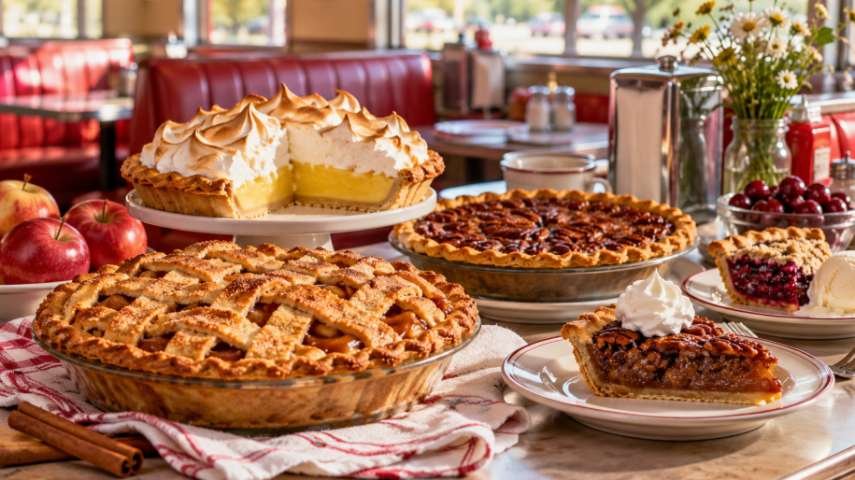
Grandma’s Lemon Meringue Pie
Lemon meringue is a diner counter classic for good reason. The filling should taste sharply citrusy before the sweetness of the meringue rounds it out. A homemade lemon curd built from fresh juice, sugar, egg yolks, and butter gives the pie a glossy, creamy center.
Old-Fashioned Chocolate Fudge Pie
Chocolate fudge pie sits somewhere between a traditional pie and a dense chocolate dessert. Cocoa, sugar, butter, and eggs create a batter that sets into a rich center with a texture closer to soft fudge than pudding.
A little vanilla and salt can sharpen the chocolate flavor without making the pie taste complicated. Serve modest slices with whipped cream or vanilla ice cream. The contrast between the warm chocolate center and cool topping gives it that unmistakable diner-dessert feel.
Southern Buttermilk Pie
Buttermilk pie proves that a short ingredient list can produce a memorable dessert. Buttermilk brings gentle tang, while sugar and butter create a rich custard. Lemon keeps the sweetness balanced, and a little nutmeg adds the old-fashioned warmth associated with Southern baking.
Overbaking can make the custard firm and dry instead of silky. Once chilled, the filling should cut cleanly while remaining soft on the fork.
Arkansas Possum Pie
Possum pie is the playful layered dessert in this group. Its pecan shortbread crust adds crunch beneath sweetened cream cheese, dark chocolate pudding, and whipped cream. Each layer brings a different texture, which makes every forkful feel generous.
Indiana Sugar Cream Pie
Sugar cream pie has the kind of simplicity that makes old-fashioned desserts memorable. Heavy cream, sugar, flour, and vanilla bake into a smooth custard with subtle caramel notes. A light dusting of nutmeg or cinnamon can add warmth without changing its character.
Getting the Homemade Filling Right
The biggest difference between a good diner-style pie and a disappointing one often comes down to moisture control. Fruit releases juice as it cooks, so apples, berries, and cherries need a filling that accounts for that liquid. Cornstarch or flour can help, but the amount should match the fruit and cooking method.
Custard pies need a different approach. Eggs thicken gradually, so steady oven heat matters. Blind-baking the crust can help when a wet filling would otherwise make the bottom soggy. Cooling is equally important because many fillings continue setting after they leave the oven.
This is also where homestyle diner recipes with global flavor twists can inspire a broader approach to comfort food. The classic techniques stay useful even when the flavors change.
Serving Diner Desserts at Home
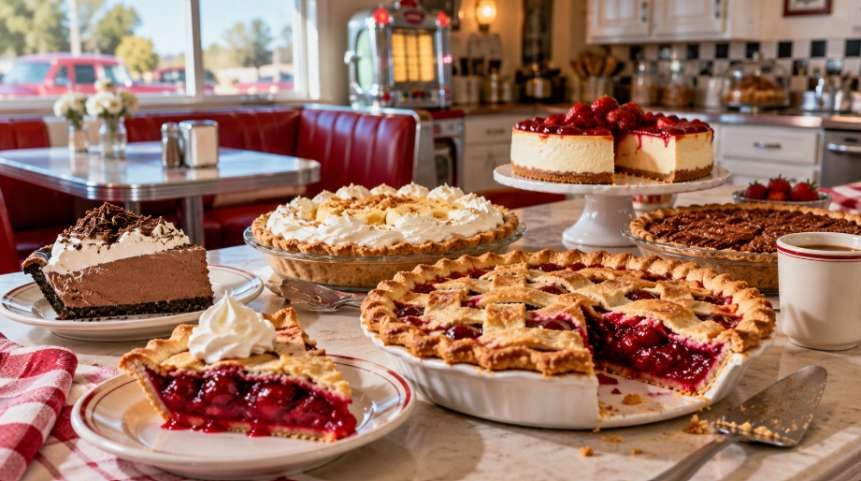
Presentation does not need to be elaborate. Cut generous but manageable slices, add a spoonful of softly whipped cream, or serve a warm slice with vanilla ice cream. Coffee is the natural partner for nearly every pie here, especially chocolate, sugar cream, and buttermilk varieties.
For a genuine diner feel, use simple plates and let the dessert remain the focus. A slightly rustic crust or uneven meringue is not a flaw. It can make a homemade pie look more inviting.
Keeping the Diner Spirit Fresh
Nostalgic desserts do not need to remain frozen in the past. A familiar pie can share a dessert table with newer interpretations, and the same homemade filling techniques can support both. The appeal comes from recognizable ingredients prepared with care, not from strict rules about presentation.
That same balance works across the diner menu, where familiar mains can make room for contemporary sides.
Frequently Asked Questions
1. What makes a pie taste like an old-school diner dessert?
Generous filling, a flaky or crisp crust, familiar flavors, and simple toppings create the classic diner character. Texture matters as much as sweetness.
2. Can homemade pie fillings be made ahead?
Yes. Fruit fillings and many custards can be prepared ahead, then cooled and stored properly. Follow the recipe’s chilling and storage requirements for the best texture.
3. Why does a homemade pie filling become watery?
Excess fruit juice, insufficient thickener, undercooking, or cutting the pie too soon can cause a loose filling. Cooling gives many pies time to set.
4. What is the best topping for diner-style pie?
Whipped cream and vanilla ice cream are reliable choices. Meringue works especially well with tart lemon filling, while chocolate and fruit pies pair beautifully with lightly sweetened cream.
Why Homemade Desserts Still Feel Special
That same idea makes classic diner meatloaf recipes with modern side dishes a natural companion to these desserts, keeping the meal familiar while leaving room for a little freshness.
There is something satisfying about bringing an old-fashioned pie to the table and seeing a dessert that looks generous, familiar, and made with real care.
Understanding comfort food vs soul food differences can also help put these nostalgic diner desserts into a broader context of American food traditions and the different meanings attached to comforting dishes.
These recipes do not depend on complicated decoration. Their appeal comes from the contrast of textures, the balance of sweet and tart flavors, and the patience required to let a filling cook and cool properly. That is why diner desserts continue to feel at home in modern kitchens.
The best versions leave room for memory, conversation, and one more generous slice afterward.
A good pie does not need to look perfect. It needs to taste like someone cared enough to make the filling from scratch.