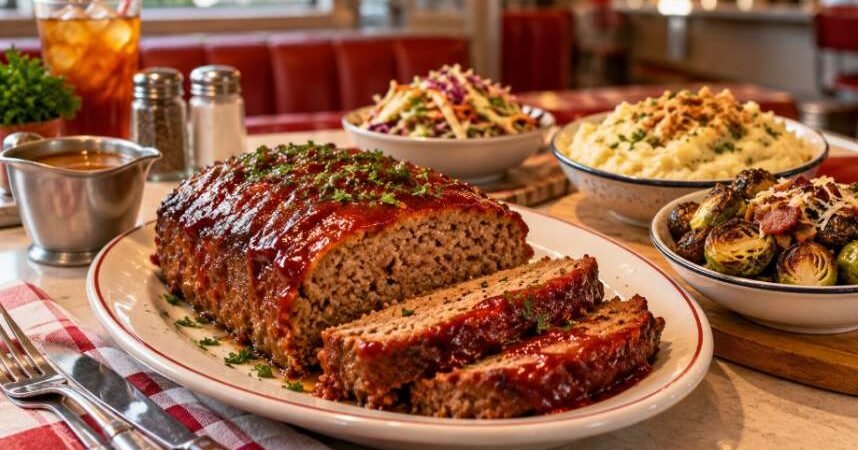
I have always thought diner meatloaf works best when it tastes familiar from the first bite. The ketchup glaze, tender beef, savory onions, and browned edges bring back the kind of plate that feels comforting without needing much explanation. What makes it more interesting now is what happens around that slice of meatloaf.
I also find that the side dishes can completely change the mood of the meal. A rich meatloaf does not need four heavy accompaniments competing for attention. A crisp vegetable, a bright salad, or a potato with plenty of roasted texture can make the same old-fashioned centerpiece feel surprisingly fresh.
Build a Better Diner-Style Meatloaf
For a juicy loaf, use about two pounds of 80% to 85% lean ground beef. A half-and-half blend of beef and pork works too, especially if you want a softer, richer texture. Finely chopped onion adds sweetness and savoriness as it cooks. A little browning around the edges is welcome because it adds the roasted flavor associated with a good diner slice. If using a loaf pan, avoid packing the mixture down harder than necessary. A free-form loaf also gives more surface area for the glaze to caramelize and develop those browned edges nicely.
Two eggs help bind the mixture, while about two-thirds cup of breadcrumbs or quick oats gives the meat structure. Milk helps hydrate that binder. Worcestershire sauce, salt, black pepper, and Italian seasoning or garlic powder round out the flavor.
The glaze should stay recognizably diner-style. A mixture of ketchup, brown sugar, and Worcestershire sauce gives the top a glossy, sweet-savory finish. Bake the loaf at 350°F until the center reaches 160°F, then let it rest for about 10 minutes before slicing. Resting helps the juices settle and makes cleaner slices.
Side Dishes That Bring a Modern Edge
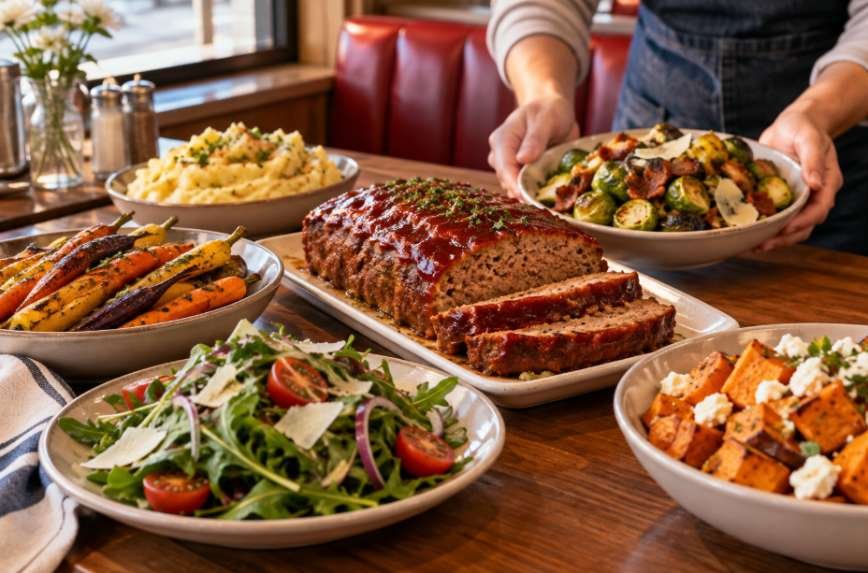
Cacio e Pepe Roasted Broccoli
Roasted broccoli is an easy way to add char and bitterness beside a sweet ketchup glaze. Toss florets with olive oil, salt, and black pepper, then roast at 400°F until the edges are browned and crisp. Finish with plenty of finely grated Pecorino Romano and another turn of pepper.
The cheese gives the vegetable a cacio e pepe-inspired character without making it complicated. The broccoli brings a roasted, slightly bitter note that keeps each bite of meatloaf from feeling too rich.
Miso-Butter Glazed Carrots
Glazed carrots already belong on a classic comfort-food plate, but white miso makes them more savory and layered. Sauté sliced carrots in butter until they begin to soften, then stir in a small spoonful of white miso with a splash of water to create a glossy coating.
Garlic-Herb Smashed Potatoes
Mashed potatoes are the obvious partner, but smashed potatoes bring much-needed texture. Boil baby yellow potatoes until tender, drain them, and gently flatten them on a sheet pan. Drizzle with olive oil, add crushed garlic and herbs, then roast until the edges become deeply crisp.
The contrast is excellent: soft potato centers, crunchy edges, juicy meatloaf, and a sticky glaze. They also hold up well if the meatloaf is served with a little gravy.
Apple and Pomegranate Spinach Salad
A fresh salad is especially useful when the rest of the plate leans warm and savory. Toss baby spinach with thin apple slices, pomegranate arils, and a light vinaigrette. The fruit adds sweetness and acidity, while the spinach keeps the plate from becoming overly heavy.
The crisp fruit and tangy dressing provide the reset that a heavy comfort-food dinner often needs.
How to Balance the Whole Plate
A good modern meatloaf dinner does not require abandoning the classics. It works by giving familiar flavors a little more contrast. Think about the plate in layers: the meatloaf provides savory richness, the potato supplies satisfying starch, the vegetable contributes roasted or fresh flavor, and the salad adds acidity and crunch.
You can also choose just two sides instead of trying to serve everything. For a cozy dinner, smashed potatoes and miso-butter carrots make sense. For a lighter plate, roasted broccoli and apple-pomegranate spinach salad create a better balance. If the meatloaf is particularly rich, prioritize something crisp or acidic.
This approach also leaves room for the broader spirit of homestyle diner recipes with global flavor twists. A small ingredient change can shift a familiar dish without stripping away its identity. Miso, Pecorino, pomegranate, and fresh herbs do exactly that here.
Small Techniques That Make the Meal Better
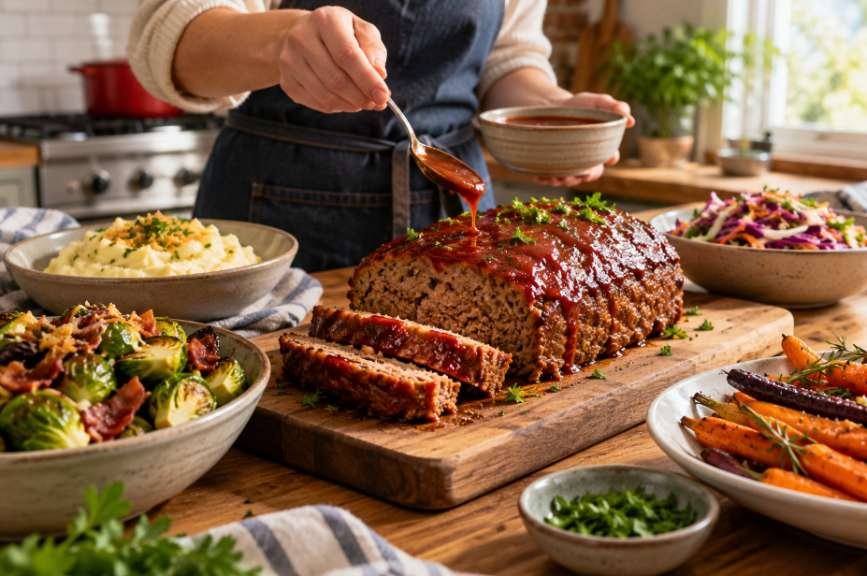
Timing helps. Meatloaf needs resting time, so use those final minutes to finish the vegetables, dress the salad, or crisp the potatoes. Keeping the sides simple also makes the plate feel intentional rather than overloaded.
Leftovers deserve some attention too. Thick slices can become excellent sandwiches with toasted bread, extra glaze, pickles, or crunchy lettuce. The same meatloaf can also be reheated gently and served with a fresh side the next day, which is one reason this style of dinner remains practical for busy households.
Thick meatloaf slices also work well in sandwiches, making classic diner sandwiches with homemade sauces a natural way to turn leftovers into another comforting meal.
For another direction, pair leftovers with ideas inspired by late-night diner food recipes to make at home. A slice of meatloaf can move comfortably from a traditional dinner plate to a late-night sandwich without losing its diner character.
Frequently Asked Questions
1. What makes diner-style meatloaf different?
It usually emphasizes a tender ground-meat mixture, familiar savory seasonings, and a ketchup-based glaze. The flavor is straightforward, rich, and nostalgic.
2. Can I use ground beef and pork?
Yes. A 50/50 beef and pork blend can produce a moister, richer loaf. Keep the binder balanced so the mixture remains tender rather than soft.
3. Which side is best for a rich meatloaf?
A bright salad or roasted vegetable works particularly well because acidity, freshness, and slight bitterness balance the meatloaf’s richness.
4. Should meatloaf rest before slicing?
Yes. A 10-minute rest allows the juices to settle and helps the loaf hold together when sliced.
Why Familiar Comfort Food Still Has Room to Change
The best modern diner plate does not chase novelty for its own sake. It keeps the details people love about meatloaf, then uses contrast to make the meal more enjoyable. A sticky glaze can sit beside charred broccoli. Crisp potatoes can share a plate with tender beef. A sharp vinaigrette can wake up every rich bite.
That balance is what keeps diner food relevant. The meal still feels like comfort food, but it has enough freshness and texture to make you want to cook it again.