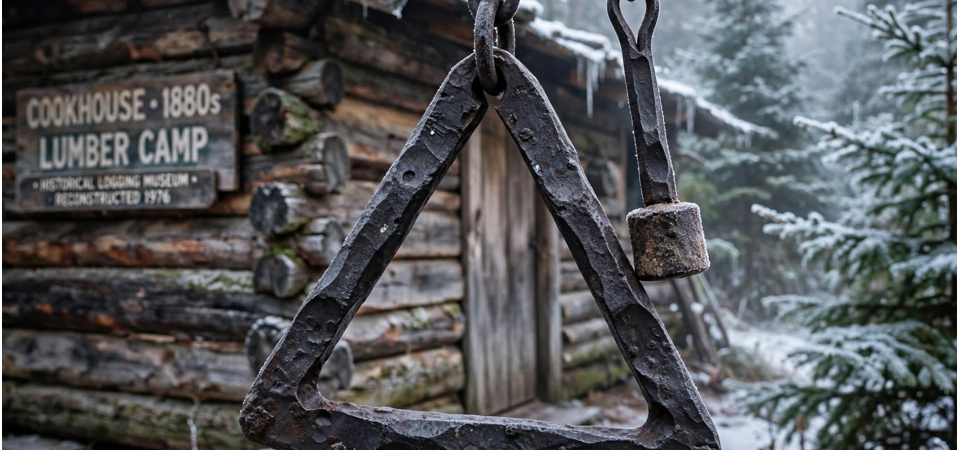
When you stand beside a heavy wrought-iron dinner triangle suspended outside a reconstructed shanty at an open-air logging museum, the quiet timber feels peaceful. Yet, striking that cold bar with an iron striker releases an ear-shattering, vibrating ring that cuts through dense spruce and pine for miles. That resounding chime represents the traditional cookhouse bell in lumber camps—the acoustic command center that governed everyday survival, labor, and order across 19th and early 20th-century North American timberlands.
In the remote frontier woods of Michigan, Wisconsin, Maine, and the Pacific Northwest, clocks were rare luxuries. Men worked from dawn until dusk under grueling conditions. The camp cookhouse operated as the geographic and social nucleus of the entire operation. Every step a lumberjack took—from throwing off woolen blankets to downing mountains of sourdough flapjacks—depended directly on the clanging notes echoing from the cook’s porch.
The Sonic Pulse That Controlled Frontier Labor
The dinner bell was never just a pleasant invitation to eat; it was an unyielding workplace siren. In frontier logging operations, companies housed anywhere from thirty to two hundred men in cramped, drafty bunkhouses. Coordinating shifts across dense acreage without radios or telephone lines required an instrument with unmistakable presence.
The Forest History Society notes that timber companies prioritized camp nutrition above nearly every other operating expense. Loggers burned between 5,000 and 7,000 calories every single day hauling crosscut saws, skidding green logs, and wrangling draft teams in sub-zero snowdrifts. Hunger was an occupational hazard. When the cook struck the bell, all labor within earshot ceased instantly.
5:00 AM 5:30 AM 12:00 PM 6:00 PM 9:00 PM
Wake Call Breakfast Midday Dinner Supper Lights Out
(Short Bursts) (Sustained Roll) (Double Toll) (Heavy Ring) (Single Chime)
From Dawn Rouse to Bedtime: Decoding the Camp Bell Schedule
The camp schedule operated with clockwork regularity. Each chime pattern communicated a distinct instruction across the camp clearing:
- The Rouse (5:00 AM): A short, sharp rhythm shaken on the iron triangle or a single ringing burst from the post bell. This signaled the teamsters to head to the stables to feed and harness the horses, while the lumberjacks dressed in freezing bunkhouses.
- Breakfast Call (5:30 AM): A rapid, rolling strike that signaled the opening of the dining hall doors.
- The Noon Call (12:00 PM): For crews felling trees close to the central clearing, the midday bell signaled a hot dinner. For remote felling gangs miles out in the woods, assistant cooks (“cookees”) hauled food out on sledges, often sounding long tin dinner horns directly at the work sites.
- Supper Call (6:00 PM): The heaviest, longest toll of the day. Saws dropped, axes were secured in stumps, and men sprinted across frozen ground to secure their places at the tables.
- Lights Out (9:00 PM): A measured, single strike warned the camp that stove fires had to be banked and lanterns extinguished.
Why Silence Was Golden: Enforcing the Cookhouse Gag Rule
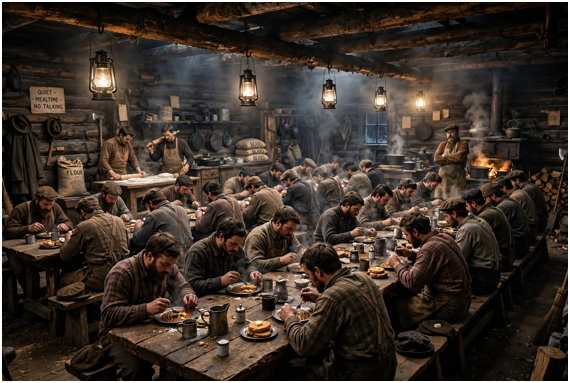
Once the bell fell silent, an eerie hush descended over the mess hall. Stepping inside a dining shanty during mealtime surprised outside visitors because of the total absence of conversation.
Every crew adhered strictly to established lumber camp mess hall rules and dining traditions, and the cook enforced them without exception. Talking was outlawed. If a novice woodsman asked his tablemate about the weather, a veteran logger or a pacing cookee would silence him with a pointed glare or a tap with a rolling pin.
┌─────────────────────────────────────────────────────────────┐
│ CAMP COOKHOUSE DINING CODE │
├─────────────────────────────────────────────────────────────┤
│ 1. Sit in your assigned place. │
│ 2. Reach only for what sits in front of you; point to pass.│
│ 3. No talking, laughing, or storytelling at the table. │
│ 4. Eat your fill, clear your tin, and leave immediately. │
└─────────────────────────────────────────────────────────────┘
This absolute silence was purely practical. Feeding ninety exhausted, ravenous men in shifts demanded lightning-fast turnover. Meals rarely lasted longer than twelve to fifteen minutes. Silence kept the focus strictly on shoveling down calories and prevented arguments between men of varied nationalities, keeping peace in volatile frontier camps.
Triangle, Post-Mounted Bronze, or Tin Horn? The Anatomy of Logging Camp Bells
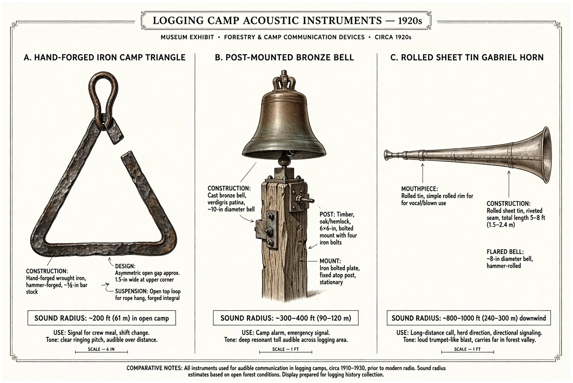
Not every camp sounded the same. Depending on the size of the logging company and the camp’s expected lifespan, operators selected one of three primary acoustic instruments:
| Instrument Type | Primary Construction Material | Effective Sound Radius | Primary Deployment Location |
| Camp Triangle | Hand-forged scrap steel or iron | 1.0 to 1.5 miles | Suspended outside the cookhouse door |
| Post-Mounted Bell | Cast bronze or farm bell iron | 2.0 to 3.5 miles | Bolted atop a timber post or roof ridge |
| Gabriel Horn | Rolled sheet tin (5 to 8 feet long) | 2.5 to 4.0 miles | Blown by hand from the clearing edge |
Forged iron triangles remained the most practical option across remote historic logging camps. Camp blacksmiths frequently forged them directly on-site using salvaged drill steel, round stock, or iron wagon tires.
A unique archival insight from vintage logging journals preserved by the Minnesota Historical Society reveals that experienced cooks intentionally left the bottom corner gap of their forged triangles uneven.
This slight asymmetry created complex disharmonics when struck. The resulting pitch warble prevented the sound from blending in with the sharp cracks of falling timber or the steady drone of nearby sawmill saws.
TYPICAL COOKHOUSE TRIANGLE GEOMETRY
Open Top Loop (Suspension point)
o
/ \
/ \ Forged drill steel
/ \ or scrap wagon tire
/ \
/ \
/__________ \ <– Asymmetric open gap
(Gap creates acoustic dissonance)
Acoustic Range: How Sound Carried Across Deep Winter Timber
Winter air drastically altered camp acoustics. Cold, dense air acted as a natural acoustic magnifier, especially over smooth snowpacks.
Sound waves travel faster through warm air near the ground and bend upward. In sub-zero lumber camps, thermal inversions frequently formed: freezing ground-level air trapped sound beneath a warmer upper layer.
When struck vigorously with an iron bar, the vibrations of a 1-inch thick steel triangle reverberated against this atmospheric boundary, carrying crisp acoustic signals across miles of white pine wilderness.
For operations cut off by rugged ridges, the camp cook relied on the “dinner horn” or “Gabriel horn”. Crafted from long cones of tin, these straight trumpets required immense lung capacity. A skilled cookee could blast a low, resonant drone that bounced off valley walls, cutting through freezing fog where high-pitched bells fell flat.
The Camp Hierarchy: Why the Man Behind the Mallet Held the Real Power
While the camp walking boss or timber cruiser carried administrative authority, the head cook—universally called “Cookie”—held the real leverage over camp success. Finding reliable woodsmen was tough. Keeping them through sub-zero blizzards was nearly impossible if the food slipped in quality.
Cooks often earned higher weekly pay than the logging foreman. If a cook was stingy, served sour salt pork, or let the sourdough spoil, crews would stage spontaneous walkouts. A legendary lumberjack tradition involved dissatisfied loggers nailing a batch of rock-hard flapjacks directly to the cookhouse door as their formal notice of resignation.
┌────────────────────────────────────────────────────────┐
│ CAMP SHANTY POWER STRUCTURE │
├────────────────────────────────────────────────────────┤
│ Camp Boss: Directs harvest, roads, and felling. │
│ The Cook: Controls rations, wake calls, health. │
│ Cookees: Peel potatoes, fetch water, chop wood.│
│ Bull Cook: Cleans bunkhouse, handles camp fires. │
└────────────────────────────────────────────────────────┘
The cook controlled the bell rope or striker with complete autonomy. No lumberjack dared touch the instrument. Striking the bell out of turn was considered an immediate offense that disrupted work rhythms and invited instant dismissal.
As research from the National Park Service on historic backcountry settlements demonstrates, clear auditory signaling was the single most reliable way to coordinate isolated communities before electricity.
Ringing Out the Past: Preserving North Woods Cookhouse Heritage
Today, the traditional dinner triangle hangs as a nostalgic decorative piece on suburban porches and barbecue joints. However, handling an authentic 19th-century triangle reveals the industrial weight of frontier life: heavy steel pitted by forge fire and weathered by decades of northern snow.
If you ever find yourself visiting a preserved historic camp in northern Wisconsin, Minnesota, or Maine, take a minute to study the entrance of the mess shanty. That hanging bar of steel tells the story of early American industry. It echoes hundreds of men running through freezing mud, the scent of woodsmoke and hot lard, and the disciplined community that cut the timbers for a developing nation.
Frequently Asked Questions About Logging Camp Cookhouse Bells
1. What was the traditional cookhouse bell made of?
Most camp bells were hand-forged from scrap steel or iron rods, while larger central camps used cast-bronze post bells or sheet-tin Gabriel horns.
2. Why did lumberjacks eat in total silence?
Silence ensured men consumed their meals quickly so cookees could clean up and prepare the next seating without table arguments.
3. Who was allowed to ring the cookhouse bell?
Only the head cook or designated assistant cookees were permitted to ring the bell or sound the dinner horn.
4. How far could a logging camp dinner horn sound carry?
A long tin Gabriel horn could carry sound up to four miles across valleys and frozen lakes under favorable winter conditions.