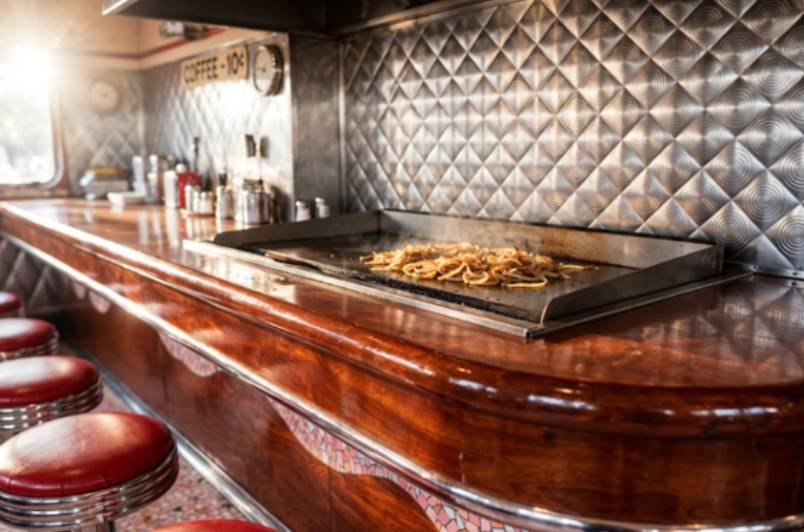
The smell of caramelized griddle onions hit me the second I pushed past the heavy steel door of a preserved 1941 Jerry O’Mahony car in New Jersey. Sunlight ricocheted off engine-turned, quilted stainless steel backsplashes, illuminating round swivel stools and pink terrazzo flooring.
Few culinary symbols hold a grip on Americana quite like these gleaming, metallic capsules. Understanding the history of silver dining car restaurants requires unraveling two intertwined stories: the luxury transcontinental railroad streamliners that revolutionized travel, and the ingenious roadside entrepreneurs who repackaged that aerodynamic glamour for everyday drivers.
[ 1860s – 1920s ] [ 1930s – 1940s ] [ 1950s – Present ]
Pullman “Delmonico” Cars Budd Co. Shot-Welded Streamliners Highways & Fast-Food Chains
│ │ │
▼ ▼ ▼
Night Lunch Wagons Prefabricated Roadside Diners Historic Preservation
(Horse-drawn street carts) (Jerry O’Mahony & Samuel Kullman) & Modern Retro Revivals
The Railcar Origins: When Fine Dining Rode Shot-Welded Steel
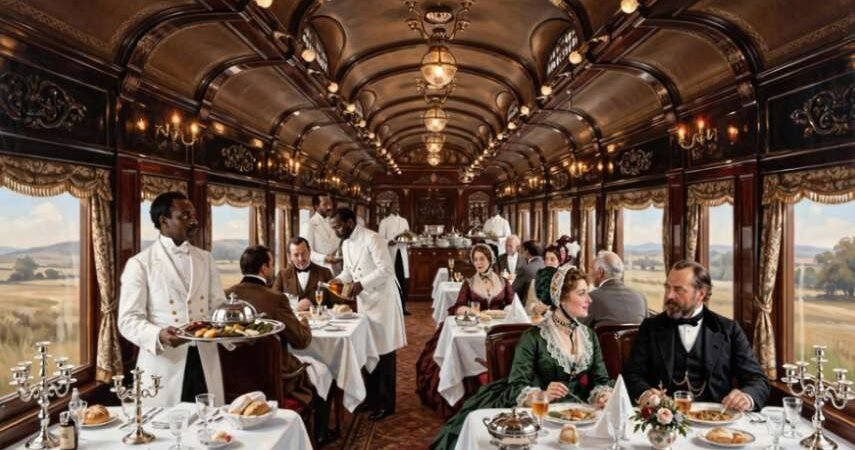
Before dedicated kitchen carriages existed, rail passengers endured frantic fifteen-minute depot stops. Station buffets served lukewarm, stale coffee and salted meats of dubious origin. Industrialist George Pullman transformed that misery in 1868 with the Delmonico, a kitchen car built expressly for onboard culinary service.
Fine dining on rails soon became a traveling boardroom for the country’s elite. Yet the true “silver” identity emerged decades later during the Great Depression.
The Budd Company and the Corrugated Stainless Revolution
In the early 1930s, the Budd Company of Philadelphia rewrote transportation engineering. Traditional carbon steel railcars were heavy and prone to rust, requiring layers of protective paint. Stainless steel offered unmatched corrosion resistance and natural brilliance, but intense heat from standard welding destroyed its protective chromium oxide layer.
Edward G. Budd patented shot-welding in 1932. This process applied precise electrical impulses that fused the metal without compromising its stainless properties. The Library of Congress Historic American Engineering Record catalogs this breakthrough as the catalyst for the 1934 Burlington Pioneer Zephyr.
Carwrapped in corrugated, fluted stainless steel, these trains looked perpetually in motion. Railroads quickly placed gleaming dining carriages—bearing proud names like Silver Restaurant and Silver Cuisine—at the center of their promotional campaigns.
Multi-Course Glamour Aboard Burlington’s Silver Cuisine
Rail dining in these silver cars was an orchestrated performance. Fresh roses sat in weighted silver bud vases atop crisp Irish linen tablecloths. Stewards weighed silverware down against train sways.
Archival menus reveal regional sophistication. Eastbound trips on the California Zephyr showcased pan-fried Rocky Mountain rainbow trout and walleyed pike. Westbound runs served roasted prime ribs of beef with horseradish foam and Pacific Northwest salmon. A passenger paying a dollar for breakfast received freshly squeezed Florida orange juice, coddled eggs, warm buttermilk biscuits, and customized porcelain china marked with the railroad’s herald.
The experience established a cultural precedent: shimmering stainless steel was synonymous with pristine hygiene, speed, and culinary hospitality.
Roadside Architecture: How Prefab Builders Copied the Rails
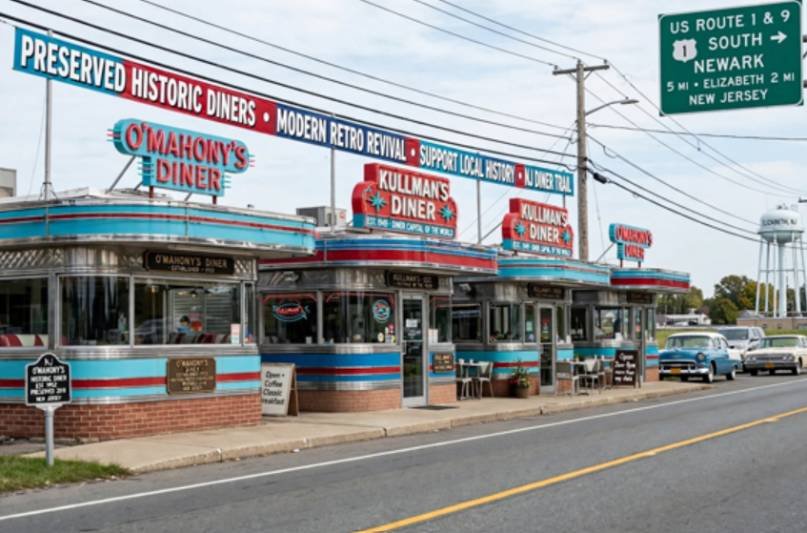
Automobile ownership exploded across the United States during the 1920s and 1930s. Roadside entrepreneurs realized they could capture the romance and sanitary reputation of luxury streamliners without laying a foot of track.
This shift also helped define the greasy spoon restaurant as an affordable, informal alternative to more elaborate dining establishments, giving everyday motorists access to simple, filling meals in distinctive roadside settings.
The transition started on street corners. Late-night lunch wagons had long catered to third-shift factory workers, but municipal ordinances began pushing mobile wagons off city streets. Builders responded by fabricating permanent, wagon-inspired structures inside factories, shipping them across state lines via flatbed trailers and rail spurs.
As the Smithsonian National Museum of American History notes, diner manufacturers deliberately borrowed industrial Streamline Moderne motifs from aviation and rail to reassure suburban motorists that roadside kitchens were clean, modern, and respectable. Two New Jersey titans led this transformation.
┌────────────────────────────────────────────────────────────────────────┐
│ VINTAGE DINER ARCHITECTURAL ANATOMY │
└────────────────────────────────────────────────────────────────────────┘
Monitor / Clerestory Roof (Early) or Barrel Roof (1940s)
╭───────────────╮
Curved Eaves / Prow ────│ [RESTORED] │──── Fluted Stainless Fascia
Glass Block Corners ──│ ╭───╮ ╭───╮ │── Porcelain Enamel Trim
│ │ │ │ │ │
Marble/Wood ────│ ╰───╯ ╰───╯ │
Back-Bar │ █ █ █ █ █ █ █ │──── Ceramic Mosaic / Terrazzo Floor
╰───────────────╯
Steel I-Beam
Transport Skid
Jerry O’Mahony: Hardwood Frames and Glass-Block Curves
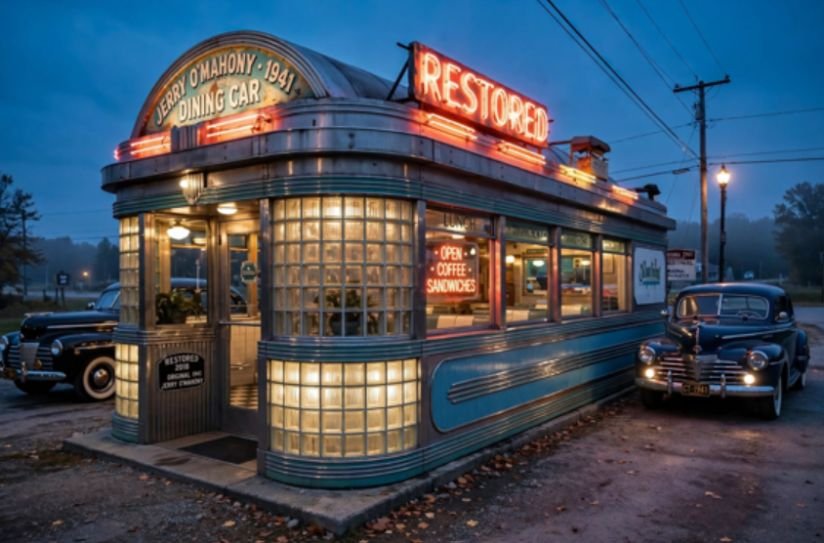
Operating out of Elizabeth, New Jersey, Jerry O’Mahony, Inc. coined the phrase: “In our diners, you eat in a work of art.”
O’Mahony diners relied on a hybrid engineering system. The chassis utilized massive steel I-beams designed to withstand the stress of crane hoisting. Above the floor line, skilled carpenters framed the walls using dense, cured West Virginia white oak.
On the exterior, O’Mahony incorporated curved glass-block corner modules flanking entryways. These blocks diffused incoming headlights while preserving diner privacy. Craftsmen fitted stainless steel panels with friction-lock strips, eliminating visible exterior rivet heads.
Inside, O’Mahony balanced cold metal with opulent warmth. Polished Mexican mahogany counters, hand-set Wheeling mosaic floor tiles, and engine-turned stainless steel made patrons feel as though they were boarding a private luxury coach.
Samuel Kullman: Unibody Steel and Space-Age Enamel
The Kullman Dining Car Company took a purely industrial path. Samuel Kullman recognized that structural timber warped over decades of griddle heat and outdoor humidity. He transitioned his factory to all-steel, tubular welded unibody frames.
Kullman favored striking, colorful porcelain-enamel panels alongside quilted stainless steel. Bright turquoise, cream, and cherry red bands wrapped around the exterior perimeter. By the late 1940s, Kullman mastered multi-section construction. Instead of squeezing a diner into the 10-foot-wide highway transit limit, his factory built two- and three-piece units that bolted together seamlessly on concrete piers.
The aesthetic pivoted from train emulation toward space-age optimism. Large plate-glass picture windows replaced narrow train-car sashes, and cantilevered overhangs sheltered motorists parking their sedans.
Mid-Century Shakeout: Highways, Plastics, and the Preservation Fight
By the late 1950s, the economic foundation of silver dining cars began to buckle on both tracks and tarmac.
Railroads were hemorrhaging millions on passenger service. The expansion of commercial aviation and President Eisenhower’s Interstate Highway System diverted travel away from the rails. White-tablecloth crews gave way to automated vending cars, pre-packaged airline-style meals, and eventual passenger-rail service cutbacks.
Roadside diners faced aggressive pressure from corporate fast-food franchises. Chains built with cheap drywall, asphalt, and fiberglass offered fifteen-cent burgers with zero seating overhead. Many independent silver diners closed, falling victim to scrap-metal yards or highway bypasses.
Yet the visual power of these structures prevented total extinction. A renewed appreciation for mid-century industrial craft emerged in the 1980s.
A renewed appreciation for mid-century industrial craft emerged in the 1980s. This shift marked an important turning point in the decline and revival of retro diners, as preservationists and diners enthusiasts began recognizing the cultural and architectural value of these once-common roadside establishments.
Historians worked alongside the National Park Service National Register of Historic Places to preserve classic stainless steel diners like Mickey’s Diner in Saint Paul and the Summit Diner in New Jersey.
Simultaneously, the modern restaurant industry rediscovered the public’s appetite for this aesthetic. Understanding why classic diner food feels nostalgic reveals how familiar flavors, sensory experiences, and comforting spaces can evoke powerful memories
Frequently Asked Questions
1. Why were historic dining cars and diners made of stainless steel?
Stainless steel was chosen for its corrosion resistance, sanitary ease of cleaning, and high-tech visual association with modern rail speed.
2. Did stationary silver diners actually run on railroad tracks?
Most stationary diners were purpose-built in modular factories and trucked to sites; only a tiny percentage were retired passenger railcars converted on site.
3. What was the Budd Company’s shot-welding process?
Patented in 1932, shot-welding used regulated electrical bursts to join stainless steel without destroying its anti-corrosive properties.
4. Where is the highest concentration of vintage silver diners today?
New Jersey holds the title as the diner capital of the world, maintaining the largest collection of operating pre- and post-war prefabricated diners.
The Last Call at the Griddle
The enduring charm of a silver dining car is not just its shimmering shell; it is the deliberate marriage of heavy industrial engineering and democratic hospitality. These buildings were built to outlive trends, highways, and the factories that produced them.
If you want to experience this design firsthand, skip the corporate drive-thru this weekend. Find an authentic O’Mahony or Kullman car tucked along a classic US highway, order a short stack and black coffee at the counter, and run your fingers along the fluted stainless steel that once defined American travel.
To witness these mid-century roadside landmarks in detail, check out The Great Diner Dash – Part 1. This road trip documentation highlights over a hundred classic prefabricated diners built between the 1920s and 1960, showing the preserved architectural details of these iconic roadside eateries.