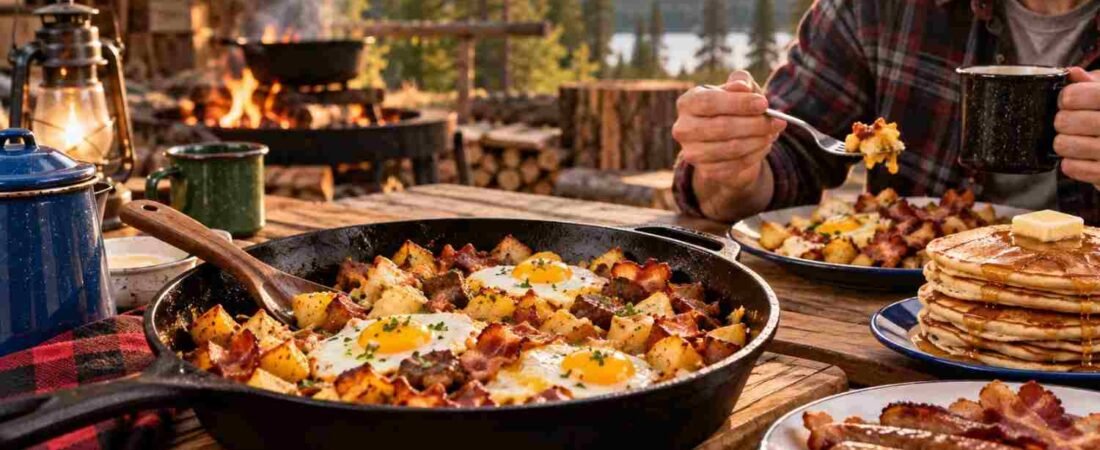
I have always liked breakfasts that look generous before anyone takes the first bite. A skillet piled with crisp potatoes, browned sausage, eggs, and something buttery feels especially satisfying on a cold morning. The appeal is not really about eating like a lumberjack. It is about the simple pleasure of cooking food that is substantial, unfussy, and meant to keep people at the table.
I also noticed that the best lumber camp-inspired meals are not complicated. Historically, logging camps depended on filling staples, baked goods, beans, potatoes, meat, and hot drinks, served in quantities that matched demanding physical work. The goal is a hearty plate with good texture, plenty of protein, and enough starch to make it feel like a real meal.
What Makes a Breakfast Lumber Camp-Inspired?
A lumber camp breakfast starts with fuel rather than fuss. Workers needed food that could be prepared efficiently, served quickly, and provide lasting energy through cold mornings and strenuous labor. Historical Minnesota logging camps, for example, served enormous amounts of food, with some 80-man camps producing hundreds of pancakes at breakfast.
That does not mean every modern recipe needs to recreate those quantities. The better approach is to borrow the cooking logic: use sturdy ingredients, build flavor in one pan, and make every component earn its place. Potatoes, eggs, sausage, bacon, oats, beans, biscuits, apples, and molasses all fit naturally into that framework.
Cast iron is particularly useful. A heavy skillet holds heat well, browns potatoes beautifully, and moves easily from stovetop to oven or campfire when the recipe allows.
Skillet Breakfasts Built for Big Appetites
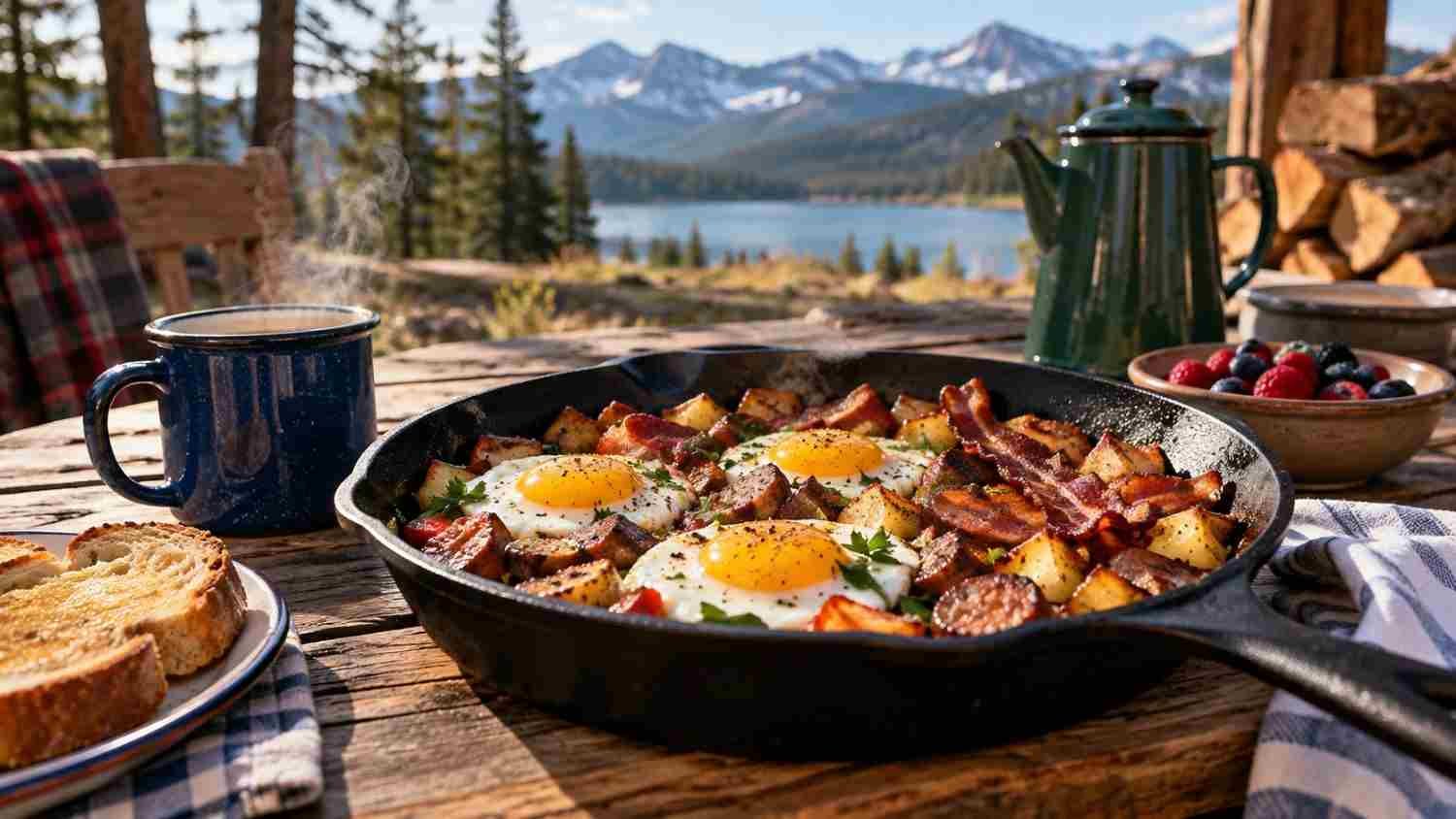
A loaded potato and sausage skillet is one of the easiest places to start. Dice russet or red potatoes fairly small so they cook evenly, then brown them in bacon drippings or a little butter. Add onions and thick breakfast sausage, letting everything develop crisp edges before adding beaten eggs. A modest handful of shredded cheddar or Colby Jack melts over the top and brings the whole pan together.
For a different texture, try a corned beef hash. Cook diced potatoes and onions until deeply browned, then fold in chopped corned beef and a little bell pepper. Press the mixture against the skillet and leave it alone for several minutes. That contact with hot iron creates the dark, crunchy crust that makes hash so good. Make small wells in the mixture, crack in eggs, cover the pan, and cook until the whites set while the yolks stay soft.
Another option is a sausage, bean, and potato skillet. Warm cooked white beans with browned sausage, onions, and roasted potatoes, then season with black pepper, mustard, and a small spoonful of molasses. The combination nods toward the bean-heavy meals associated with Maine logging camps without pretending to be a historical replica. Serve it with toast or biscuits for a breakfast that can easily become brunch.
Pancakes, Oats, and Biscuits Have Their Place
Pancakes belong in the conversation, but they do not have to be thin diner flapjacks. Try a thicker buttermilk batter with a spoonful of cornmeal for extra texture. A little molasses in the batter adds a darker sweetness that works well with smoked bacon or breakfast sausage.
Oatmeal can take the same rustic direction. Simmer old-fashioned oats with milk and water, then add chopped apples, dried cranberries, toasted walnuts, cinnamon, and a drizzle of maple syrup. For a more old-fashioned character, replace some of the maple with molasses. The result is inexpensive, filling, and easy to scale for a group.
Biscuits and sausage gravy are another natural fit. Brown pork sausage, stir flour into the drippings, then slowly whisk in whole milk until the gravy becomes thick and peppery. Spoon it over warm buttermilk biscuits. Adding a fried egg gives the plate more protein and a runny yolk that blends into the gravy.
If you enjoy the crispy potato side of diner breakfasts, crispy diner breakfast potatoes with savory seasoning can work alongside nearly any of these dishes. Keep the potatoes separate when you want distinct crispness instead of letting them soften beneath eggs or gravy.
Make the Meal Feel Like Camp Cooking
The camp-inspired feeling comes as much from technique as ingredients. Use one substantial skillet whenever possible, prep ingredients before the pan gets hot, and let food brown before stirring. Those small habits create deeper flavor without requiring elaborate equipment.
Cooking for several people also changes the rhythm. Instead of plating each serving separately, put the skillet, pancakes, or biscuits in the center of the table. Add bowls of butter, maple syrup, hot sauce, jam, or pickles so everyone can adjust the meal.
A few modern touches can fit without losing the rustic character. Leftovers fit naturally here too, since yesterday’s potatoes can become today’s crispest breakfast with little work. Add roasted mushrooms to a sausage skillet, use sharp cheddar instead of mild cheese, or finish potatoes with scallions. You can also borrow the same browning technique for lunch or dinner, especially when a hot griddle is already doing the work. If you want a richer dinner-style side later in the day, diner-style smash burger recipes with creative toppings offer another way to use that browned, griddled approach while keeping the cooking straightforward and satisfying.
FAQs: Hearty Lumber Camp-Inspired Breakfast Recipes for Big Appetites
1. What foods were common in lumber camp breakfasts?
Potatoes, eggs, pancakes, biscuits, meat, beans, baked goods, coffee, and other filling staples appeared in different logging camps and regions.
2. Why are cast-iron skillets useful?
They retain heat well, encourage browning, and work especially well for one-pan meals with potatoes, meat, and eggs.
3. Can these recipes be made for a crowd?
Yes. Double or triple skillet recipes as needed, or prepare pancakes and biscuits in batches while keeping finished portions warm.
4. Are these historically authentic recipes?
They are inspired by lumber camp cooking rather than exact historical reproductions. Modern ingredients and techniques make them more practical for home kitchens.
Why Big, Simple Breakfasts Still Have a Place
The charm of lumber camp-inspired cooking is its practicality. These meals were shaped by real constraints: cold weather, hard labor, limited kitchen space, and the need to feed many hungry people. At home, those conditions are different, but the underlying idea still works. A good breakfast does not need complicated ingredients or a long list of steps. It needs contrast, warmth, satisfying textures, and enough substance to carry you through the morning.
That is why a hot skillet, a stack of pancakes, or a plate of biscuits can still feel special. The food is simple, but it never feels skimpy.