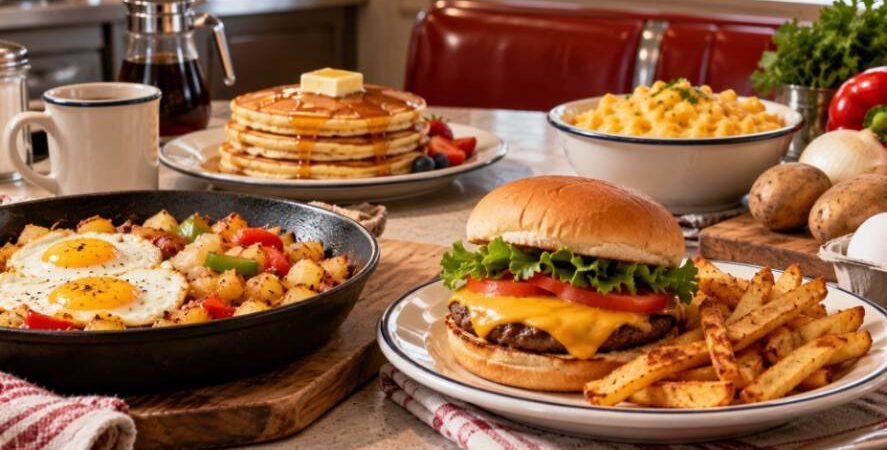
I have always liked the kind of food you find at a neighborhood diner: crisp potatoes, buttery toast, cheesy sandwiches, and filling plates that do not try too hard. When I cook those flavors at home, I notice that the best results rarely require unusual ingredients. A few inexpensive staples can create the same familiar, satisfying feeling.
I also find that diner-style cooking makes sense when I am trying to keep a grocery bill under control. Eggs, potatoes, pasta, bread, canned beans, ground meat, frozen vegetables, and cheese can carry several meals without making dinner feel repetitive. The trick is knowing how to season and combine them so simple ingredients still feel special.
What Makes a Meal Feel Like Diner Food?
Diner food has a recognizable character. It is hearty, familiar, and built around ingredients people already know. A skillet, baking dish, or saucepan does most of the work, while browned meat, melted cheese, crisp potatoes, toasted bread, and savory sauces provide comfort.
That makes diner cooking a natural fit for a limited grocery budget. You do not need steak or specialty cheese to create a satisfying plate. Ground beef can become a patty melt, meatloaf, or skillet pasta. Potatoes can become hash browns or home fries, while eggs can anchor breakfast, sandwiches, or dinner.
Start With Affordable Kitchen Staples
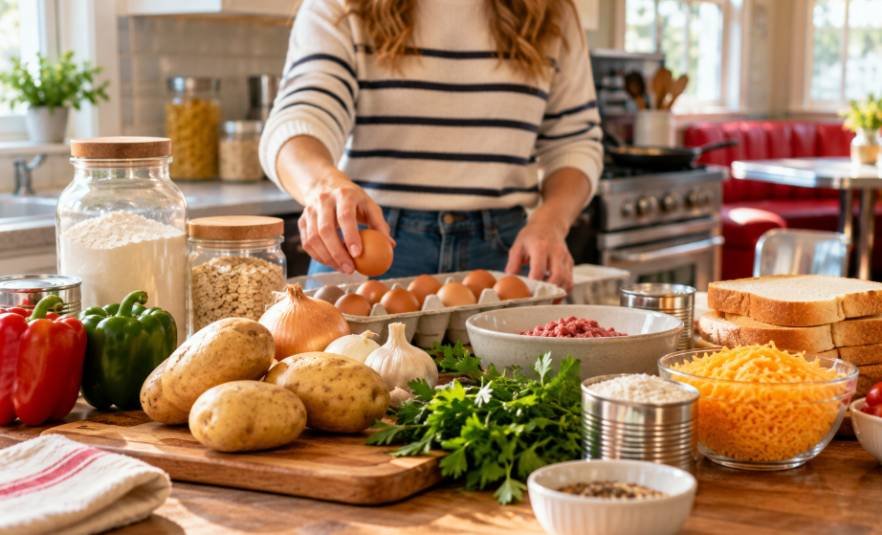
A useful budget strategy is to buy ingredients that can move between meals. Sandwich bread can become French toast, grilled cheese, or a diner-style melt. Eggs work for breakfast plates and quick rice dinners. Pasta can stretch a small amount of meat into a family meal.
Beans are inexpensive, filling, and easy to season. Canned black beans can become a rice bowl, burrito filling, or side dish. Ground meat goes further when paired with pasta, rice, potatoes, or vegetables.
Frozen vegetables reduce waste and work well in casseroles, skillet meals, soups, and pasta. Keeping dependable staples on hand makes it easier to create comfort food without a special grocery trip.
Easy Diner-Style Meals to Make at Home
One-pot cheeseburger pasta shows how diner flavors can become an inexpensive dinner. Brown ground beef, add pasta and broth, and let everything cook together. Stir in cheddar near the end for a creamy, savory meal with minimal cleanup.
For a breakfast that needs more staying power, combine eggs, potatoes, cheese, and a small amount of bacon or sausage in a skillet. If you want more ideas in the same spirit, protein-packed diner breakfast recipes for busy mornings can help expand that combination without relying on expensive ingredients.
Creamy tomato and spinach pasta offers another useful formula. Crushed tomatoes provide the base, while garlic, milk or cream, and spinach add richness. Frozen spinach is often cheaper and easier to keep available.
Tuna noodle casserole remains practical. Egg noodles, canned tuna, cream of mushroom soup, and frozen peas create a substantial dish from inexpensive pantry and freezer ingredients. A crunchy cracker or breadcrumb topping adds the expected baked-casserole texture.
Black bean and rice bowls are even simpler. Season beans with cumin, garlic powder, salt, and pepper, then spoon them over rice with salsa and shredded cheese. The same filling works in tortillas, while a fried egg makes the bowl more substantial.
Egg roll in a bowl takes a different route. Brown ground pork or turkey with shredded coleslaw mix, then add soy sauce and a little sesame oil. Cabbage and carrots cook quickly, making a complete skillet dinner.
Make Simple Ingredients Taste More Like Diner Food
Good seasoning matters more than expensive ingredients. Black pepper, garlic powder, paprika, onion powder, mustard, hot sauce, or dried herbs can give familiar foods more character.
Browning makes a noticeable difference. Let ground meat develop color, and allow potatoes to sit against the hot pan long enough to crisp. Toast bread before making sandwiches and finish casseroles with something crunchy. Small texture changes make inexpensive meals more satisfying.
Sauces help, too. Mayonnaise and mustard can brighten a sandwich, while gravy can turn mashed potatoes and meatloaf into a classic diner plate. Salsa or hot sauce can wake up rice and beans cheaply.
Plan around ingredient overlap rather than buying something separate for every recipe. Leftover potatoes can become breakfast hash, extra ground beef can fill a grilled sandwich, and cooked rice can become tomorrow’s bowl. This cuts waste and simplifies the next meal.
These same techniques can be used to recreate familiar favorites with a modern approach, and classic diner recipes updated for modern home kitchens can offer more ideas for adapting traditional diner dishes to everyday cooking.
Keep Comfort Food Practical
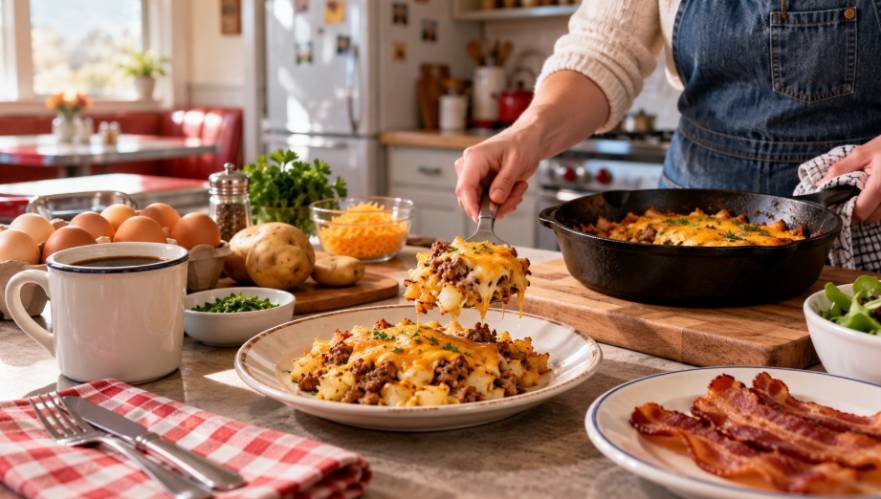
Budget cooking works best when recipes fit real schedules. One-pot pasta, skillet meals, casseroles, and bowls keep preparation manageable and often produce leftovers. Batch-cooking rice or potatoes can shorten work on busy nights.
There is room for lighter adjustments without losing the diner character. Leaner ground meat, more vegetables, less cheese, or a larger vegetable side can change the balance without losing familiar flavors. Better-for-you versions of classic diner comfort foods can provide more ideas for making those small changes while keeping familiar flavors intact.
The goal is not perfect economy or nutrition. It is a flexible kitchen where inexpensive ingredients can become several satisfying meals instead of one predictable dinner.
Frequently Asked Questions
1. What ingredients are best for budget diner recipes?
Eggs, potatoes, pasta, rice, beans, bread, ground meat, canned tuna, frozen vegetables, and basic cheese are especially versatile and affordable.
2. How can I make diner food cheaper?
Choose ingredients that work across several meals, buy store brands when practical, use frozen vegetables, and turn leftovers into a new meal.
3. Can diner-style food be made ahead?
Yes. Casseroles, cooked rice, pasta dishes, meatloaf, and seasoned beans generally work well for meal prep and leftovers.
4. How do I make inexpensive meals taste better?
Focus on browning, seasoning, texture, and simple sauces. Toasted bread, crisp potatoes, melted cheese, and a flavorful topping can make basic ingredients feel much more satisfying.
Why Simple Diner Food Still Works
The appeal is not about recreating a restaurant plate perfectly. It comes from understanding why diner food feels comforting: familiar ingredients, generous textures, straightforward seasoning, and food served hot from the pan. Built around affordable staples, those qualities make recipes practical enough to repeat instead of occasional treats.
Good comfort food does not need an impressive shopping list. A skillet, a few pantry staples, and attention to texture can put a satisfying dinner on the table.