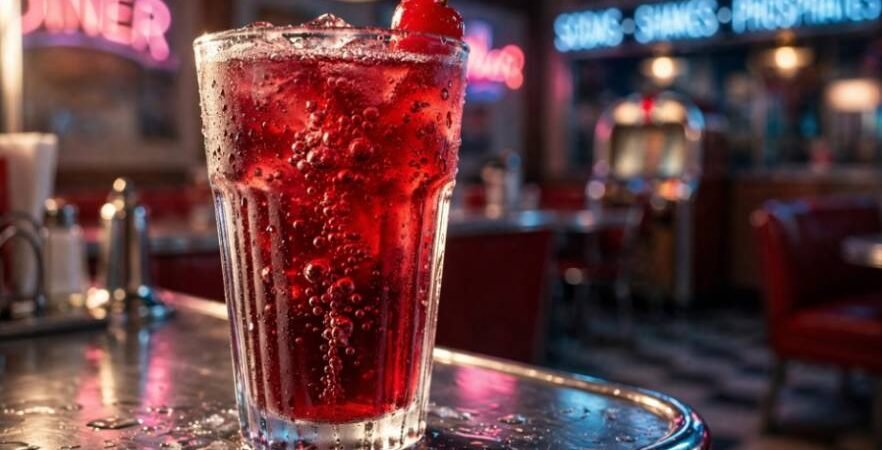
Learning how to make diner style cherry phosphate requires unlearning modern soda habits. If your cherry soda tastes like a cloying melted ice pop, you are missing the signature mineral bite of the golden age soda counter.
A true phosphate does not rely on lemon juice or citric acid for tartness. It demands genuine acid phosphate—a buffered solution of phosphoric acid and mineral salts pioneered in the 1870s.
When blended correctly with rich cherry syrup and high-pressure seltzer, it yields a dry, intensely crisp beverage that cuts through thirst without leaving a sugary coating on your tongue.
After years of running vintage beverage programs and testing soda formulas, I have dialed in the exact sequence, ratios, and extraction methods needed to recreate that chrome-and-neon counter magic right in your kitchen.
The Chemistry of the Phosphate Snap: Why Citrus Fails
The defining hallmark of an authentic soda fountain phosphate is a sharp, dry sourness that leaves fruit aromas untouched. During the late 19th and early 20th centuries, soda jerks reached for dash bottles of Horsford’s Acid Phosphate to transform standard fruit sodas into sophisticated adult beverages.
As detailed by the Science History Institute, Eben Horsford originally developed this buffered solution using bone ash and calcium phosphate, giving birth to an entire genre of fountain drinks.
Citric Acid (Lemons / Limes):
[Tartness] + [Heavy Citrus Aroma] + [Fruity Esters] ➔ Alters Cherry Profile
Acid Phosphate (Phosphoric Salt Buffer):
[Crisp Tartness] + [Neutral Aroma] + [Dry Finish] ➔ Enhances Pure Cherry
Acid Phosphate vs. Citric Acid: The Flavor Neutrality Test
Citric acid brings along bright citrus notes. If you add lemon or lime juice to cherry syrup, you make cherry lemonade. Acid phosphate behaves differently. According to food chemistry analyses published by Chemical & Engineering News, phosphoric acid provides a sharper, cleaner acid profile at a lower pH without competing aromatic esters.
Because the solution is buffered with potassium, magnesium, and calcium salts, it blunts raw burning acidity into an elegant, palate-cleansing dryness. That dryness allows the deep, dark tannins of the cherry fruit to shine forward in pristine isolation.
Ingredients and Equipment for Fountain Authenticity
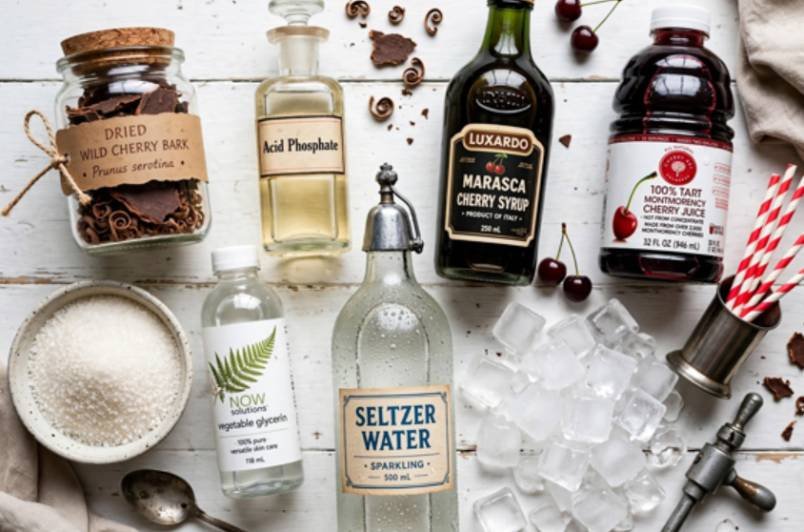
Skip commercial bottled cherry sodas made with high-fructose corn syrup. To capture the genuine diner experience, you need high-grade components that hold their structure under carbonation.
| Component | Optimal Specification | Purpose |
| Cherry Base | Wild cherry bark reduction or Luxardo marasca syrup | Provides woodsy tannins and natural benzaldehyde (bitter almond aroma) |
| Sour Agent | Food-grade acid phosphate (e.g., Extinct Chemical Co.) | Delivers crisp, non-citrus mineral tartness |
| Water Base | Heavy seltzer water, chilled to 34°F (1°C) | Holds dissolved CO2 and lifts dense syrup |
| Ice | Dense cubed or crushed clear ice | Chills without excessive dilution |
| Glassware | 12 oz fluted soda fountain glass or Collins glass | Directs aromatic volatile compounds upward |
The Secret Weapon: Cold-Macerated Wild Cherry Bark Syrup
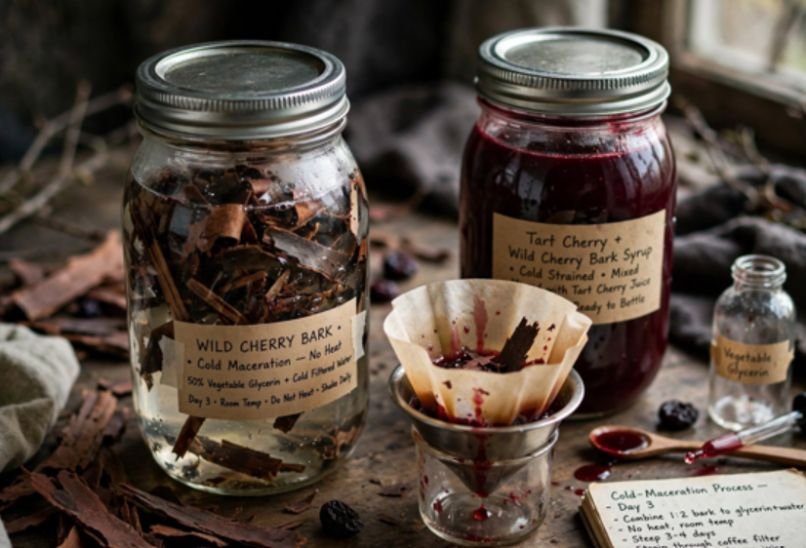
Most modern cherry syrups rely on synthetic benzaldehyde to mimic fruit flavor. Authentic 19th-century fountain syrups, however, used dried wild cherry bark (Prunus serotina).
To make your own base:
- Combine 1 oz of cut dried wild cherry bark with 1 oz of food-grade vegetable glycerin and 4 oz of cold filtered water in a sealed jar.
- Let it sit at room temperature for 24 hours without heat. Heating extracts unpleasant, muddy tannins; cold extraction pulls out subtle, aromatic benzaldehyde and herbal aromatics.
- Strain this liquid through a paper filter, mix it with 4 oz of 100% tart Montmorency cherry juice, and cold-whisk in 12 oz of pure granulated cane sugar until completely dissolved.
The resulting syrup produces a layered, woodsy finish that transforms a simple drink into an artisanal heirloom treat. If you enjoy vintage fountain drinks that elevate nostalgic flavors, try our homemade black cow root beer float.
Proper Seltzer Carbonation Levels
Standard grocery store club sodas often lack the carbonation pressure required to lift heavy sugar syrup. Look for seltzer water labeled with high carbonation volumes, or carbonate your own filtered water using a home system chilled close to freezing.
According to hydration and beverage data tracked via USDA FoodData Central, mineral content and chilling parameters directly dictate gas dissolution rates in carbonated liquids. Keep your water between 33°F and 36°F to prevent rapid decarbonation when pouring.
Step-by-Step: Crafting the Perfect Diner Style Cherry Phosphate
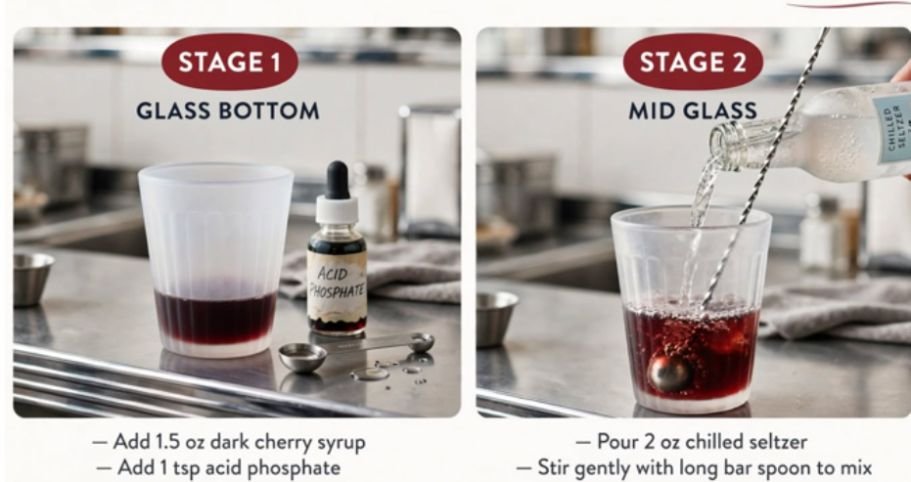
Follow this tested build sequence. Changing the order in which you combine syrup, seltzer, and ice will knock out carbonation and leave heavy sugar pooling at the bottom of the glass.
Glass Bottom ➔ 1.5 oz Cherry Syrup + 1 tsp Acid Phosphate
↓
Mid Glass ➔ 2 oz Chilled Seltzer (Gently lift with spoon to incorporate)
↓
Pack Ice ➔ Fill 3/4 with cold cubes (Prevents syrup-ice freezing)
↓
Rim Finish ➔ 6 oz Seltzer down glass wall + Maraschino Garnish
- Pre-chill your glass: Place a classic 12 oz soda fountain glass in your freezer for 15 minutes. A warm glass creates nucleation sites that flash off dissolved carbon dioxide instantly.
- Dose the base: Add 1.5 oz of wild cherry syrup directly into the base of the cold glass. Add 1 full teaspoon (approx. 5 mL) of acid phosphate. Swirl gently to combine the two liquids before introducing any carbonation.
- Execute the initial emulsion: Pour in 2 oz of icy cold seltzer. Take a long-handled bar spoon, slide it to the base, and lift the heavy syrup upward with a single, smooth pull. Incorporating the dense sugar with a small amount of liquid now ensures the entire glass mixes evenly later.
- Pack the ice: Slide clear ice cubes gently into the glass until it is three-quarters full. Adding ice after the initial blend prevents thick syrup from adhering and freezing to dry ice cubes.
- Top with high-pressure water: Pour an additional 6 to 7 oz of seltzer water slowly down the interior wall of the glass. Do not pour directly into the center, which agitates the liquid and ruins carbonation.
- Give a single rolling turn: Insert the spoon once more and make a gentle half-rotation to bring the layers together. Garnish with a stemmed brandied or maraschino cherry. Serve immediately with a straw.
Crucial Fountain Jerk Rules for Maximum Fizz
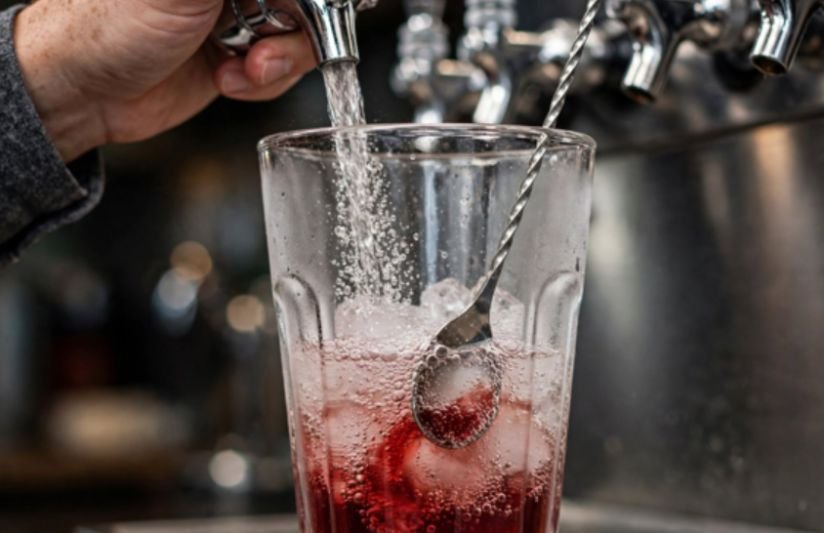
Decades of historical soda fountain logs, as chronicled by Smithsonian Magazine, highlight that the soda jerk’s primary enemy was warm equipment. Warm syrups and room-temperature glassware destroy carbonation within thirty seconds.
- Never shake or vigorously stir carbonated drinks. Aggressive stirring releases dissolved gas molecules, turning a sharp drink flat before the first sip.
- Keep your syrups refrigerated. Warm syrup increases the internal temperature of the drink on contact, triggering violent foaming and lost effervescence.
- Calibrate your acid ratio. If using commercial tart cherry syrup, start with 1/2 teaspoon of acid phosphate. For sweeter, thicker maraschino-style syrups, increase the dose to a full teaspoon to cut through the heavy sugar profile.
Frequently Asked Questions
1. Can I substitute lemon juice for acid phosphate in a cherry phosphate?
Fresh lemon juice works in a pinch, but it adds strong citrus aromatics and pulp that eliminate the crisp, authentic mineral finish of true acid phosphate.
2. Where can I buy genuine acid phosphate for sodas?
You can purchase bottled food-grade acid phosphate online through craft bar supply shops and specialty cocktail ingredient retailers.
3. Is acid phosphate safe to consume?
Yes, food-grade acid phosphate is a carefully buffered blend of phosphoric acid and essential mineral salts formulated specifically for beverages.
4. How long does homemade wild cherry fountain syrup last?
Stored in an airtight glass bottle in the refrigerator, cold-process 2:1 wild cherry syrup remains fresh for up to three months.
Ditch the Bottled Pop: Your Counter Is Open
Once you experience the sharp, dry snap of real acid phosphate against the rich, almond-scented profile of wild cherry syrup, store-bought soda loses its appeal entirely.
For another cozy drink with a richer, fireside character, try this campfire spiked hot chocolate with whiskey.
The balance of chemistry and kitchen craft transforms simple tap water and sugar into a masterclass in balance. Keep your glassware frosty, treat your bubbles with care, and serve this authentic vintage fountain classic whenever you crave a genuine piece of Americana. If you enjoy vintage fountain drinks, mix up a classic diner style egg cream.