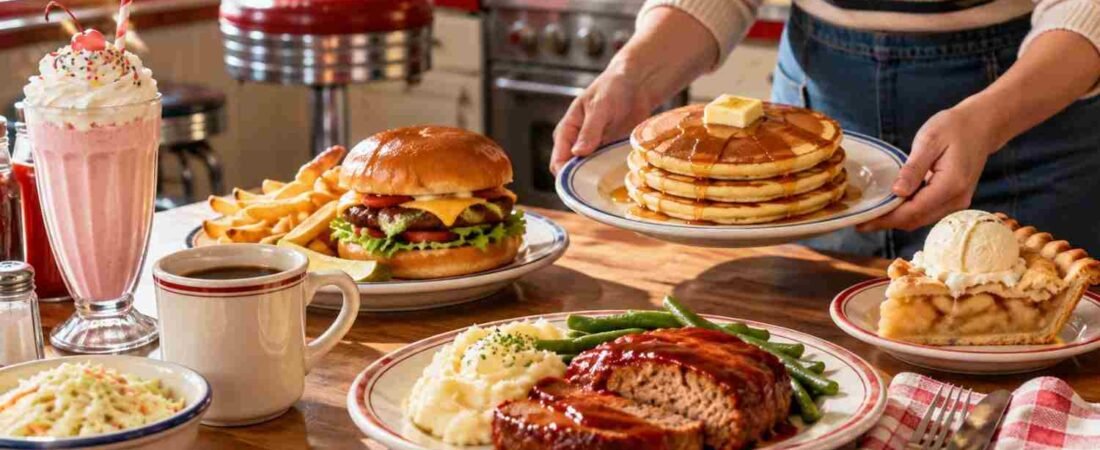
I’ve always liked the kind of diner meal that arrives looking completely uncomplicated: a browned sandwich, crisp potatoes, or a plate covered in gravy. I found that there is something reassuring about food that does not need a long ingredient list to feel satisfying. When I started recreating those meals at home, I found that the familiar flavors mattered more than trying to copy every detail of a restaurant kitchen.
I also noticed how well these old-fashioned diner recipes worth making at home fit into a normal week. That familiarity leaves room for substitutions based on what is already in the pantry. That is part of their appeal: the cooking feels familiar enough to improvise. A little extra onion, a sharper pickle, or a handful of herbs can shift the character while keeping the meal recognizable. The best versions leave room for personal habits without fuss.
Why Old-Fashioned Diner Food Works So Well at Home
Classic diner food has a practical quality that can get lost when nostalgia takes over. These meals were built around inexpensive staples, generous portions, strong seasoning, and cooking methods that produced plenty of flavor without requiring fancy equipment. Ground beef, bread, eggs, noodles, potatoes, cheese, canned vegetables, and simple sauces can do a surprising amount of work.
Modern diner recipes inspired by classic American comfort food can follow the same principle without losing their easygoing character. A patty melt can become dinner with a side salad, while Salisbury steak feels complete with mashed potatoes and green beans. A creamy noodle skillet can stretch a small amount of protein into a family meal.
Four Classics Worth Putting Into Rotation
Patty Melt
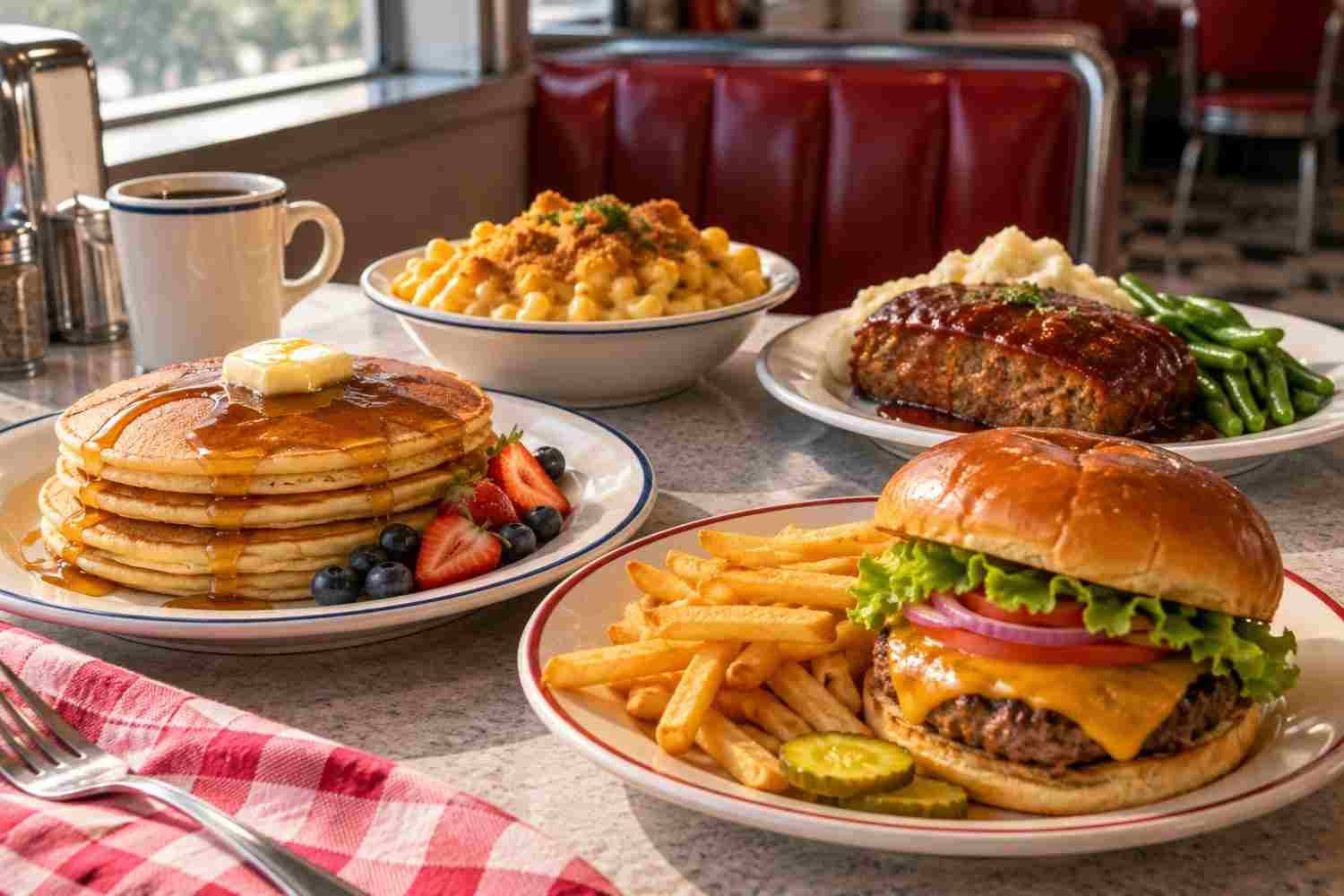
A good patty melt sits somewhere between a burger and a grilled cheese sandwich. Shape a seasoned beef patty fairly thin so it cooks quickly, then give the onions enough time to soften and develop deep color. Texas toast or another sturdy bread holds up well against the juicy beef, melted American and Swiss cheese, and creamy sauce.
Serve it with pickles, fries, or a simple pile of dressed greens.
Tuna Noodle Skillet
Tuna noodle dishes have the kind of retro appeal that comes from making a little go a long way. Egg noodles, canned tuna, peas, and condensed cream of mushroom soup create a creamy base with very little preparation. The skillet version is particularly useful on nights when there is no interest in washing several pans.
Cook the noodles just until tender, since they will continue absorbing sauce in the skillet. Black pepper, onion, garlic, or shredded cheddar can sharpen the flavor without changing its old-school character.
Salisbury Steak
Salisbury steak is one of the clearest examples of why diner comfort food remains popular. The beef mixture is shaped into oval patties, browned in a skillet, and finished in a savory gravy. That sequence creates flavor in the same pan instead of relying on a complicated sauce made separately.
Use enough seasoning in the patties to keep the beef from tasting flat, then scrape the browned bits from the skillet when building the gravy. Spoon the finished gravy over mashed potatoes, rice, or egg noodles.
Classic Skillet Lasagna
Traditional lasagna can take time, but a skillet version captures the familiar combination of beef, tomato sauce, pasta, and melted cheese with much less effort. Brown the beef first, add marinara and enough liquid to cook the pasta, then finish with cheese once the noodles are tender.
Stir occasionally so it does not stick, but avoid constant stirring, which can break the noodles and make the sauce overly thick. Skillet lasagna is simply a practical cousin that delivers those comforting flavors on a busy night.
Small Details That Make These Meals Better
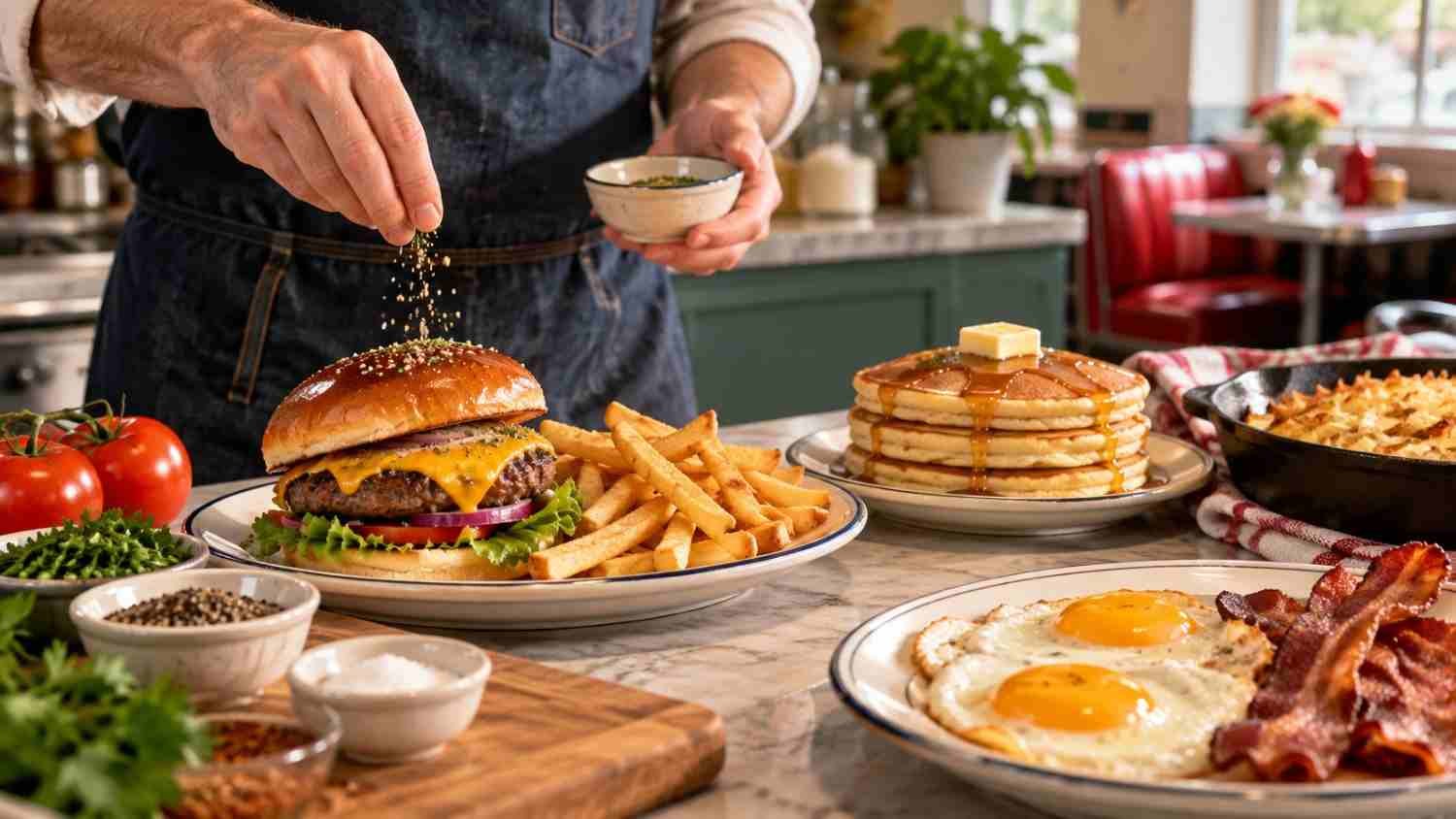
The difference between decent diner food and food that tastes genuinely satisfying often comes down to browning and timing. Let meat develop color before moving it around, give onions space to cook, and season in layers instead of dumping everything in at once.
Toast bread in the same skillet, using rendered beef fat or a small amount of butter to encourage an even crust. For creamy dishes, add liquid gradually and remember that noodles continue absorbing sauce after the heat is turned off.
A few familiar sides can also make the meal feel more complete. Retro diner breakfast recipes with a modern twist use the same balance of familiar flavors and practical cooking. Pickles cut through rich sandwiches, crisp greens add contrast to Salisbury steak, and roasted or pan-fried vegetables work beside creamy noodles. The goal is balance, not recreating an entire diner menu.
FAQs: Old Fashioned Diner Recipes Worth Making at Home Any Day of the Week
1. What makes a recipe taste like diner food?
Diner-style cooking usually leans on browned meats, toasted bread, melted cheese, savory sauces, eggs, potatoes, and straightforward seasoning. The food is hearty without being complicated.
2. Are these recipes good for weeknight dinners?
Yes. Patty melts, tuna noodle skillet meals, Salisbury steak, and skillet lasagna all use familiar ingredients and relatively simple cooking methods, making them practical for busy evenings.
3. Can I change the ingredients?
Absolutely. Ground turkey can replace beef in some recipes, different cheeses can work in sandwiches, and frozen vegetables are convenient substitutes when fresh produce is unavailable.
4. What sides pair well with diner meals?
Try fries, home fries, mashed potatoes, green beans, coleslaw, or pickles. Choose something crisp or fresh when the main dish is especially rich.
Why These Classics Still Belong in the Weekly Rotation
The best diner recipes do not depend on nostalgia alone. They work because they understand what makes a home-cooked meal satisfying: a browned crust, a good sauce, melted cheese, tender noodles, or gravy soaking into something warm underneath. Those small details create meals that feel generous even when the shopping list is short. Keeping a few of these recipes in regular rotation also makes weeknight cooking less predictable. One evening can be a crisp patty melt, another can be a creamy skillet, and another can bring a plate of Salisbury steak to the table. The ingredients may be humble, but the result never has to feel ordinary.
Sometimes the most useful recipes are the ones you already know you will crave again.